
Domingoa
Domingoa
Domingoa is a genus of orchids comprising four recognized species, native to Mexico, Central America, Cuba, Hispaniola, and Mona in the Greater Antilles. Established by Rudolf Schlechter in 1913, the genus name is a reference to Santo Domingo, an older name for the island of Hispaniola. The genus is abbreviated as Dga. in cultivation.
Key Facts
- ›Domingoa is a genus within the Orchidaceae family.
- ›It includes four recognized species.
- ›These orchids are found in Mexico, Central America, Cuba, Hispaniola, and Mona.
- ›The genus was established by Rudolf Schlechter in 1913.
- ›The genus name honors Santo Domingo, an historical name for Hispaniola.

Mexico, Central America, Cuba, Hispaniola, Mona
About Domingoa
The genus Domingoa belongs to the Orchidaceae family and encompasses four recognized species. These orchids are native to a broad geographic range that includes Mexico, Central America, and several islands in the Greater Antilles such as Cuba, Hispaniola, and Mona.
Taxonomy and Naming
Rudolf Schlechter established the genus Domingoa in 1913. The genus name itself is derived from Santo Domingo, an historical designation for the island of Hispaniola. In horticultural and cultivation circles, the genus name is frequently abbreviated as Dga.
Species Distribution
The species within the Domingoa genus are spread across Mexico and Central America, extending to the Caribbean islands of Cuba, Hispaniola, and Mona. This distribution highlights their adaptation to varied tropical and subtropical environments within these regions.
Source: Wikipedia ↗
Frequently Asked Questions
What is Domingoa?
Domingoa is a genus of orchids belonging to the family Orchidaceae. It currently comprises four recognized species.
Where are Domingoa orchids found?
These orchids are naturally found in diverse regions including Mexico, Central America, Cuba, Hispaniola, and Mona, which are part of the Greater Antilles.
Who established the genus Domingoa and when?
The genus Domingoa was established by Rudolf Schlechter. He is credited with describing the genus in 1913.
What is the origin of the name Domingoa?
The name Domingoa is a reference to Santo Domingo, which was an older name for the island of Hispaniola, one of the regions where these orchids are found.
How is the genus Domingoa abbreviated in cultivation?
In horticultural contexts and cultivation, the genus Domingoa is commonly abbreviated as Dga.
Related Orchid species
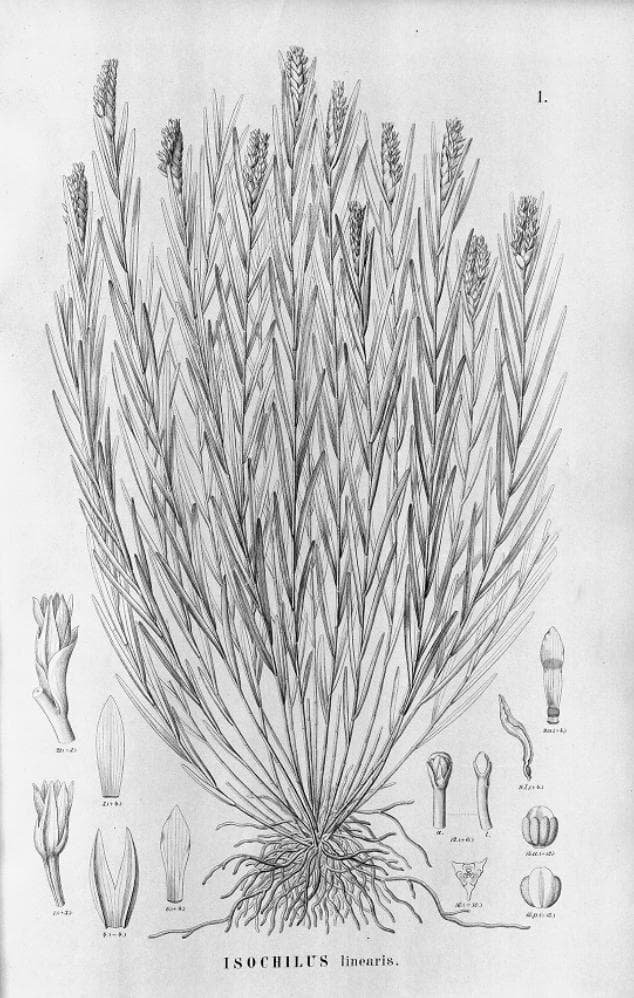
Isochilus
Isochilus is a genus of orchids comprising 13 recognized species, predominantly found as lowland epiphytes throughout Central America, extending from Cuba and Mexico down to Argentina. These orchids are distinguished by their slender, cane-like stems bearing narrow, distichous flat leaves, and small, sessile tubular flowers that emerge at the apex of the stem.

Barbosella
Barbosella is a genus of creeping orchids comprising about 20 species, primarily found across the West Indies and Latin America, from Mexico down to Argentina. These orchids are distinguished by their solitary flowers, which feature a unique lip base that functions like a ball and socket joint. The genus was named in honor of João Barbosa Rodrigues, a notable investigator of Brazilian orchids.

Dinema
Dinema is a genus of orchids, currently represented by the single species Dinema polybulbon. This orchid is native to Mexico, Central America, and the Caribbean, where it typically grows as an epiphyte or lithophyte in humid mixed forests. It is distinguished by its relatively large, solitary flowers with a simple white to yellowish-white lip and distinctive cornicle-shaped extensions on the column.