
Epidendroideae
Epidendroideae
Epidendroideae is the largest subfamily within the orchid family (Orchidaceae), encompassing over 15,000 species across 576 genera. Predominantly tropical epiphytes, these orchids are characterized by pseudobulbs and are found in diverse habitats, primarily tropical and subtropical rainforests. They are distinguished by specific floral structures, including a single, fertile anther and a unilocular ovary.
Key Facts
- ›Comprises over 15,000 species in 576 genera, making it the largest orchid subfamily.
- ›Most species are tropical epiphytes, often featuring pseudobulbs.
- ›Includes some terrestrial species and even myco-heterotrophs (parasitic on fungi).
- ›Characterized by a single, fertile, incumbent anther and a unilocular ovary.
- ›Floral structures include pollinia with or without caudicles and viscidia, and a stigma with a beak and stipe.
- ›Found in tropical and subtropical rainforests, often growing on host trees to access light.

Tropical, Subtropical
Epiphytic, Terrestrial, Myco-Heterotrophic
About Epidendroideae
Epidendroideae stands as the largest subfamily within the vast Orchidaceae family, representing a significant portion of orchid diversity with over 15,000 species organized into 576 genera. This subfamily is primarily composed of tropical epiphytes, plants that grow on other trees or plants without being parasitic, often featuring characteristic pseudobulbs which serve as storage organs.
Habitat and Adaptation
The natural habitat for most epidendroid orchids is within tropical and subtropical rainforests, environments that provide the high humidity necessary for their survival. They are found in various positions on host trees, from forks to thin branches, adapting their growth to access optimal light conditions. While predominantly epiphytic, the subfamily also includes terrestrial species, such as those in the genus Epipactis, and some myco-heterotrophs, which obtain nutrients from mycorrhizal fungi.
Epiphytic orchids have developed adaptations to survive periods of drought, despite their lack of direct access to soil moisture. Many exhibit Crassulacean Acid Metabolism (CAM), a photosynthetic pathway that allows them to absorb carbon dioxide at night and store it, minimizing water loss during the day. They also possess absorptive tissues capable of quickly taking up available water. However, high night-time temperatures and low humidity can impede CAM, leading to stress, reduced growth, and even carbon loss, thereby limiting the range of habitats a species can inhabit.
Floral Characteristics
Epidendroideae orchids are typically monandrous, meaning they possess a single fertile anther. This anther is characteristically incumbent, or strongly convex, and suberect, often forming a right angle with the column axis or pointing backward. The pollinia, masses of pollen, are usually hard and may be accompanied by a caudicle and viscidium. The stigma is typically entire or three-lobed, featuring a prominent beak, and the apical part of the middle stigma lobe forms a stipe, which attaches to the pollinium. The ovary is unilocular, and the leaves are arranged distichously or spirally on thickened stems.
Taxonomy and Classification
The subfamily was first published by Vincenz Franz Kosteletzky in 1831, with Epidendrum L. designated as the type genus. The classification of Epidendroideae is complex and has been divided into two major clades: the 'higher epidendroids' (also referred to as vandoids) and the 'lower epidendroids'. These groups are further subdivided into numerous tribes, such as Cymbidieae, Vandeae, Arethuseae, and Epidendreae, among others. This taxonomic framework is dynamic and subject to frequent revisions as new morphological and genetic data become available.
Source: Wikipedia ↗
Frequently Asked Questions
What is Epidendroideae?
Epidendroideae is the largest subfamily of plants within the orchid family, Orchidaceae. It is comprised of more than 15,000 species distributed across 576 genera.
Where do Epidendroideae orchids typically grow?
Most epidendroid orchids are tropical epiphytes, meaning they grow on other plants, typically trees, in tropical and subtropical rainforests. Some species, however, are terrestrial or myco-heterotrophic, growing in soil or on fungi, respectively.
What are the defining floral characteristics of Epidendroideae?
These orchids typically have a single, fertile anther that is incumbent and suberect. They possess hard pollinia, usually with a caudicle and viscidium, and a stigma that is entire or three-lobed, featuring a beak and a stipe on the middle lobe. The ovary is unilocular.
What is the significance of pseudobulbs in Epidendroideae?
Pseudobulbs are a common feature among epidendroid orchids, serving as storage organs for water and nutrients. Their presence is typical for the majority of species within this subfamily.
How are Epidendroideae orchids classified?
The classification of Epidendroideae is complex and has been divided into two main groups: 'lower epidendroids' and 'higher epidendroids' (also known as vandoids). These groups are further organized into various tribes, though this classification is subject to frequent revision.
Related Orchid species

Cottonia
Cottonia peduncularis is a monotypic genus of orchid native to India and Sri Lanka. Its most distinctive feature is its lip, which is shaped like a hairy bee, earning it the common name "bee-orchid," though unlike the Ophrys genus, no specific bee pollinator has been identified.
Bifrenaria
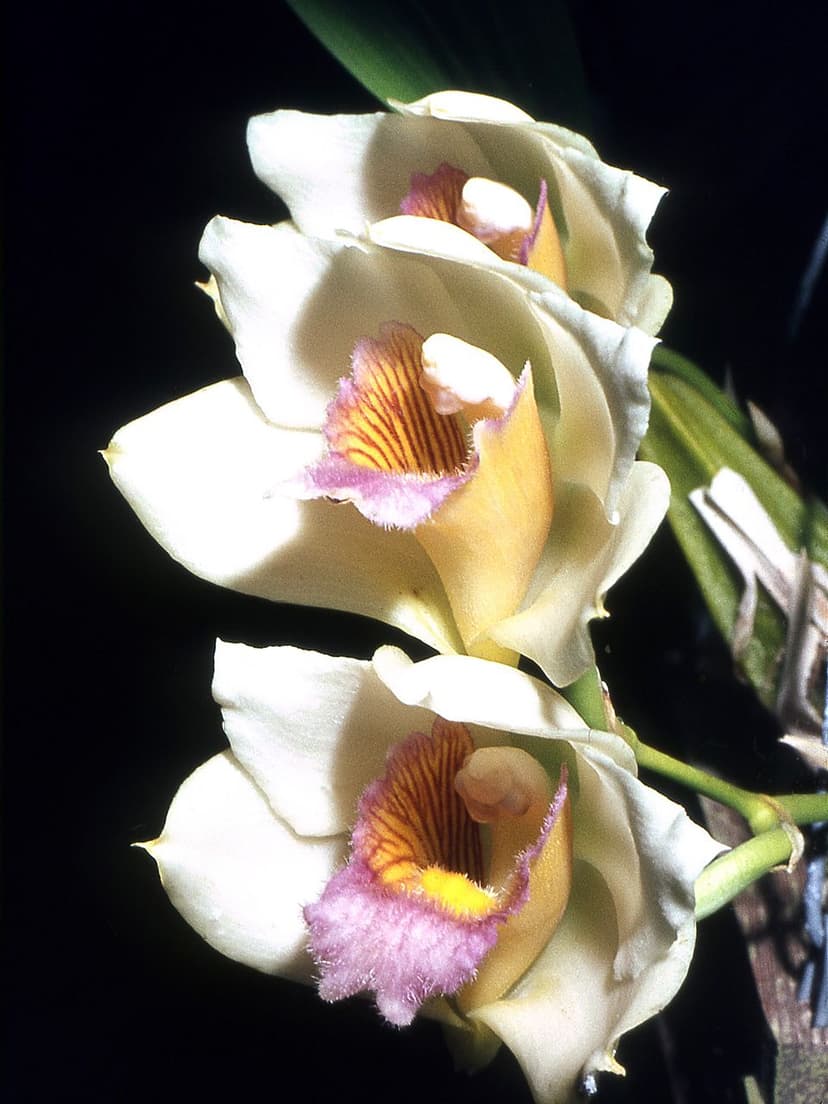
Bifrenaria is a genus of orchids comprising about twenty species native to Panama, Trinidad, and South America, primarily found in the Amazon and Atlantic Forests of Brazil. These orchids are admired by growers for their abundant and striking flowers, which are often strongly scented and possess a distinctive calcar at the base of the sepals.
Huntleya
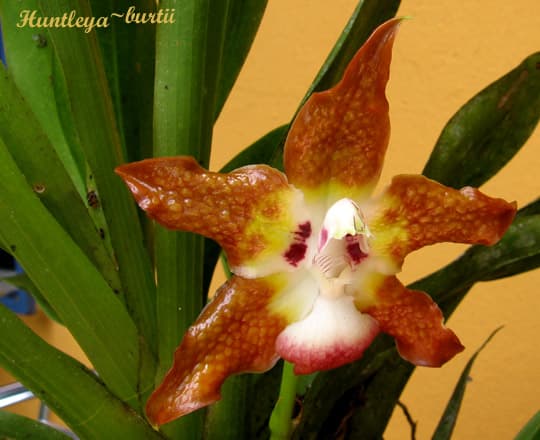
Huntleya is a small genus of orchids native to South America, Central America, and Trinidad. These plants are characterized by their epiphytic growth habit, pseudobulbless structure, and erect, single-flowered inflorescences. They are typically found growing in wet cloud forests at medium altitudes.