
Habenaria
Habenaria
Habenaria, commonly known as rein orchids or bog orchids, is a widespread genus of approximately 880 orchid species found on every continent except Antarctica. These terrestrial plants are characterized by their fleshy tubers, upright stems, and flowers that are typically small, white, green, or yellowish, featuring a distinctive labellum with a spur and three lobes, and two club-shaped projections on the stigma.
Key Facts
- ›The genus Habenaria comprises about 880 formally described species.
- ›Habenaria species are found in tropical and subtropical zones across all continents except Antarctica.
- ›They are primarily terrestrial plants with fleshy tubers and upright stems.
- ›Flowers are resupinate, usually small, and can be white, green, or yellowish.
- ›A distinguishing feature is the presence of two club-shaped projections on the stigma.
- ›The genus name 'Habenaria' is derived from the Latin word for 'rein' or 'strap'.
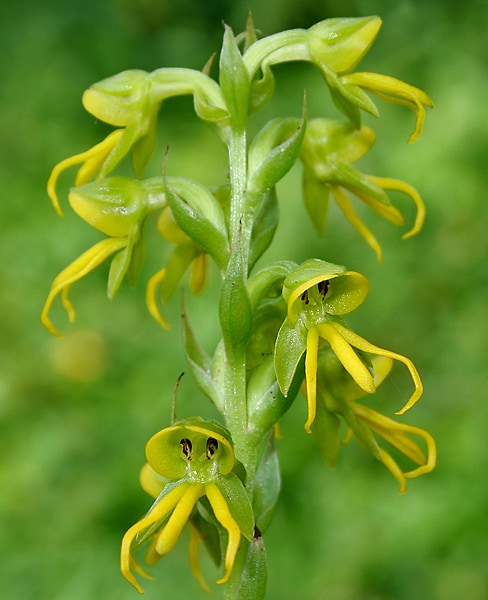
Rein Orchids, Bog Orchids
Terrestrial
About Habenaria
Habenaria, commonly known as rein orchids or bog orchids, represents a widely distributed genus of orchids within the tribe Orchideae. With approximately 880 species formally described, this genus is found across tropical and subtropical zones on every continent except Antarctica. Their widespread presence and varied species make them a significant component of orchid diversity globally.
Description and Characteristics
Plants belonging to the Habenaria genus are predominantly terrestrial, characterized by the presence of fleshy tubers and upright, often tall, stems that can be either thin or fleshy. The leaves are arranged either in a basal rosette, close to the ground, or are scattered along the length of the stem. The flowers of Habenaria are resupinate, typically small in size, and exhibit colors such as white, green, or yellowish hues. They are arranged along an elongated flowering stem. A notable floral feature is the dorsal sepal and petals, which overlap to form a protective hood over the column. The labellum, or lip, possesses a spur and usually presents three lobes, which can vary in length and form, sometimes being threadlike. The most distinguishing characteristic of the genus Habenaria is the presence of two club-shaped projections located on the stigma.
Taxonomy and Naming
The genus Habenaria was first formally described in 1805 by the botanist Carl Ludwig Willdenow, with its description published in the renowned botanical work, Species Plantarum. The generic name 'Habenaria' itself is derived from the Latin word 'habena,' meaning 'thong,' 'strap,' or 'rein.' This etymology likely alludes to the shape or structure of certain parts of the orchid's flower, possibly the labellum or its appendages.
Distribution and Habitat
Rein orchids are distributed throughout tropical and subtropical regions worldwide. Significant centers of diversity for the genus are found in Africa and Brazil, underscoring their prominence in these regions' floras. Seventeen species of Habenaria are known to occur in Australia, further illustrating the genus's broad geographical reach. They typically inhabit environments where they can grow in soil, aligning with their terrestrial growth habit.
Source: Wikipedia ↗
Frequently Asked Questions
What are Habenaria orchids commonly called?
Habenaria orchids are commonly referred to as rein orchids or bog orchids. These names reflect their appearance and typical habitat.
Where are Habenaria orchids found naturally?
Habenaria orchids have a wide distribution, occurring in tropical and subtropical regions on every continent except Antarctica. Centers of diversity are noted in Africa and Brazil.
What are the key characteristics of Habenaria flowers?
The flowers of Habenaria are typically small and resupinate, meaning they twist during development. They are usually white, green, or yellowish, with a labellum that possesses a spur and three lobes, and the stigma has two distinctive club-shaped projections.
How do Habenaria plants grow?
Habenaria are mainly terrestrial plants, meaning they grow in soil. They typically have fleshy tubers and upright stems, with leaves arranged either in a basal rosette or scattered along the stem.
What does the name 'Habenaria' mean?
The generic name Habenaria originates from the Latin word 'habena,' which translates to 'thong,' 'strap,' or 'rein.' This likely refers to the shape of some floral parts.
Related Orchid species

Archivea
Archivea kewensis is a monotypic orchid species known only from an 1823 watercolour illustration. Believed to be native to Brazil, it was formally described in 1996 based on this sole artistic representation. Its distinctive features include ovoid, ribbed pseudobulbs, lanceolate leaves, and white flowers with yellowish tips, resembling Cirrhaea species in habit.
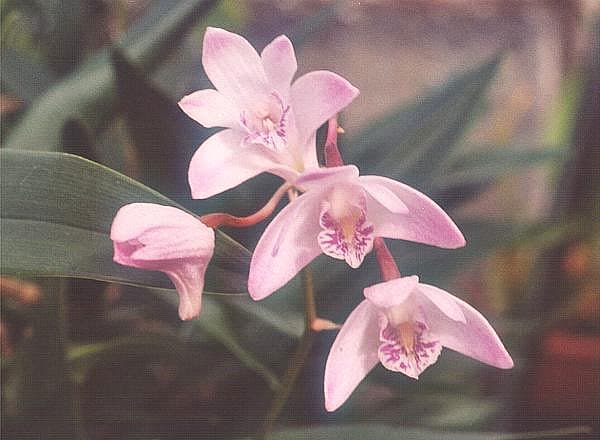
Dendrobium
Dendrobium is a vast genus of orchids, predominantly epiphytic or lithophytic, found across Asia and the Pacific. These orchids are characterized by their creeping roots and unique flower arrangements, often featuring contrasting labellums and a central callus. Many species are cultivated for their horticultural value and some are recognized for their air-purifying qualities and medicinal properties.

Dipodium
Dipodium, commonly known as hyacinth orchids, is a genus of approximately forty orchid species native to tropical, subtropical, and temperate regions across Southeast Asia, New Guinea, the Pacific Islands, and Australia. This genus is distinguished by its large, often colorful flowers borne on tall stems, and includes species that are either terrestrial or climbing, some with leaves and some leafless.