
Hylophila
Hylophila
Hylophila is a genus of flowering plants belonging to the orchid family, Orchidaceae. These orchids are native to Southeast Asia, New Guinea, and Melanesia. The genus is distinguished by its placement within the Orchidaceae family and its specific geographic distribution.
Key Facts
- ›Hylophila is a genus of orchids.
- ›It belongs to the family Orchidaceae.
- ›The genus is native to Southeast Asia, New Guinea, and Melanesia.
- ›As of December 2025, six species are recognized.
- ›The recognized species include Hylophila cheangii, H. lanceolata, H. mollis, H. nipponica, H. rubra, and H. vietnamensis.

About Hylophila
Hylophila is a genus of flowering plants that are part of the extensive Orchidaceae family, commonly known as orchids. These plants are indigenous to a broad geographic area that encompasses Southeast Asia, New Guinea, and the Melanesian islands.
Taxonomy and Species
As of December 2025, the recognized botanical authority Plants of the World Online lists six distinct species within the Hylophila genus. These accepted species include Hylophila cheangii, Hylophila lanceolata, Hylophila mollis, Hylophila nipponica, Hylophila rubra, and Hylophila vietnamensis. Each of these species contributes to the diversity of the genus, occupying specific ecological niches within their native ranges.
Distribution and Habitat
The natural distribution of Hylophila orchids spans tropical and subtropical regions of Southeast Asia, the island of New Guinea, and the islands of Melanesia. This wide range suggests a capacity to thrive in varied environmental conditions characteristic of these biodiverse areas, though specific habitat preferences for individual species are not detailed.
Significance
As members of the Orchidaceae family, Hylophila orchids are of interest to botanists and orchid enthusiasts alike. Their classification and the ongoing study of their species contribute to the broader understanding of orchid evolution and biogeography. Further research into their specific characteristics, such as growth habits, floral morphology, and ecological interactions, would provide a more comprehensive picture of this genus.
Source: Wikipedia ↗
Frequently Asked Questions
What family does Hylophila belong to?
Hylophila belongs to the family Orchidaceae, commonly known as the orchid family. This places it among a vast and diverse group of flowering plants renowned for their intricate blooms.
Where are Hylophila orchids found naturally?
Hylophila orchids are native to several regions, including Southeast Asia, New Guinea, and Melanesia. This wide distribution suggests adaptability to various tropical and subtropical environments within these areas.
How many species are currently recognized in the Hylophila genus?
As of December 2025, there are six species officially accepted within the Hylophila genus. These include species such as Hylophila cheangii and Hylophila lanceolata, among others.
Related Orchid species
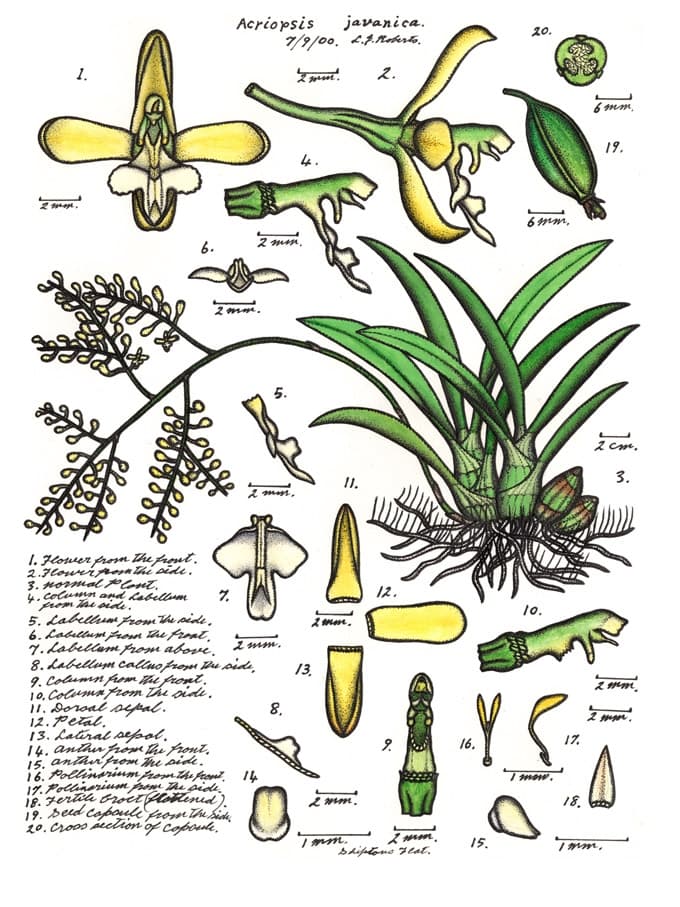
Acriopsis
Acriopsis, commonly known as chandelier orchids or 合萼兰属 (he e lan shu), is a genus of epiphytic herbs in the Orchidaceae family. Native to regions spanning India, Southeast Asia, New Guinea, and Australia, these orchids are distinguished by their many small, non-resupinate flowers with unique column projections and a grasshopper-like appearance.

Anoectochilus
Anoectochilus, commonly known as marbled jewel orchids or filigree orchids, is a genus of approximately fifty terrestrial orchid species found in moist, deeply shaded areas across the Himalayas, Southeast Asia, and the Pacific Islands. These orchids are distinctive for their dark leaves adorned with striking silvery or reddish veins and their relatively large, velvety flowers with a uniquely structured labellum.

Eria
Eria is a diverse genus of orchids comprising over 50 species. These orchids are predominantly found across Asia and Oceania, with their native habitats extending from China and the Himalayas to Southeast Asia and various Pacific islands. The genus is characterized by its broad distribution and the significant number of species that have been reclassified into other genera over time.