
Listrostachys
Listrostachys
Listrostachys is a genus of flowering plants in the orchid family, Orchidaceae, native to tropical Africa. Currently, only one species, Listrostachys pertusa, is recognized within the genus, which is distinctive for its botanical classification and its limited remaining species. The genus's range extends across West and Central Africa.
Key Facts
- ›Listrostachys is a genus within the Orchidaceae family.
- ›Currently, only Listrostachys pertusa is recognized as a species within this genus.
- ›The genus is native to tropical Africa, with a range from Sierra Leone to Congo-Kinshasa.
- ›Many species previously assigned to Listrostachys have since been reclassified into other genera.
- ›The genus's classification has undergone significant revision over time.

Tropical Africa, Sierra Leone, Congo-Kinshasa
About Listrostachys
Listrostachys is a genus of flowering plants belonging to the orchid family, Orchidaceae. The genus is native to tropical Africa, with its natural range extending from Sierra Leone in West Africa to Congo-Kinshasa in Central Africa. Historically, a number of orchid species were classified under the genus Listrostachys. However, significant taxonomic revisions have occurred over time, leading to the transfer of most of these species to other genera.
Current Classification
As of current botanical understanding, the genus Listrostachys is recognized as containing only one species: Listrostachys pertusa. This represents a considerable reduction from its earlier scope, reflecting ongoing research and re-evaluation of orchid phylogeny. The genus serves as an example of how taxonomic classifications can evolve based on new scientific data and analytical methods.
Source: Wikipedia ↗
Frequently Asked Questions
What is Listrostachys?
Listrostachys is a genus of flowering plants belonging to the orchid family, Orchidaceae. It is characterized by its botanical classification and its native habitat in tropical Africa. The genus has a history of taxonomic revision, with many species formerly included now placed in other groups.
Which species are currently recognized in the genus Listrostachys?
As of recent classifications, only one species is recognized within the genus Listrostachys. This species is known as Listrostachys pertusa. Other species that were once part of this genus have been transferred to different botanical classifications.
Where is Listrostachys native to?
Listrostachys is native to tropical Africa. Its natural distribution spans a broad region, extending from Sierra Leone in West Africa eastward to Congo-Kinshasa in Central Africa. This geographical range encompasses diverse tropical ecosystems.
Has the classification of Listrostachys species changed over time?
Yes, the classification of species within the Listrostachys genus has undergone significant changes. Historically, many species were placed under this genus, but most of them have since been transferred to other botanical groups. This taxonomic revision means that the current understanding of the genus is much more limited than in the past.
Related Orchid species

Corymborkis
Corymborkis is a genus of terrestrial orchids found across tropical regions worldwide. These evergreen plants are known for their leafy stems, pleated leaves, and widely-opening flowers, which are typically greenish-white and arranged in crowded clusters. The genus name itself reflects the characteristic bunched arrangement of their blooms.
Aerangis
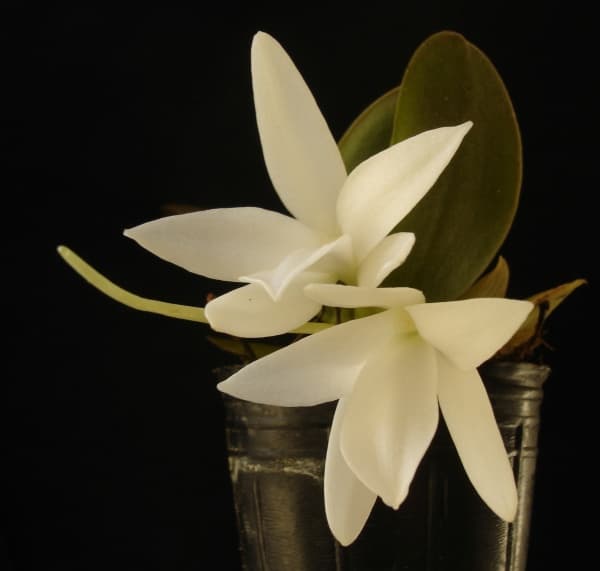
Aerangis is a genus of orchids within the Orchidaceae family, named from Greek words for "air" and "urn" due to the lip's shape. Native to tropical Africa, Madagascar, the Comoro Islands, and Sri Lanka, these orchids are distinguished by their large, waxy, star-shaped flowers, typically white, cream, or yellow, often featuring a long spur and a pleasant nocturnal fragrance.

Angraecum
Angraecum, commonly known as the comet orchid, is a diverse genus of orchids native to tropical and South Africa, Madagascar, and Sri Lanka. These plants are characterized by their fleshy leaves, adapted to dry tropical woodlands, and their distinctive flowers, often white with a long spur at the base of the lip, which can be up to 30 centimeters long in some species. This unique morphology has led to fascinating co-evolutionary relationships with specific pollinators, most famously the hawk moth with Angraecum sesquipedale.