
Asian barred owlet
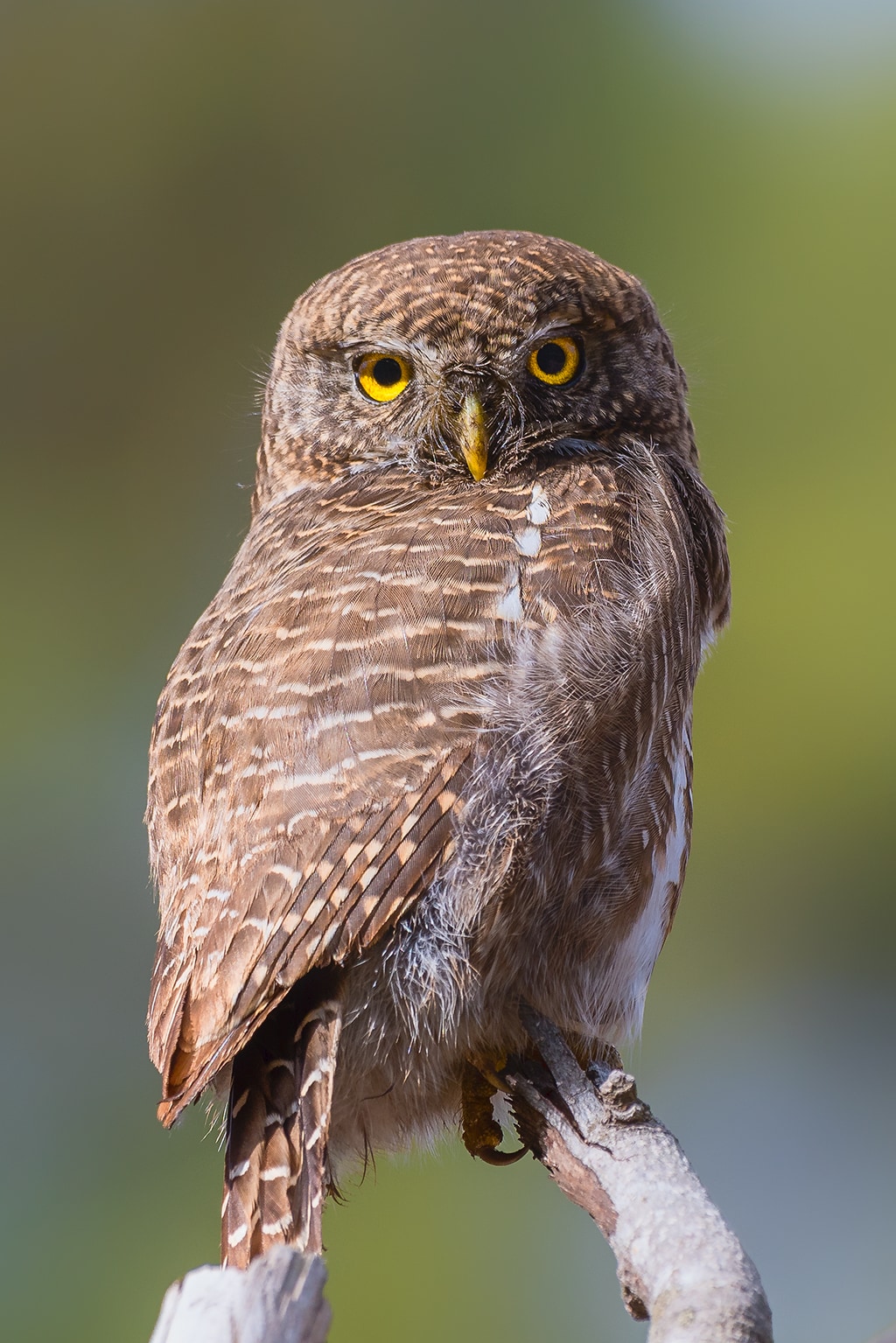
The Asian barred owlet (Glaucidium cuculoides), also known as the cuckoo owlet, is a small pygmy owl found in forests and shrublands across Southeast Asia and the Himalayan foothills. Distinctive for its densely barred plumage and lack of false eyes on its head, it is primarily diurnal and feeds on insects and small vertebrates.
Key Facts
- ›Measures 22–25 cm (8.7–9.8 in) in length, making it one of the larger pygmy owls.
- ›Primarily insectivorous, but also eats lizards, small rodents, and birds.
- ›Mainly diurnal, often perching on bare branches to hunt throughout the day.
- ›Has an undulating flight pattern consisting of rapid flaps followed by a pause.
- ›Breeds between January and February in Thailand, and March to June in other parts of its range.
- ›Lays a single clutch of 3 to 5 rounded, white eggs per year.
Cuckoo Owlet
Forests, Shrublands, Pine Forests, Oak Forests, Subtropical Evergreen Jungles, Tropical Evergreen Jungles, Secondary Forests, Gardens, Parks
Southeast Asia, Himalayan Foothills, Pakistan, China, Bhutan, Myanmar, Laos, Vietnam, Thailand, Nepal, Bangladesh, India
Insects, Beetles, Grasshoppers, Cicadas, Lizards, Small Rodents, Mice, Small Birds
About Asian barred owlet
The Asian barred owlet (Glaucidium cuculoides), also referred to as the cuckoo owlet, is a species of pygmy owl native to the forests and shrublands of mainland Southeast Asia and extending to the foothills of the Himalayas in northern Pakistan. This owl is relatively small, measuring between 22 and 25 cm (8.7–9.8 inches) in length, positioning it among the larger pygmy owl species.
Description and Appearance
Adult Asian barred owlets are characterized by their dark brown or olive-brown plumage, which is densely barred. They possess a distinctive white throat patch. The breast and belly are whitish, marked with dark brown bars, while their tail and wings also feature dark brown with whitish barring. Notably, unlike many other pygmy owl species, they do not have false eyes on the back of their heads. Juvenile birds present a streaked breast rather than barring, and their heads are a more ruddy brown color. Females typically exhibit a larger size than males.
Habitat and Distribution
This species is commonly found in various woodland environments, including pine and oak forests, and subtropical and tropical evergreen jungles at lower elevations. They inhabit foothills and submontane regions, with recorded sightings up to 2,100 meters (6,900 ft) in elevation, and even as high as 2,700 meters (8,900 ft) in the Himalayas. The Asian barred owlet also sometimes adapts to more developed areas, appearing in gardens and parks, and has shown a preference for secondary forests over primary ones in certain parts of its range.
Their geographic distribution is widespread across mainland Southeast Asia, encompassing countries such as China, Bhutan, Myanmar, Laos, Vietnam, Thailand, Nepal, Bangladesh, northeast India, and extending into Pakistan along the Himalayan foothills.
Behavior and Diet
The Asian barred owlet is primarily diurnal, meaning it is most active during the day. It often perches on bare branches to hunt, and due to its daytime activity, it can frequently be mobbed by smaller birds, against which it typically remains still. Their flight pattern is described as undulating, involving a series of rapid flaps followed by a pause with closed wings.
Their diet is mainly composed of insects like beetles, grasshoppers, and cicadas. They also consume lizards, small rodents such as mice, and small birds. They have been observed catching prey, including common quail, in mid-air.
Vocalizations
The vocalizations of the Asian barred owlet include a distinctive male song that is a trill lasting between 5 and 20 seconds, progressively increasing in loudness and harshness before abruptly ceasing. They also produce a common call that is a smooth "hoot." These owls are most vocal at dawn and for a few hours after sunrise, though they can vocalize at any time of day.
Reproduction and Life Cycle
The breeding season for Asian barred owlets generally occurs from January to February in Thailand and from March to June in other regions. They nest in unlined tree cavities, often utilizing old nests of woodpeckers and barbets, or even the cavities of other owl species. In some instances, they have been known to kill woodpeckers or barbets to secure nest holes. Ground nests have also been recorded, possibly due to a scarcity of suitable tree cavities. A breeding pair typically lays a single clutch of 3 to 5 rounded, white eggs per year. Both parents care for the young, bringing them food at the nest. Chicks fledge as early as April in Thailand and typically by early July in most of their range.
Conservation and Human Interaction
In some areas of their range, owls, including the Asian barred owlet, are perceived negatively, considered symbols of bad news, leading some people to attempt to eradicate them through shooting, egg collection, or pesticide use. This prejudice, combined with threats from habitat destruction due to urbanization and deforestation, exacerbates the risks faced by the species and can hinder local conservation efforts.
Source: Wikipedia ↗
Frequently Asked Questions
What is the scientific name for the Asian barred owlet?
The scientific name for the Asian barred owlet is Glaucidium cuculoides. It was first described in 1831 as Noctua cuculoides before being reclassified into the genus Glaucidium. The name Taenioglaux cuculoides has also been used synonymously.
What does the Asian barred owlet eat?
The diet of the Asian barred owlet primarily consists of insects such as beetles, grasshoppers, and cicadas. They also supplement their diet with lizards, small rodents like mice, and small birds. They are known to hunt from a perch and catch birds in mid-air.
Where does the Asian barred owlet live?
Asian barred owlets are found in woodland habitats across mainland Southeast Asia and the foothills of the Himalayas, extending into northern Pakistan. Their preferred habitats include forests of pine and oak, subtropical and tropical evergreen jungles at lower elevations, and submontane regions up to 2,100 meters.
What are the distinctive physical characteristics of the Asian barred owlet?
The Asian barred owlet is a small owl, typically 22–25 cm long, with dark brown or olive-brown plumage that is densely barred. It features a white throat patch, and its breast and belly are whitish with dark brown barring. Unlike many other pygmy owl species, it lacks false eyes on the back of its head. Juveniles have a streaked breast and a more ruddy brown head.
When is the breeding season for the Asian barred owlet?
The breeding season for the Asian barred owlet varies by region. In Thailand, it typically occurs from January to February, while in other parts of their range, it extends from March to June. They lay a single clutch of 3 to 5 eggs annually.
Do Asian barred owlets migrate?
Asian barred owlets are resident birds and do not undertake long-distance migrations. They do, however, make local movements, often shifting to lower elevations during the non-breeding season.
What are the vocalizations of the Asian barred owlet?
The male Asian barred owlet has a distinctive song that is a trill lasting 5–20 seconds, with progressively louder and harsher notes. They also produce a common call described as a smooth "hoot." These owls are most vocal at dawn and for a few hours after sunrise but can vocalize at any time of day.
Related Owl species

African barred owlet
The African barred owlet is a small owl species found across southern, central, and eastern Africa. It inhabits open woodlands and gallery forests, and is notable for being partly diurnal, often seen hunting during daylight hours. Its call is a distinctive purring sound, and it feeds on a variety of small prey.
Amazonian pygmy owl
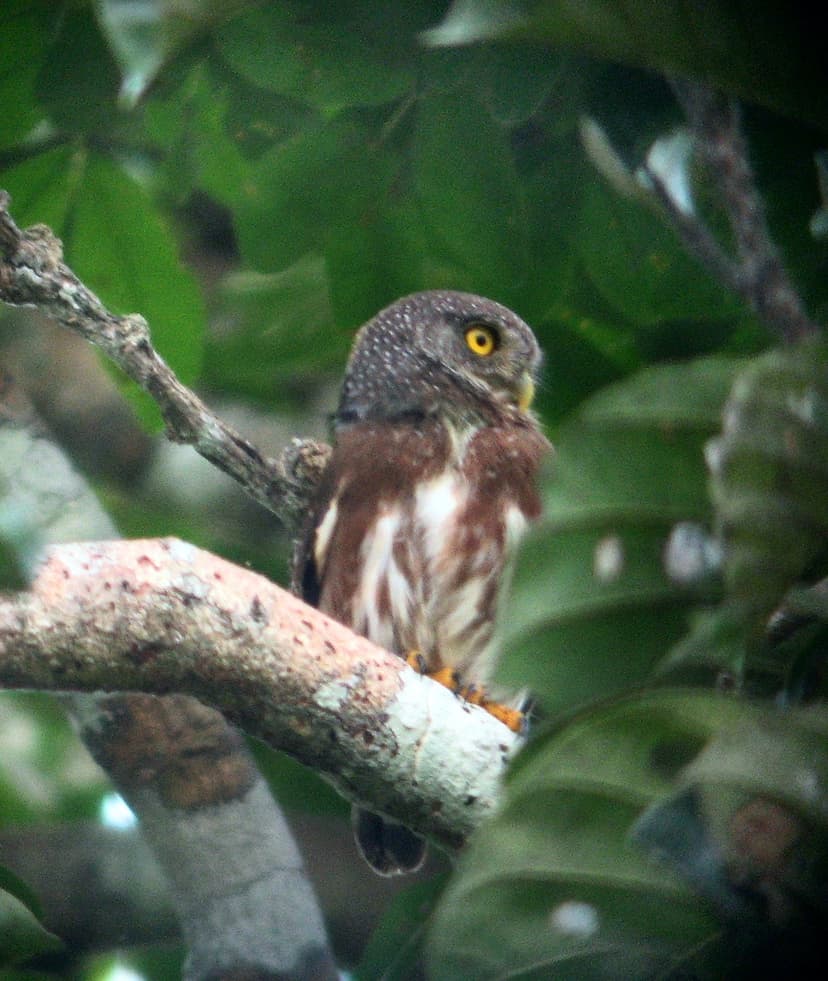
The Amazonian pygmy owl (Glaucidium hardyi), also known as Hardy's pygmy owl, is a small owl species native to the Amazon Basin and northern South America. It is characterized by its large, round head with false eyespots, diurnal habits, and a diet likely consisting of arthropods and small vertebrates. Its conservation status is listed as Least Concern by the IUCN, despite evidence of a decreasing population.

Central American pygmy owl
The Central American pygmy owl (Glaucidium griseiceps) is a small owl species native to the humid tropical forests and secondary growth areas of Central America and northwestern Colombia. It is distinguished by its small size, spotted crown, and the presence of dark "false eyes" on its nape, which are thought to deter predators. This owl is known to hunt both during the day and at night.