
Chestnut-backed owlet
The chestnut-backed owlet is a small, stocky owl endemic to Sri Lanka, distinguished by its chestnut brown upperparts and white underparts with blackish streaks. It is a common resident of the wet zone forests, often found on steep hillsides, and is known for its diurnal activity and distinctive slow "kraw-kraw" call.
Key Facts
- ›Endemic to Sri Lanka, found primarily in wet zone forests.
- ›Small and stocky, measuring approximately 19 cm in length.
- ›Upperparts are mainly chestnut brown with darker barring; underparts are white with blackish streaks.
- ›Diurnal, meaning it is active during the day, especially in the evenings.
- ›Feeds on insects, small lizards, mice, and occasionally small birds.
- ›Known by the Sinhala name Pitathabala Vana-Bassa.

Pitathabala Vana-Bassa
Wet Zone Forests, Hillsides, Low Country Forests
Sri Lanka
Insects, Beetles, Mice, Small Lizards, Small Birds
About Chestnut-backed owlet
The chestnut-backed owlet (Glaucidium castanotum) is a small owl species endemic to the island of Sri Lanka. It belongs to the family Strigidae, which encompasses most of the world's typical owl species. Formerly, it was considered a subspecies of the jungle owlet.
Description and Appearance
This owlet is characterized by its small, stocky build, measuring around 19 cm in length. Its plumage features chestnut brown upperparts, including the scapulars and wing coverts, which are marked with darker barring. The underside is white, distinguished by blackish shaft-streaks. The facial disc is predominantly brown, complemented by yellow eyes. A notable feature is the white neckband. Both male and female chestnut-backed owlets share a similar appearance, with no observable sexual dimorphism.
Distribution and Habitat
The chestnut-backed owlet is a common resident within the wet zone forests of Sri Lanka. It can be readily observed in areas such as Kitulgala and the Sinharaja Forest Reserve. Historical records indicate its presence across many parts of southern Sri Lanka, particularly in hilly and wet-zone lowlands extending towards the outskirts of Colombo. In contemporary times, its range has contracted significantly, and it is now found sparingly in the remaining forests of the wet zone and adjacent hills, inhabiting altitudes up to 2,000 meters (6,500 ft) above sea level.
Behavior and Diet
This species is diurnal, meaning it is active during daylight hours, with frequent sightings occurring in the early evening. Its flight pattern is notably undulating. Small birds often betray its presence by mobbing it when it perches in a tree. The chestnut-backed owlet typically frequents the upper branches of tall trees, often situated on steep hillsides, which can make it challenging to spot. Its diet primarily consists of insects, such as beetles, but it also preys on mice, small lizards, and small birds, especially when raising young. Its call is a slow "kraw-kraw" that carries over long distances.
Cultural Significance
In Sri Lanka, the chestnut-backed owlet is known by the Sinhala name Pitathabala Vana-Bassa (පිටතඔල වන බස්සා).
Source: Wikipedia ↗
Frequently Asked Questions
What does the chestnut-backed owlet look like?
The chestnut-backed owlet is a small, stocky bird measuring about 19 cm in length. It has chestnut brown upperparts with darker barring and white underparts marked with blackish streaks. Its facial disc is brown, its eyes are yellow, and it possesses a distinctive white neckband. Males and females appear similar.
Where can the chestnut-backed owlet be found?
This owl species is endemic to Sri Lanka and is a common resident in the wet zone forests. Historically, its range covered much of the southern half of the island, including hills and lowlands near Colombo. Currently, it is found more sparingly in remaining wet zone forests and adjoining hills up to altitudes of 2,000 meters.
What does the chestnut-backed owlet eat?
The chestnut-backed owlet's diet primarily consists of insects, such as beetles. It also captures small prey items including mice, small lizards, and occasionally small birds, particularly when it is feeding its young.
What sounds does the chestnut-backed owlet make?
The chestnut-backed owlet has a distinctive call described as a slow "kraw-kraw." This vocalization is known to carry for a long distance.
When is the chestnut-backed owlet active?
This species is diurnal, meaning it is active during the day. It is frequently seen in daylight, with activity often noted particularly in the evening.
How does the chestnut-backed owlet nest?
The chestnut-backed owlet nests in a hole found within a tree. Typically, the female lays two eggs in these tree hollows.
Related Owl species

African barred owlet
The African barred owlet is a small owl species found across southern, central, and eastern Africa. It inhabits open woodlands and gallery forests, and is notable for being partly diurnal, often seen hunting during daylight hours. Its call is a distinctive purring sound, and it feeds on a variety of small prey.
Amazonian pygmy owl
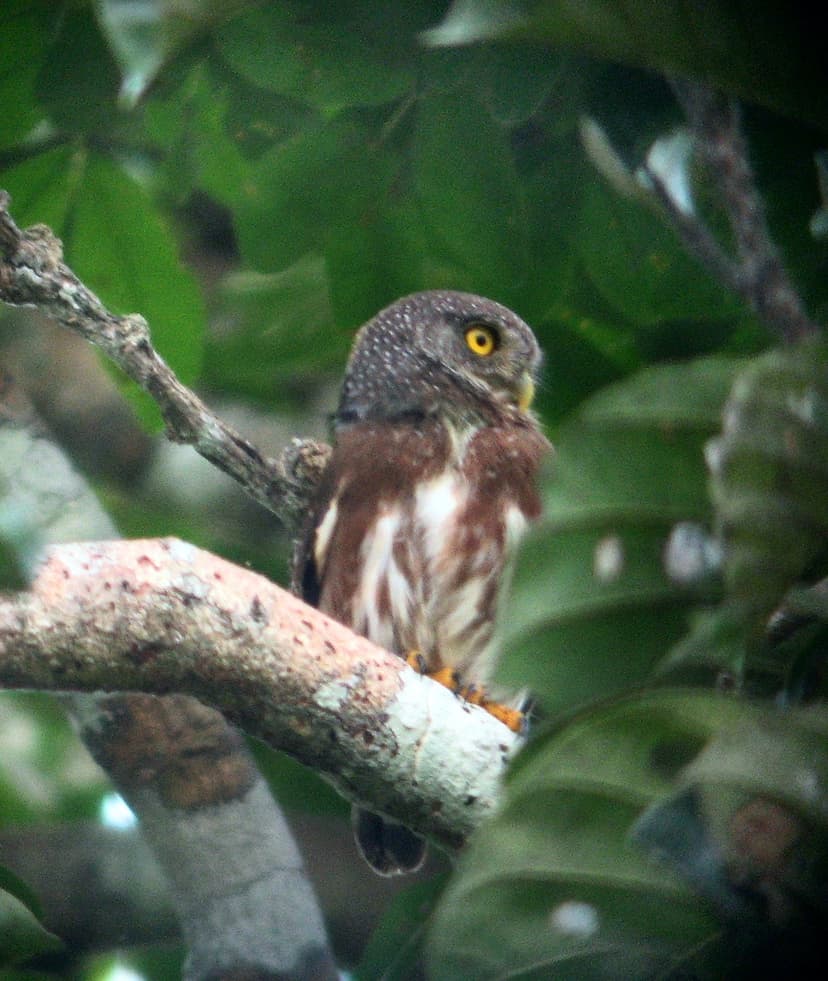
The Amazonian pygmy owl (Glaucidium hardyi), also known as Hardy's pygmy owl, is a small owl species native to the Amazon Basin and northern South America. It is characterized by its large, round head with false eyespots, diurnal habits, and a diet likely consisting of arthropods and small vertebrates. Its conservation status is listed as Least Concern by the IUCN, despite evidence of a decreasing population.
Asian barred owlet
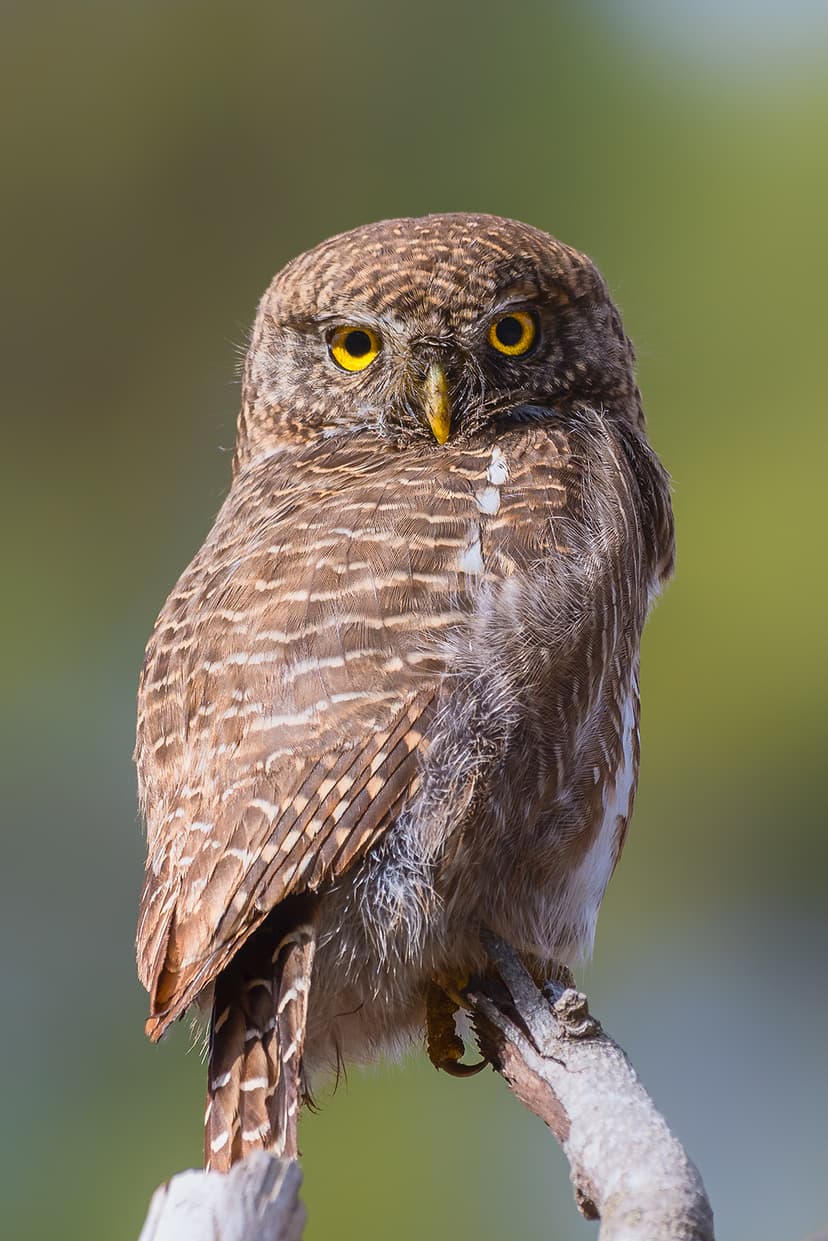
The Asian barred owlet (Glaucidium cuculoides), also known as the cuckoo owlet, is a small pygmy owl found in forests and shrublands across Southeast Asia and the Himalayan foothills. Distinctive for its densely barred plumage and lack of false eyes on its head, it is primarily diurnal and feeds on insects and small vertebrates.