
Cloud-forest pygmy owl
The Cloud-forest pygmy owl, scientifically known as Glaucidium nubicola, is a small owl species found in the cloud forests of western Colombia and northwestern Ecuador. It is distinguished by its dark brown plumage, a rounded head without ear tufts, and distinctive "false eyespots" on its nape that likely deter predators.
Key Facts
- ›Inhabits cloud forests between 900-2000 meters above sea level in the Andes.
- ›Distinctive "false eyespots" on its nape resemble larger eyes to confuse predators.
- ›Primarily diurnal or crepuscular, hunting insects, small birds, and reptiles.
- ›Breeds between February and June, with chicks fledging when young birds are abundant.
- ›Classified as Vulnerable globally due to rapid population decline and habitat loss.
- ›Its scientific name, nubicola, means "cloud-inhabiting" in Latin.

Cloudforest Pygmy Owl
Cloud Forests, Primary Forests, Altered Habitats
Colombia, Ecuador
Insects, Small Birds, Lizards, Grasshoppers, Crickets, Cicadas, Bugs
About Cloud-forest pygmy owl
The Cloud-forest pygmy owl (Glaucidium nubicola) is a small owl species native to the humid cloud forests of the Andes in western Colombia and northwestern Ecuador. Its scientific name, nubicola, directly translates to "cloud-inhabiting," reflecting its specialized habitat.
Description and Distinguishing Features
This owl is characterized by its compact build, measuring between 14.5 to 16 cm in length with a wingspan of approximately 93 cm. Its plumage is predominantly dark brown, often with a rufous hue, and features a blackish tail marked with incomplete white bands. A key distinguishing feature is the presence of "false eyespots" on its nape – two dark feather patches edged in white that mimic the appearance of larger eyes. These are common among diurnal and crepuscular owls in the Glaucidium genus and are believed to help confuse predators and mobbing birds.
Habitat and Distribution
The Cloud-forest pygmy owl is confined to cloud forests situated between 900 and 2000 meters above sea level. Its range extends from Risaralda in Colombia southward to northern Cotopaxi in Ecuador, with a notable isolated population in southwestern El Oro, Ecuador. It can be found in primary or slightly altered forests, though its habitat is often difficult to access and prone to fragmentation.
Behavior and Ecology
In line with other pygmy owls, the Cloud-forest pygmy owl is primarily diurnal and crepuscular, meaning it is active during the day and twilight hours. It is an ambush predator, employing a "sit-and-wait" hunting strategy from a perch before pouncing on its prey. Its diet includes a variety of insects like grasshoppers and crickets, as well as small vertebrates such as birds and lizards. The species is known to vocalize with simple, hollow whistles.
Breeding and Lifespan
The breeding season typically occurs between February and June, a period that coincides with the abundance of young birds (fledglings), providing a plentiful food source for the owlets. Nests are usually made in tree cavities or old woodpecker holes. Observations have indicated that the species can live for at least five years in the wild.
Conservation Status
The Cloud-forest pygmy owl is currently classified as Vulnerable on the IUCN Red List. This status is attributed to a suspected rapid decline in its population, driven by severe deforestation and habitat loss within its limited range. Threats include timber extraction, agricultural expansion, and mining, which have significantly reduced its available habitat. Efforts to protect this species are challenged by the fact that it does not appear to benefit significantly from existing protected areas.
Source: Wikipedia ↗
Frequently Asked Questions
What is the scientific name of the Cloud-forest pygmy owl?
The scientific name of the Cloud-forest pygmy owl is Glaucidium nubicola. This name reflects its habitat, with 'nubicola' meaning "cloud-inhabiting" in Latin.
Where is the Cloud-forest pygmy owl found?
This owl species is endemic to the Andean region of western Colombia and northwestern Ecuador. Its range is specifically confined to the humid cloud forests within a particular altitudinal range.
What makes the Cloud-forest pygmy owl distinctive?
It is characterized by its dark brown plumage, a rounded head lacking ear tufts, and noticeable "false eyespots" on its nape. These "eyespots" are thought to serve as a defense mechanism against predators.
What does the Cloud-forest pygmy owl eat?
Its diet primarily consists of insects such as grasshoppers, crickets, and bugs. It also preys on small vertebrates, including birds and lizards.
Why is the Cloud-forest pygmy owl considered vulnerable?
The species is classified as Vulnerable due to a suspected rapid population decline, largely caused by severe ongoing deforestation within its naturally small distribution range. Logging and agricultural expansion are significant threats.
When does the Cloud-forest pygmy owl breed?
The breeding season for the Cloud-forest pygmy owl is principally between February and June. This timing allows young owls to fledge when there is an abundance of prey, such as young birds.
Related Owl species
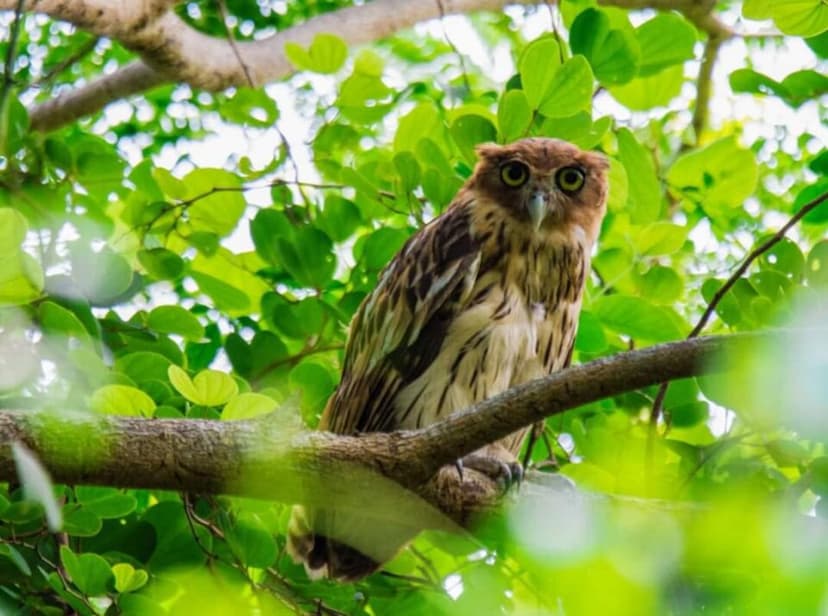
Philippine eagle-owl
The Philippine eagle-owl (Ketupa philippensis) is a vulnerable species of owl endemic to the Philippines. While it is the largest owl in its home country, it is relatively small for its genus, characterized by its rufous plumage, lighter belly, and yellow eyes. Its population is declining due to habitat destruction, hunting, and poaching.
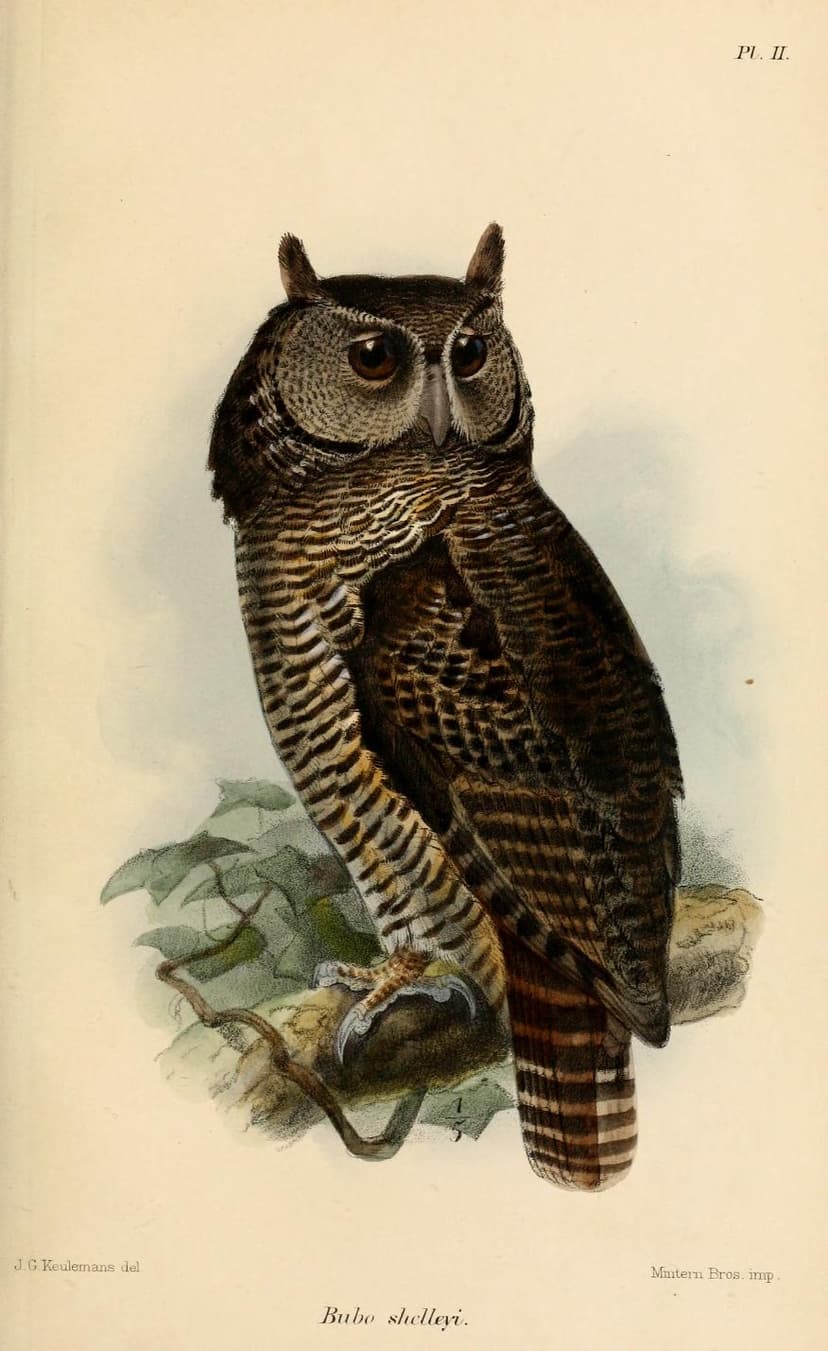
Shelley's eagle-owl
Shelley's eagle-owl is a large, rarely studied owl species found in the tropical rainforests of Central and Western Africa. It is distinguished by its dark plumage, massive bill, and powerful talons, suggesting a diet of medium-sized mammals and large birds. Despite its size, it is a very little-known species, with its first wild photograph taken in 2021.

African barred owlet
The African barred owlet is a small owl species found across southern, central, and eastern Africa. It inhabits open woodlands and gallery forests, and is notable for being partly diurnal, often seen hunting during daylight hours. Its call is a distinctive purring sound, and it feeds on a variety of small prey.