
Shelley's eagle-owl
Shelley's eagle-owl is a large, rarely studied owl species found in the tropical rainforests of Central and Western Africa. It is distinguished by its dark plumage, massive bill, and powerful talons, suggesting a diet of medium-sized mammals and large birds. Despite its size, it is a very little-known species, with its first wild photograph taken in 2021.
Key Facts
- ›It is one of the largest owls in the world and the largest eagle-owl in African rainforests.
- ›Its upperparts are dark sooty black-brown with light barring, and underparts are whitish with heavy dark barring.
- ›It is a resident of lowland, tropical rainforests and is never found outside dense, old-growth areas.
- ›The species is nocturnal, roosting in dense foliage during the day.
- ›Its diet likely consists of medium-sized mammals and large birds, with rodents being a primary food source in captivity.
- ›Shelley's eagle-owl was uplisted to Vulnerable by the IUCN in 2018 due to habitat loss and low population densities.
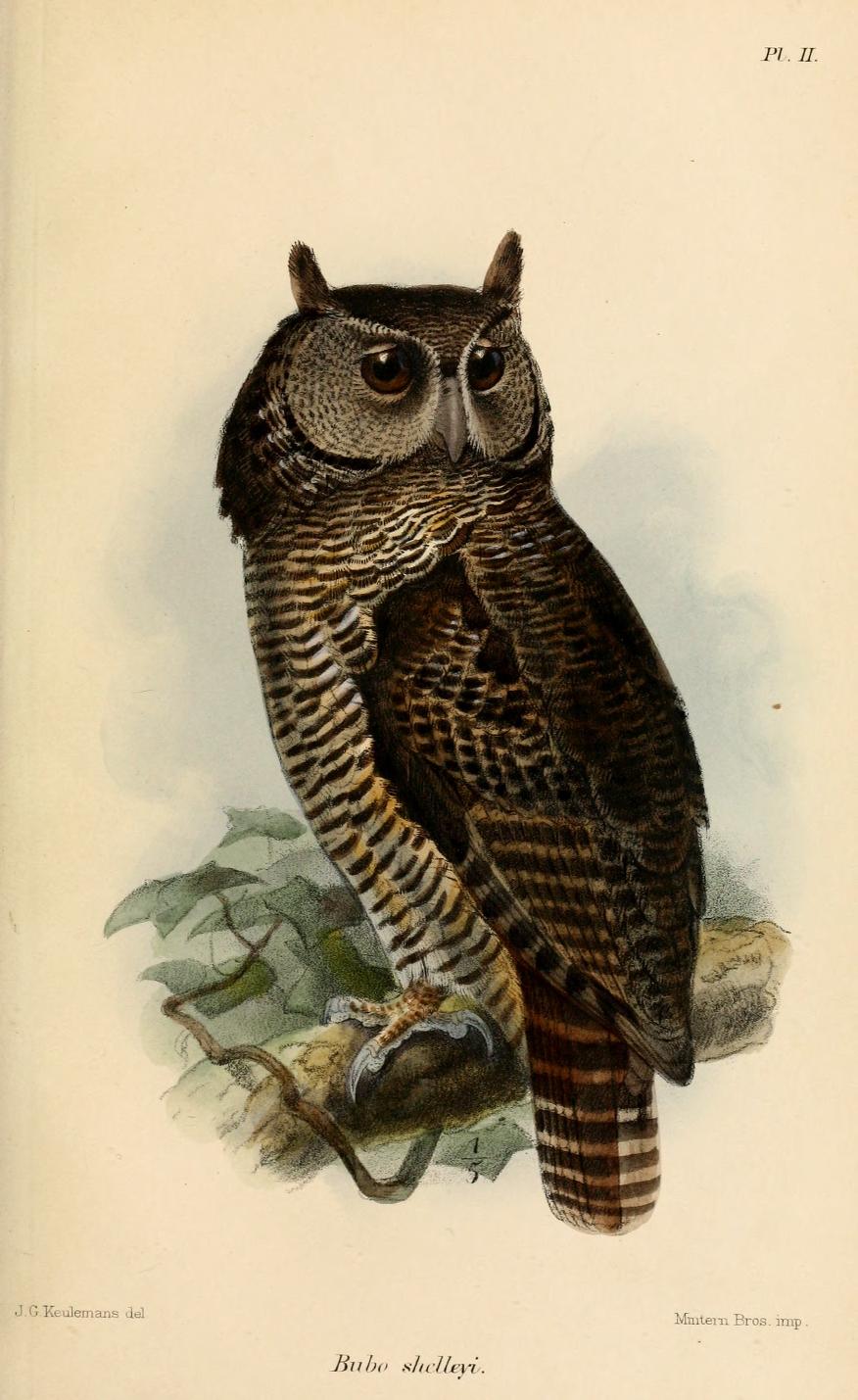
Shelley's Fish Owl
Lowland Tropical Rainforests, Densely Forested Areas, Old Growth Areas
Central Africa, Western Africa
Medium-Sized Mammals, Large Birds, Rodents, Flying Squirrels
About Shelley's eagle-owl
Shelley's Eagle-Owl: An Elusive Rainforest Resident
Shelley's eagle-owl (Ketupa shelleyi), also known as Shelley's fish owl, is a remarkably large and exceptionally rare species of owl that inhabits the dense lowland tropical rainforests of Central and Western Africa. Despite its impressive size, it is one of the least understood owls globally, with very few specimens collected and even fewer observed in the wild. Its first confirmed photograph in its natural habitat was only captured in October 2021, highlighting its elusive nature.
Physical Characteristics and Identification
Among the largest owls in the world, Shelley's eagle-owl is the most substantial eagle-owl species found within African rainforests. Adults typically measure between 53 to 61 cm (21 to 24 inches) in length. They exhibit a dark, sooty black-brown coloration on their upperparts, distinguished by light barring, while their underparts are whitish with heavy dark barring. The species presents with lighter and darker morphs. Key distinguishing features include a massive bill, proportionally larger than most other owls, and heavily feathered feet and toes. Its plumage patterns, particularly the heavy barring, set it apart from other large African eagle-owls like the Akun and Fraser's eagle-owls, which are smaller and have different toe feathering and eye coloration. The similarly sized Verreaux's eagle-owl, while paler and greyer, is generally found in different habitats and has conspicuous pink eyelids.
Distribution and Habitat
Shelley's eagle-owl is found in widely scattered populations across Central and Western Africa, often in areas isolated by habitat fragmentation. These include parts of Ghana, Liberia, Sierra Leone, Ivory Coast, Guinea, Cameroon, Nigeria, Equatorial Guinea, Gabon, the Republic of the Congo, and the Democratic Republic of the Congo, with possible extensions into Uganda. The species is strictly a resident of lowland, tropical rainforests and has never been recorded outside of dense, old-growth forest environments.
Behavior and Ecology
This species is primarily nocturnal, spending daylight hours roosting in dense foliage, sometimes at relatively low levels in trees. Observations suggest they vocalize most persistently at dawn and dusk. Their typical call is a distinctive loud, wailing 'kooouw,' which is notably higher pitched than the calls of other large eagle-owls. While details of their breeding habits are scarce, fledged young have been observed in April, and nestlings in September, indicating breeding activity across different months. The powerful talons suggest their diet consists of medium-sized mammals and large birds; a confirmed prey item was a large flying squirrel, and rodents are a staple in captivity.
Conservation Status
Shelley's eagle-owl is considered Vulnerable by the IUCN. This designation is due to its extreme rarity, very low population densities, and the significant threat posed by ongoing habitat destruction within its rainforest range. The extensive clearcutting in regions like the Guinean Forests of West Africa and the Congolian rainforests severely compromises the owl's survival prospects. Further research into its life history is urgently needed to better understand and protect this elusive species.
Source: Wikipedia ↗
Frequently Asked Questions
What makes Shelley's eagle-owl distinctive?
Shelley's eagle-owl is notable for its large size, dark, heavily barred plumage, and a proportionally massive bill, which is second only to the Blakiston's fish owl among living owls. It is also exceptionally rare and poorly studied, making sightings and photographic evidence scarce.
Where is Shelley's eagle-owl found?
This species inhabits the lowland tropical rainforests of Central and Western Africa. Its range includes scattered locations in countries such as Ghana, Liberia, Sierra Leone, Ivory Coast, Guinea, Cameroon, Nigeria, Equatorial Guinea, Gabon, the Republic of the Congo, and the Democratic Republic of the Congo, potentially reaching Uganda.
What does Shelley's eagle-owl eat?
Based on its powerful talons, its preferred prey is believed to be medium-sized mammals and large birds. A confirmed wild prey item was a large, unidentified flying squirrel. In captivity, they primarily consume rodents.
What is the conservation status of Shelley's eagle-owl?
Shelley's eagle-owl is classified as Vulnerable by the IUCN. This status reflects its scarcity, low population densities, and significant threats from habitat destruction within its rainforest habitat.
When was Shelley's eagle-owl first photographed in the wild?
The first photograph of Shelley's eagle-owl in the wild was taken on October 16, 2021. This occurred in the Atewa Range Forest Reserve in southeastern Ghana, marking a significant moment for the study of this elusive species.
What are the vocalizations of Shelley's eagle-owl?
The typical call of Shelley's eagle-owl is a loud, wailing 'kooouw,' which is higher-pitched than the calls of other large eagle-owls. They are known to vocalize most persistently around dawn and dusk.
Related Owl species
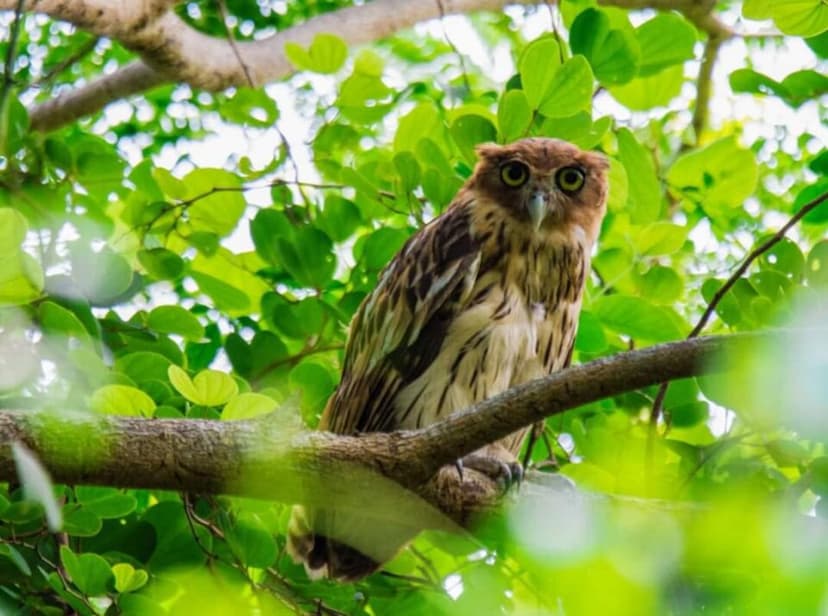
Philippine eagle-owl
The Philippine eagle-owl (Ketupa philippensis) is a vulnerable species of owl endemic to the Philippines. While it is the largest owl in its home country, it is relatively small for its genus, characterized by its rufous plumage, lighter belly, and yellow eyes. Its population is declining due to habitat destruction, hunting, and poaching.

Cloud-forest pygmy owl
The Cloud-forest pygmy owl, scientifically known as Glaucidium nubicola, is a small owl species found in the cloud forests of western Colombia and northwestern Ecuador. It is distinguished by its dark brown plumage, a rounded head without ear tufts, and distinctive "false eyespots" on its nape that likely deter predators.
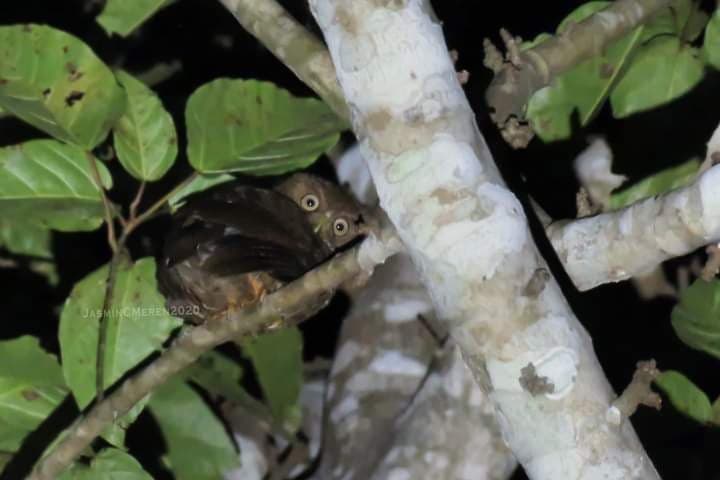
Camiguin boobook
The Camiguin boobook (Ninox leventisi), also known by its native name kugkug, is an owl species endemic to Camiguin island in the Philippines. It is distinguished by its unique greenish-yellow or grayish eyes, a trait not found in its closely related species. This species was reclassified from a subspecies of the Philippine hawk-owl in 2012 based on vocal and other evidence indicating its distinctiveness.