
Philippine eagle-owl
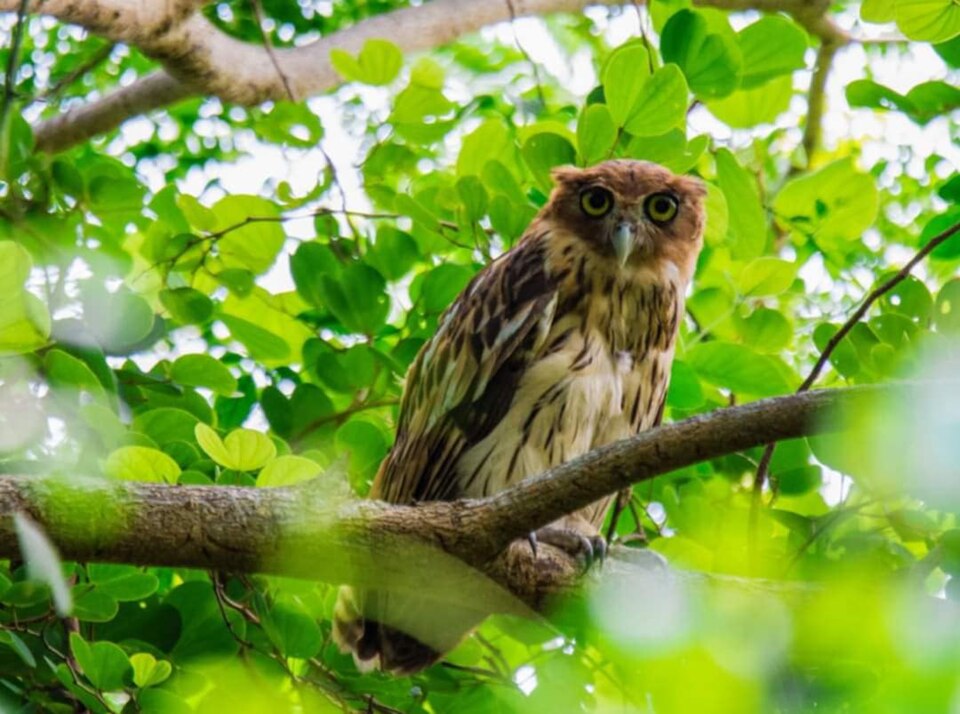
The Philippine eagle-owl (Ketupa philippensis) is a vulnerable species of owl endemic to the Philippines. While it is the largest owl in its home country, it is relatively small for its genus, characterized by its rufous plumage, lighter belly, and yellow eyes. Its population is declining due to habitat destruction, hunting, and poaching.
Key Facts
- ›The largest owl species found in the Philippines.
- ›Possesses a rufous coloration with a lighter belly and striking yellow eyes.
- ›Inhabits forest edges, often near streams, and rests in trees during the day.
- ›Feeds on small vertebrates, likely including small mammals and birds.
- ›Lays a single egg per clutch with an incubation period of approximately 35 days.
- ›Classified as a vulnerable species by the IUCN, facing threats from habitat loss and illegal trade.
Philippine Eagle-Owl
Forest Edges, Lowland Forests, Near Streams
Philippines
Small Vertebrates, Small Mammals, Birds
About Philippine eagle-owl
The Philippine eagle-owl (Ketupa philippensis), also known by its original binomial name Pseudoptynx philippensi, is a vulnerable species of owl endemic to the Philippines. It holds the distinction of being the largest owl found within its native country, though it is relatively small when compared to other members of its genus, Ketupa. The species is characterized by its rufous plumage, a lighter-colored belly, and distinctive yellow eyes. Its population is experiencing a decline, primarily due to significant threats such as habitat destruction from illegal logging, land conversion, and mining, as well as hunting and poaching for the pet trade.
Description and Habitat
Physically, the Philippine eagle-owl exhibits a warm brown coloring marked with numerous patterns on its back, and it possesses tufted ears, giving it a resemblance to the buffy fish-owl. Females of the species are generally larger than males. Its wingspan measures approximately 48 inches, with a total length ranging from 40 to 50 cm. This owl typically inhabits forest edges, frequently found in proximity to streams. During daylight hours, it rests within trees, becoming active to hunt at dusk.
Taxonomy and Distribution
The species was formally described in 1851 by German naturalist Johann Jakob Kaup. It is currently classified within the genus Ketupa. Two subspecies are recognized: K. p. philippensis, found in Luzon and Catanduanes in the northern Philippines, and K. p. mindanensis, which inhabits Mindanao, Leyte, Samar, and Bohol in the southern Philippines. Recent records indicate a presence in Luzon, with sparse sightings in Mindanao and a single unexpected record in Bohol.
Behavior and Conservation
Information regarding the behavior of this secretive species is limited. However, its powerful feet suggest a diet consisting of small mammals and birds. The Philippine eagle-owl lays a single egg per clutch, with an incubation period lasting about 35 days. Chicks require intensive parental care after hatching, relying on parental body heat for thermoregulation and being fed by their parents until they can fly and hunt independently. Hunting this owl is illegal in the Philippines, but enforcement remains a challenge. Conservation efforts include protection in areas like Northern Sierra Madre Natural Park and the development of captive breeding programs, with the first successful captive hatching occurring in 2005. Despite these efforts, the species remains vulnerable due to ongoing habitat loss and illegal trade.
Source: Wikipedia ↗
Frequently Asked Questions
What is the scientific name of the Philippine eagle-owl?
The scientific name of the Philippine eagle-owl is Ketupa philippensis. It was originally described by Johann Jakob Kaup in 1851 under the binomial name Pseudoptynx philippensi before being placed in the genus Ketupa.
What are the physical characteristics of the Philippine eagle-owl?
The Philippine eagle-owl has a rufous overall coloration with a lighter belly and yellow eyes. It has a warm brown back with many markings and tufted ears, closely resembling the buffy fish-owl. Females are typically larger than males.
Where does the Philippine eagle-owl live?
This owl is endemic to the Philippines, found in lowland forests on islands such as Catanduanes, Samar, Bohol, Mindanao, Luzon, and Leyte. It prefers forest edges near streams.
What is the conservation status of the Philippine eagle-owl?
The Philippine eagle-owl is listed as a vulnerable species by the International Union for Conservation of Nature (IUCN). Its population is estimated to be between 2,500 and 10,000 mature adults and is currently declining.
What does the Philippine eagle-owl eat?
The Philippine eagle-owl hunts at dusk and feeds on small vertebrates. Its powerful feet suggest a diet that includes small mammals and birds.
What are the main threats to the Philippine eagle-owl?
The primary threats to the Philippine eagle-owl are habitat destruction, largely due to illegal logging, land conversion, and mining. It is also threatened by hunting and poaching for the pet trade, and sometimes persecuted due to superstitions.
Related Owl species
Shelley's eagle-owl
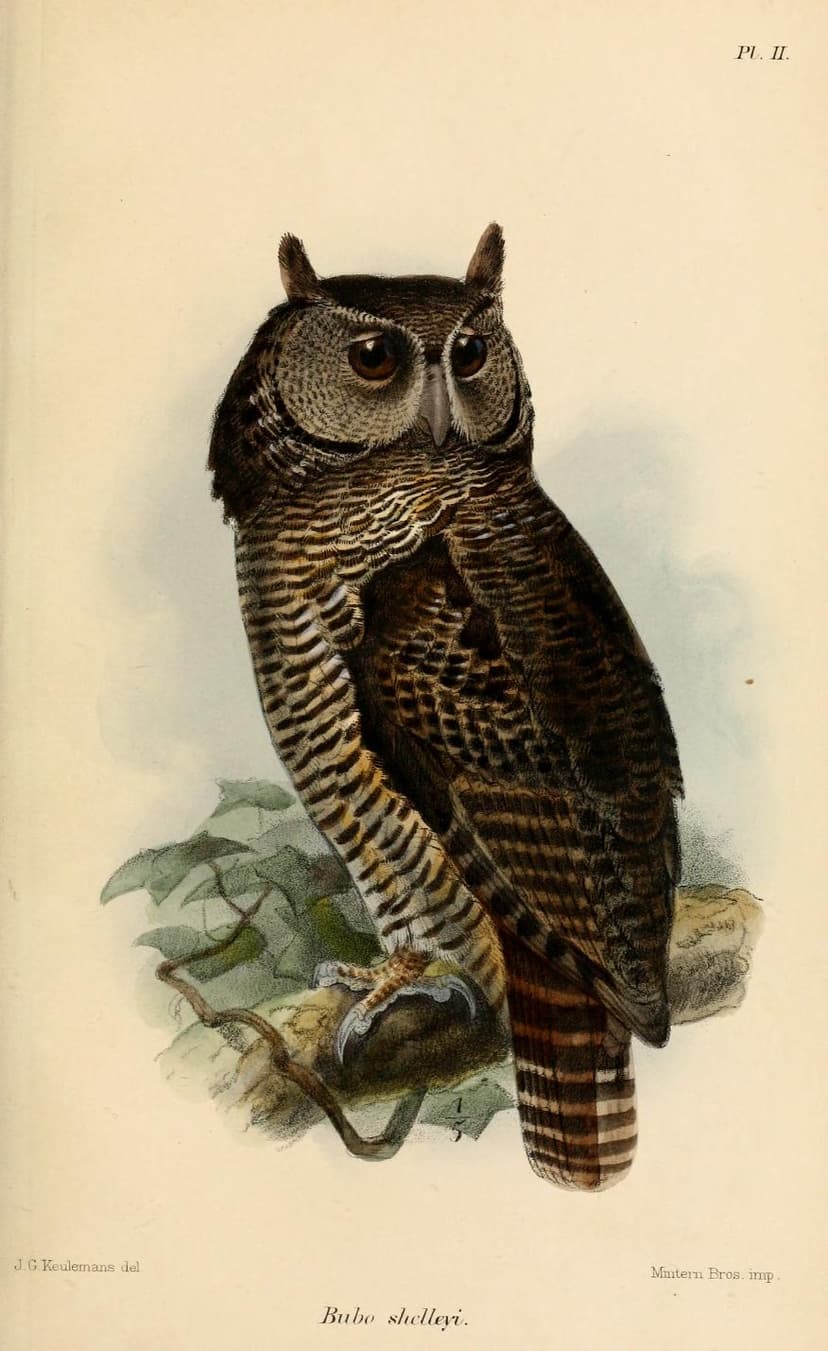
Shelley's eagle-owl is a large, rarely studied owl species found in the tropical rainforests of Central and Western Africa. It is distinguished by its dark plumage, massive bill, and powerful talons, suggesting a diet of medium-sized mammals and large birds. Despite its size, it is a very little-known species, with its first wild photograph taken in 2021.

Cloud-forest pygmy owl
The Cloud-forest pygmy owl, scientifically known as Glaucidium nubicola, is a small owl species found in the cloud forests of western Colombia and northwestern Ecuador. It is distinguished by its dark brown plumage, a rounded head without ear tufts, and distinctive "false eyespots" on its nape that likely deter predators.
Camiguin boobook
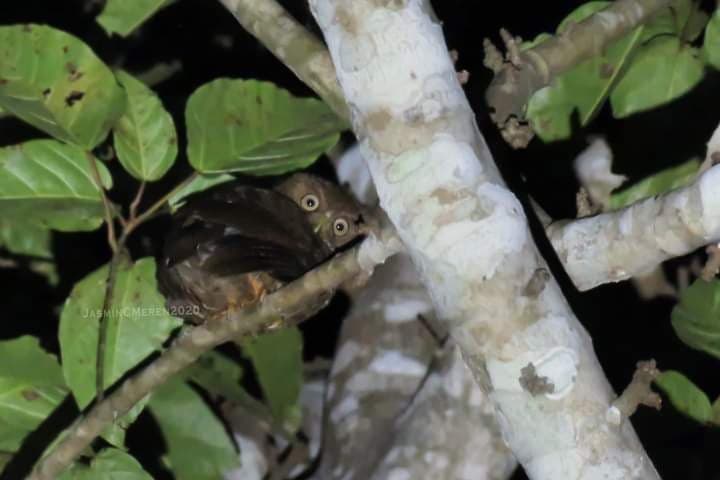
The Camiguin boobook (Ninox leventisi), also known by its native name kugkug, is an owl species endemic to Camiguin island in the Philippines. It is distinguished by its unique greenish-yellow or grayish eyes, a trait not found in its closely related species. This species was reclassified from a subspecies of the Philippine hawk-owl in 2012 based on vocal and other evidence indicating its distinctiveness.