
Rote boobook
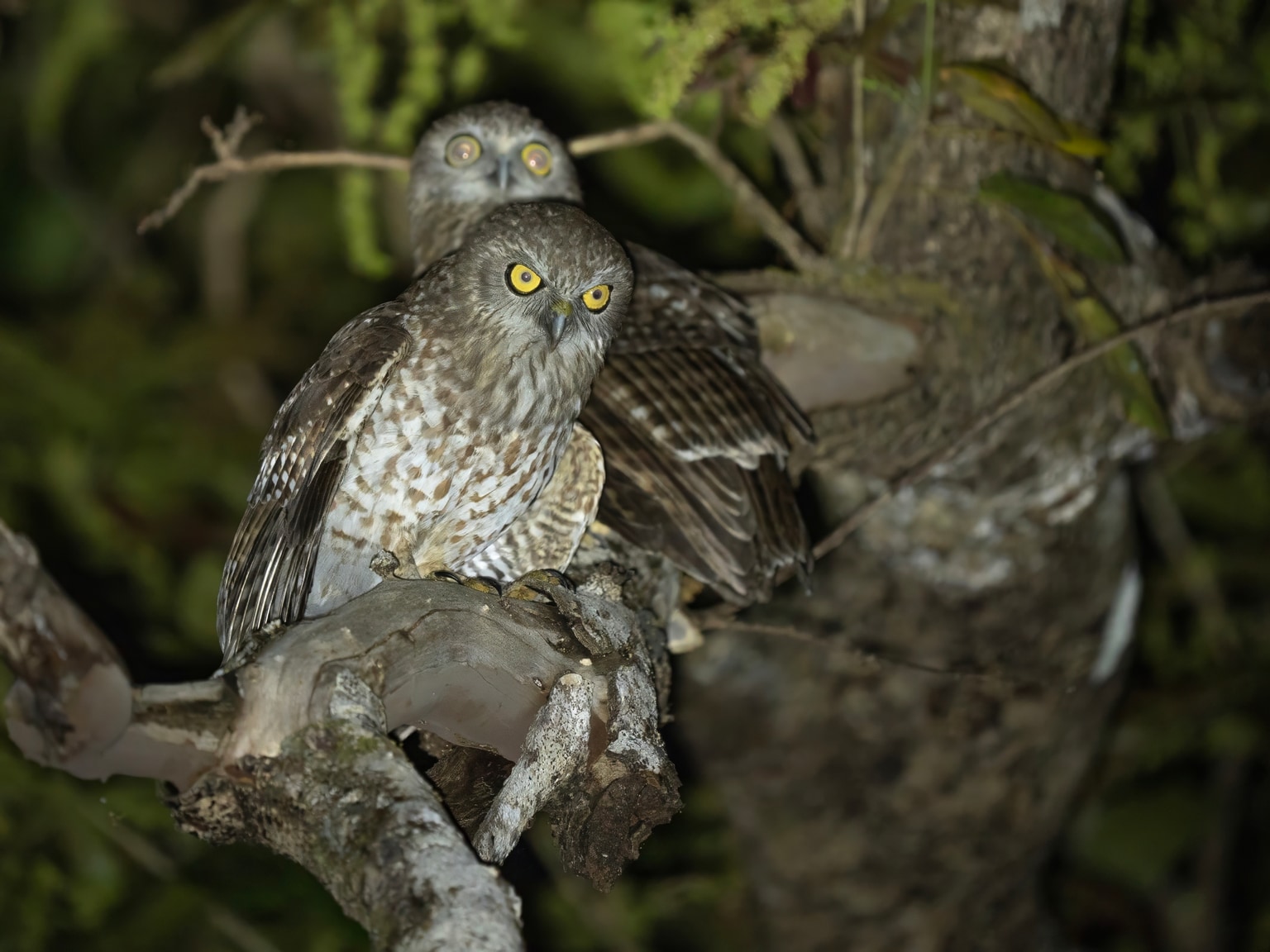
The Rote boobook is a species of owl endemic to Rote Island in Indonesia, first described in 1997. It is distinguished from its close relatives by its smaller size and distinct barring on its wings, rump, and tail. The species is locally common and known by different names in various localities on the island.
Key Facts
- ›Endemic to Rote Island in Indonesia's Lesser Sunda Islands.
- ›First scientifically described in 1997.
- ›Smaller than the Australian boobook with distinct barring on primaries, rump, and tail.
- ›Known locally as Tuterui and Kokorok.
- ›Reclassified as a separate species in 2019 based on genetic and call analysis.
Tuterui, Kokorok
Endemic To Rote Island
Indonesia
Not Specified In Text
About Rote boobook
The Rote boobook (Ninox rotiensis) is an owl species belonging to the family Strigidae. This owl is endemic to Rote Island, located within the Lesser Sunda Islands of Indonesia. It is considered locally common within its native range.
Discovery and Classification
The species was first scientifically described in 1997 by Australian biologists Ronald Johnstone and J.C. Darnell. The initial specimen, a female, was collected in a mist net in 1990. Subsequent genetic and call analysis revealed significant divergence from the Australian boobook populations. This research led to the Rote boobook being reclassified as a separate species in 2019.
Physical Characteristics
Compared to the Australian boobook, the Rote boobook is smaller. Its plumage is characterized by heavily barred primaries, rump, and tail, which serve as distinguishing features.
Local Names and Distribution
Within Rote Island, the Rote boobook is known by different local names. In the Landu locality, it is referred to as Tuterui, while in Oelaba, it is known as Kokorok.
Source: Wikipedia ↗
Frequently Asked Questions
What is the Rote boobook?
The Rote boobook is a species of owl belonging to the family Strigidae. It is found exclusively on Rote Island in the Lesser Sunda Islands of Indonesia.
When was the Rote boobook first described?
The Rote boobook was first described by Australian biologists Ronald Johnstone and J.C. Darnell in 1997. The initial specimen was collected in 1990.
What are the distinctive physical features of the Rote boobook?
This owl is smaller than the Australian boobook. It is characterized by heavily barred primaries, rump, and tail, which differentiate it from its relatives.
What are the local names for the Rote boobook?
On Rote Island, the Rote boobook is known by different names depending on the locality. It is called Tuterui in the Landu area and Kokorok in Oelaba.
Why was the Rote boobook reclassified as a separate species?
Genetic and call analysis revealed significant divergence between the Rote boobook and the Australian boobook populations. This led to its reclassification as a distinct species in 2019.
Related Owl species

African barred owlet
The African barred owlet is a small owl species found across southern, central, and eastern Africa. It inhabits open woodlands and gallery forests, and is notable for being partly diurnal, often seen hunting during daylight hours. Its call is a distinctive purring sound, and it feeds on a variety of small prey.

Northern white-faced owl
The northern white-faced owl (Ptilopsis leucotis) is an owl species native to a broad band across Africa, situated between the Sahara Desert and the Equator. It is distinguished by a remarkable defense mechanism where it can alter its appearance to either intimidate predators by appearing larger or to camouflage itself by elongating its body and narrowing its eyes when facing a larger threat.

African scops owl
The African scops owl (Otus senegalensis) is a small owl native to sub-Saharan Africa, characterized by its cryptic greyish-brown plumage and bright yellow eyes. It is a strictly nocturnal hunter, often overlooked during the day due to its remarkable camouflage. Its distinctive call is a monotonous "prrrp" sound.