
Black-billed amazon
Amazona agilis·Psittacidae·27-29
The black-billed amazon is a small parrot endemic to Jamaica, distinguished by its predominantly green plumage and a dark, almost black bill. It is the smallest member of the Amazona parrot genus and is known for its nimble nature. This species inhabits mountainous rainforests and faces threats from habitat loss and poaching.
Key Facts
- ›Endemic to the island of Jamaica.
- ›Smallest species within the Amazona parrot genus.
- ›Distinctive dark gray to black bill.
- ›Primarily green plumage with red wing patches and blue on flight feathers.
- ›Inhabits mountainous limestone rainforests.
- ›Feeds on fruits, seeds, and nuts, including cultivated crops.
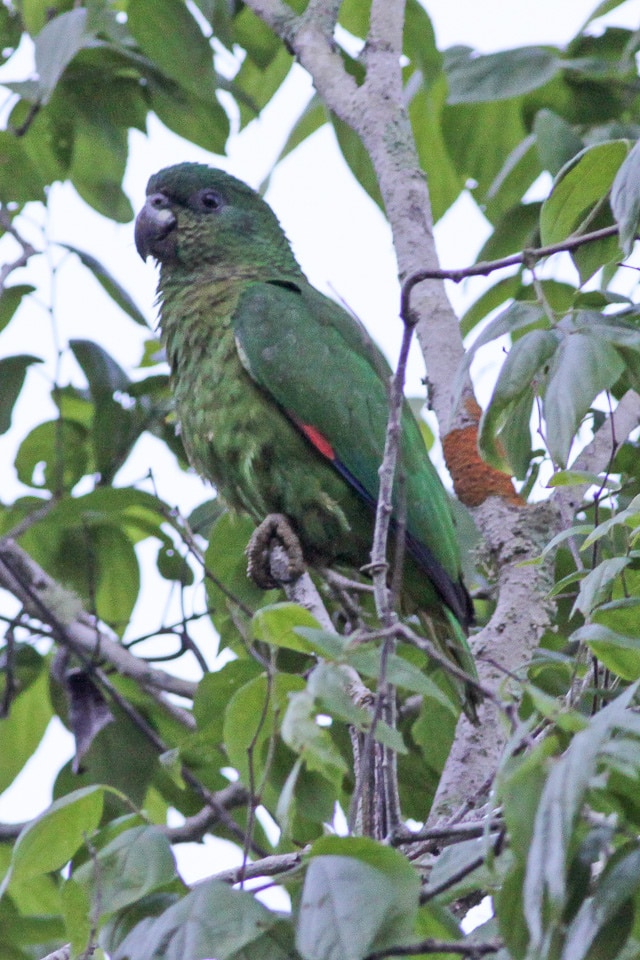
Black-Billed Parrot
Jamaica
Mountainous Rainforest, Limestone Rainforest
Dark Gray To Black Bill, Smallest Amazona Parrot
Fruits, Seeds, Nuts, Cultivated Fruits
Bugling call in flight, Growls and rumbles when perched, Calls tend to be sharp and screechy
About Black-billed amazon
The black-billed amazon (Amazona agilis), sometimes referred to as the black-billed parrot, is a species of parrot exclusively found on the island of Jamaica. It holds the distinction of being the smallest parrot within the extensive Amazona genus. Its appearance is primarily characterized by a predominantly green plumage, accented with small patches of red on its wings and occasionally flecked on its head. The most striking feature that aids in its identification is its bill, which is a very dark gray, nearly black, differentiating it from other Amazon parrots.
Taxonomy and Naming
Historically, the black-billed amazon was first illustrated and described by English naturalist George Edwards in 1751, who called it "The little green parrot." Carl Linnaeus later formally named the species Psittacus agilis in 1758. It was subsequently moved to the genus Amazona by René Lesson in 1830. The genus name Amazona is derived from a term used by Comte de Buffon, mistakenly believing these parrots originated from Amazonian jungles. The specific epithet agilis is Latin for "nimble" or "active," reflecting the bird's behavior.
Physical Description
Measuring between 27 and 29 centimeters (10.5 to 11.5 inches), the black-billed amazon is noticeably smaller than the yellow-billed amazon. The adult male exhibits a very dark gray bill, which lightens near the base. Its cere, eye-rings, and iris are also very dark gray and dark brown, respectively. The body plumage is predominantly green, with a paler, more yellowish hue on the underparts. The neck feathers are edged with dusky black, ear-coverts are blackish, and primary coverts are red. The flight feathers range from violet-blue to black, with secondaries showing blue tips fading to green at the base. The tail is mostly green, featuring red markings on the lateral feathers and blue margins on the outer ones. Feet are typically grayish-green. Females share similar coloration but may have green primary coverts instead of red.
Distribution and Habitat
The black-billed amazon is endemic to Jamaica, meaning it is found nowhere else in the world. Its natural habitat consists of mountainous rainforests, with a preference for limestone rainforests. These parrots are well-adapted to this environment, where they forage for food.
Diet
In their natural environment, black-billed amazons feed on a variety of items including fruits, seeds, and nuts. They are also known to supplement their diet with cultivated fruits such as mangos, papayas, and cucumbers, readily consuming them when available.
Threats and Conservation
Historically, the black-billed amazon was as common as the yellow-billed amazon, but its numbers have significantly declined. Major threats include deforestation and hurricane damage, which lead to habitat fragmentation. Additionally, poaching for consumption and the illegal pet trade have severely impacted the species' population, making it a rarer sight.
Vocalizations
The vocalizations of the black-billed amazon are distinctive. In flight, they emit a bugling call. When perched, they produce growling and rumbling sounds. Their calls are often described as sharp and screechy.
Source: Wikipedia ↗
Frequently Asked Questions
What makes the black-billed amazon easy to identify?
The black-billed amazon is easily identified by its bill, which is very dark gray, almost black. This feature helps distinguish it from other Amazon parrots, including the yellow-billed amazon found in Jamaica.
Where does the black-billed amazon live?
This parrot is endemic to Jamaica and resides in mountainous rainforests, particularly those found in limestone areas. They are not found naturally anywhere else in the world.
What does the black-billed amazon eat?
Their diet consists of fruits, seeds, and nuts found in their natural habitat. They are also known to consume cultivated fruits such as mangos, papayas, and cucumbers.
What are the main threats to the black-billed amazon?
The species faces significant threats from deforestation and hurricane damage, which fragment its forest habitat. Poaching for food and the illegal pet trade also contribute to its declining numbers.
What are the physical characteristics of the black-billed amazon?
It is a small parrot, measuring between 27 and 29 centimeters. Its plumage is predominantly green, with red patches on the wings and blue on the flight feathers. Males have a very dark gray bill, while females may have green primary coverts instead of red.
Related Parrot species

Blue-headed parrot
The blue-headed parrot is a medium-sized parrot native to tropical and subtropical regions of South America and southern Central America. Its most striking feature is its vibrant blue head and neck, contrasting with its predominantly green body and red undertail coverts. These parrots are known for their noisy, high-pitched calls and are popular as pets due to their affectionate nature, though they are not renowned for their talking ability.

Blue-winged macaw
The blue-winged macaw, also known as Illiger's macaw, is a small species of macaw native to central and eastern South America. It is distinguished by its predominantly green plumage with blue accents on its wings and crown, and a distinct red patch on its lower abdomen. These macaws are known for their social nature and are often kept as aviary or companion birds.
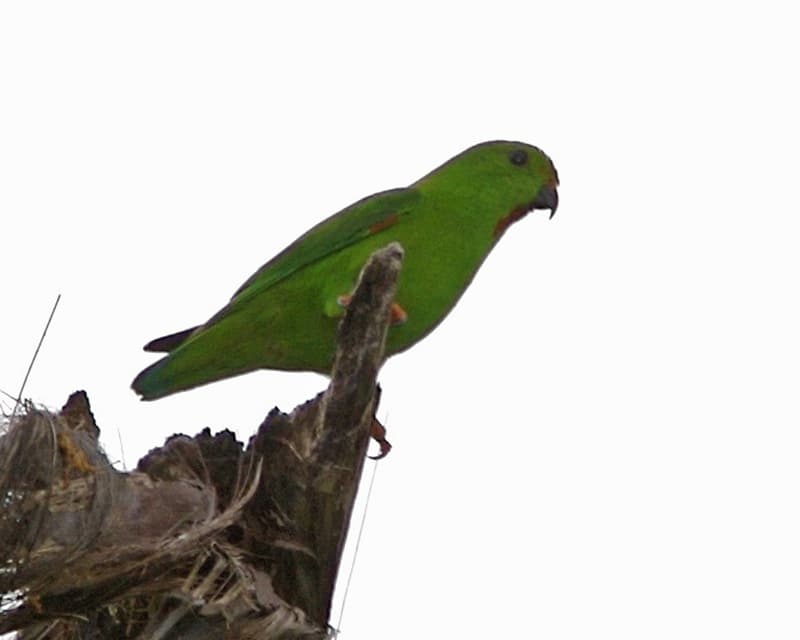
Great hanging parrot
The Great hanging parrot is a species of small parrot, notable for being the largest among the hanging parrots. It is endemic to the Indonesian island of Sulawesi and its surrounding smaller islands, inhabiting forests, secondary growth, and tall mangrove areas. Its plumage is predominantly green, with distinctive red markings on the chin, wing edges, rump, and crown, though the crown is absent in females.