
Great hanging parrot
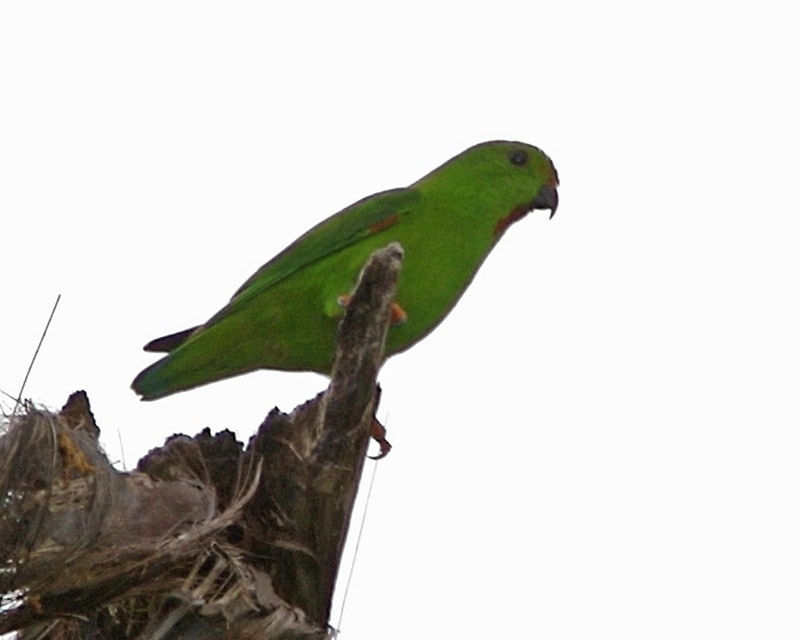
The Great hanging parrot is a species of small parrot, notable for being the largest among the hanging parrots. It is endemic to the Indonesian island of Sulawesi and its surrounding smaller islands, inhabiting forests, secondary growth, and tall mangrove areas. Its plumage is predominantly green, with distinctive red markings on the chin, wing edges, rump, and crown, though the crown is absent in females.
Key Facts
- ›The Great hanging parrot is the largest species within the hanging parrot genus.
- ›It is found exclusively on Sulawesi and adjacent islands in Indonesia.
- ›Its diet consists of fruits, such as papaya, and lichen.
- ›Nesting occurs in tree cavities, with clutches typically containing three eggs.
- ›Females incubate eggs for 20 days, and chicks fledge around 33 days after hatching.
Celebes Hanging Parrot, Sulawesi Hanging Parrot, Maroon-Rumped Hanging Parrot
Indonesia
Forest, Secondary Growth, Tall Mangrove
Red Chin, Red Leading Edge of the Wing, Red Rump, Red Crown
Fruit, Papaya, Lichen
Tree Cavities
About Great hanging parrot
The Great Hanging Parrot
The Great hanging parrot (Loriculus stigmatus), also known by common names such as the Celebes hanging parrot, Sulawesi hanging parrot, and maroon-rumped hanging parrot, is a species of parrot belonging to the Psittaculidae family. This species is remarkable for being the largest among the hanging parrots, reaching an approximate length of 15 cm.
Geographic Distribution and Habitat
The Great hanging parrot is endemic to the island of Sulawesi and its surrounding smaller islands in Indonesia. Its natural habitat encompasses a variety of environments, including forests, secondary growth areas, and notably, tall mangrove ecosystems.
Description and Taxonomy
The plumage of the nominate subspecies is predominantly green, often with an indistinct yellowish tinge on the mantle. Distinctive markings include a red chin, a red leading edge to the wing, a red rump, and a red crown; however, the red crown is typically absent in females. While historically considered a single species, recent research has led to the re-validation of subspecies: L. s. croconotus found on Muna and Buton Island, and L. s. quadricolor from the Togian Islands. These subspecies exhibit variations in wing and tail coloration, mantle tinge, and the size and brightness of red markings.
Diet and Breeding Habits
The diet of the Great hanging parrot consists of fruits, with papaya being a noted example, as well as lichen. Reproduction involves nesting in tree cavities, where a clutch typically comprises three eggs. The female undertakes the incubation, which lasts for about 20 days. The chicks remain in the nest for approximately 33 days from hatching before they fledge.
Source: Wikipedia ↗
Frequently Asked Questions
What is the scientific name of the Great hanging parrot?
The scientific name of the Great hanging parrot is *Loriculus stigmatus*. It is also sometimes referred to by its common names, Celebes hanging parrot, Sulawesi hanging parrot, or maroon-rumped hanging parrot.
Where is the Great hanging parrot found?
The Great hanging parrot is endemic to Sulawesi and nearby smaller islands in Indonesia. Its natural habitat includes forest areas, secondary growth, and tall mangrove ecosystems.
What distinguishes the Great hanging parrot from other hanging parrots?
The Great hanging parrot is the largest species of hanging parrot. It is characterized by its predominantly green plumage, with specific red markings on the chin, leading edge of the wing, rump, and crown, although the crown marking is absent in females.
What does the Great hanging parrot eat?
The diet of the Great hanging parrot primarily includes fruits, such as papaya, and lichen. These food sources are found within its natural forest and mangrove habitats.
How does the Great hanging parrot reproduce?
Great hanging parrots typically nest in tree cavities. A clutch usually consists of three eggs, which the female incubates for approximately 20 days. The young birds then leave the nest about 33 days after hatching.
Are there different subspecies of the Great hanging parrot?
While traditionally considered monotypic, recent research has re-validated two subspecies: *L. s. croconotus* from Muna and Buton Island, and *L. s. quadricolor* from the Togian Islands. The nominate subspecies refers to the population on Sulawesi itself.
Related Parrot species
Black-billed amazon
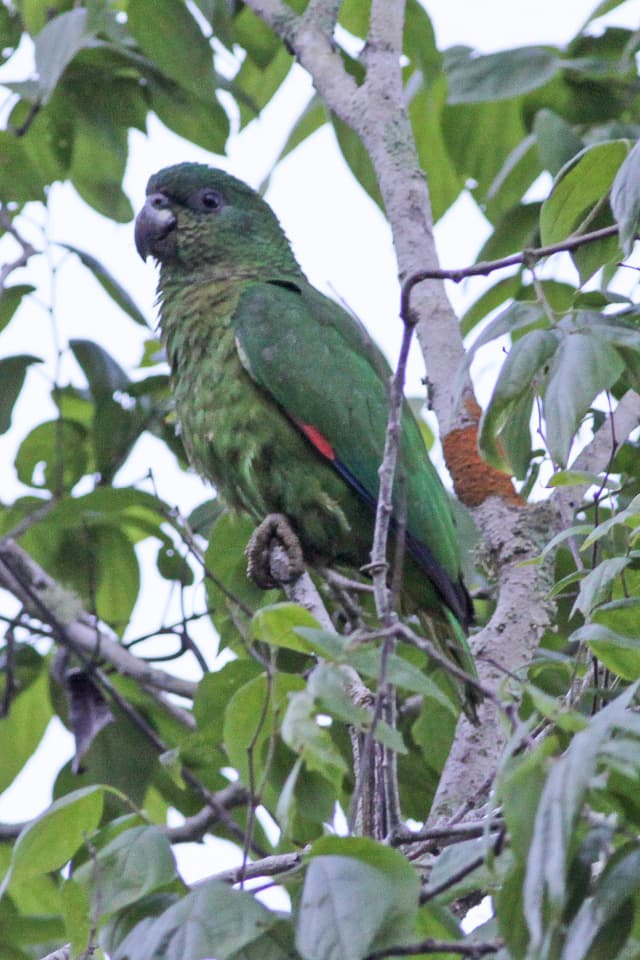
The black-billed amazon is a small parrot endemic to Jamaica, distinguished by its predominantly green plumage and a dark, almost black bill. It is the smallest member of the Amazona parrot genus and is known for its nimble nature. This species inhabits mountainous rainforests and faces threats from habitat loss and poaching.

Golden-mantled racket-tail
The golden-mantled racket-tail is a species of parrot endemic to Indonesia, found in lowland and montane moist forests. It is distinguished by its green plumage, an orange collar across the mantle in males, and elongated central tail feathers that form "rackets" with black tips.

Hispaniolan parakeet
The Hispaniolan parakeet (Psittacara chloropterus) is a Vulnerable species of parrot endemic to the island of Hispaniola, shared by the Dominican Republic and Haiti. Primarily green with yellowish underparts, it is distinguished by red flecks on its wings and head, and a distinctive white-skinned eye-ring. This species inhabits a variety of landscapes from sea level to high altitudes and is known for its grating "kree" call.