
Black-fronted parakeet
The black-fronted parakeet, also known as the Tahiti parakeet, was an extinct parrot species native to the Pacific island of Tahiti. Discovered during Captain Cook's voyages, this bird inhabited woodlands and was prized by the native Tahitian people for keeping as pets, despite not possessing highly valued red feathers for their handicrafts. Its extinction was likely caused by the introduction of invasive predators like cats and European rats.
Key Facts
- ›The black-fronted parakeet was endemic to the island of Tahiti.
- ›Specimens were collected during Captain Cook's voyages in 1769 and potentially 1773.
- ›The species inhabited woodlands and could persist despite deforestation and the presence of kiore rats and pigs.
- ›Tahitians kept the parakeet as pets, valuing them for companionship rather than their feathers.
- ›The introduction of cats and European rats led to the rapid decline and extinction of the species.
- ›The last known specimen was collected in 1844.

Tahiti Parakeet, Tahiti Parrot
Oceania
Woodlands
Black Coloring On the Forehead
Not Specified
Kept As Pets
Native Name 'ā'ā Means 'Parrot'
Eggs were preyed upon by kiore rats and pigs
About Black-fronted parakeet
The black-fronted parakeet, scientifically known as Cyanoramphus zealandicus, was a species of parrot endemic to the Pacific island of Tahiti. Its native name was simply 'ā'ā, meaning 'parrot', though one historical account also notes "aa-maha". The species was first documented by Europeans in 1769 during Captain James Cook's initial voyage, with specimens collected by the expedition now housed in various museums.
Habitat and Survival
This parakeet inhabited the woodlands of Tahiti. Historical accounts suggest that, despite widespread deforestation for agriculture and the presence of invasive kiore rats and pigs, the species was able to persist in considerable numbers. It is noted that these native animals undoubtedly preyed on the bird's eggs on occasion.
Relationship with Humans and Extinction
The natives of Tahiti valued red parrot feathers for their handicrafts and had to trade with Samoans for them, as the black-fronted parakeet did not possess these desired feathers in sufficient quality or quantity. However, the Tahitian people did keep the species as pets. The introduction of more formidable predators, namely cats and European rats, proved to be the ultimate downfall of the black-fronted parakeet. The species rapidly succumbed to these new threats, leading to its extinction. The last known specimen was collected in 1844, marking the end of this unique parrot's existence.
Source: Wikipedia ↗
Frequently Asked Questions
Where did the black-fronted parakeet live?
The black-fronted parakeet was found exclusively on the Pacific island of Tahiti. It was endemic to this single location.
When was the black-fronted parakeet discovered?
The species was first discovered in 1769 during Captain James Cook's initial voyage to the Pacific. Further specimens may have been collected on Cook's second voyage in 1773.
What caused the extinction of the black-fronted parakeet?
The primary cause of the black-fronted parakeet's extinction is attributed to the introduction of invasive predators, specifically cats and European rats. These new predators likely preyed heavily on the birds and their eggs.
Did the native Tahitians use the black-fronted parakeet for anything?
Yes, the natives of Tahiti liked to keep the black-fronted parakeet as pets. However, they did not value its feathers for handicrafts as much as other parrot species, as the desired red feathers were not present in sufficient quality or quantity.
When was the last black-fronted parakeet seen or collected?
The last known specimen of the black-fronted parakeet was collected in 1844 by Lieutenant des Marolles. Following this, the species disappeared and is now considered extinct.
Related Parrot species

Guadeloupe amazon
The Guadeloupe amazon (Amazona violacea) is a hypothetical extinct species of parrot believed to have been native to Guadeloupe in the Lesser Antilles. Described by 17th and 18th-century writers, it was characterized by violet or slate-colored head and underparts, greenish back, and wings with green, yellow, and red. Its extinction is attributed to hunting by French settlers and habitat destruction.

Newton's parakeet
Newton's parakeet, also known as the Rodrigues parakeet, was an extinct species of parrot endemic to the island of Rodrigues in the western Indian Ocean. Distinctive for its unusual greyish or slate blue plumage, a rarity in its predominantly green genus, it was also noted for its tame nature and ability to mimic speech. Its lineage is believed to be closely related to the rose-ringed parakeet, and it may have been ancestral to other Mascarene island parakeets.
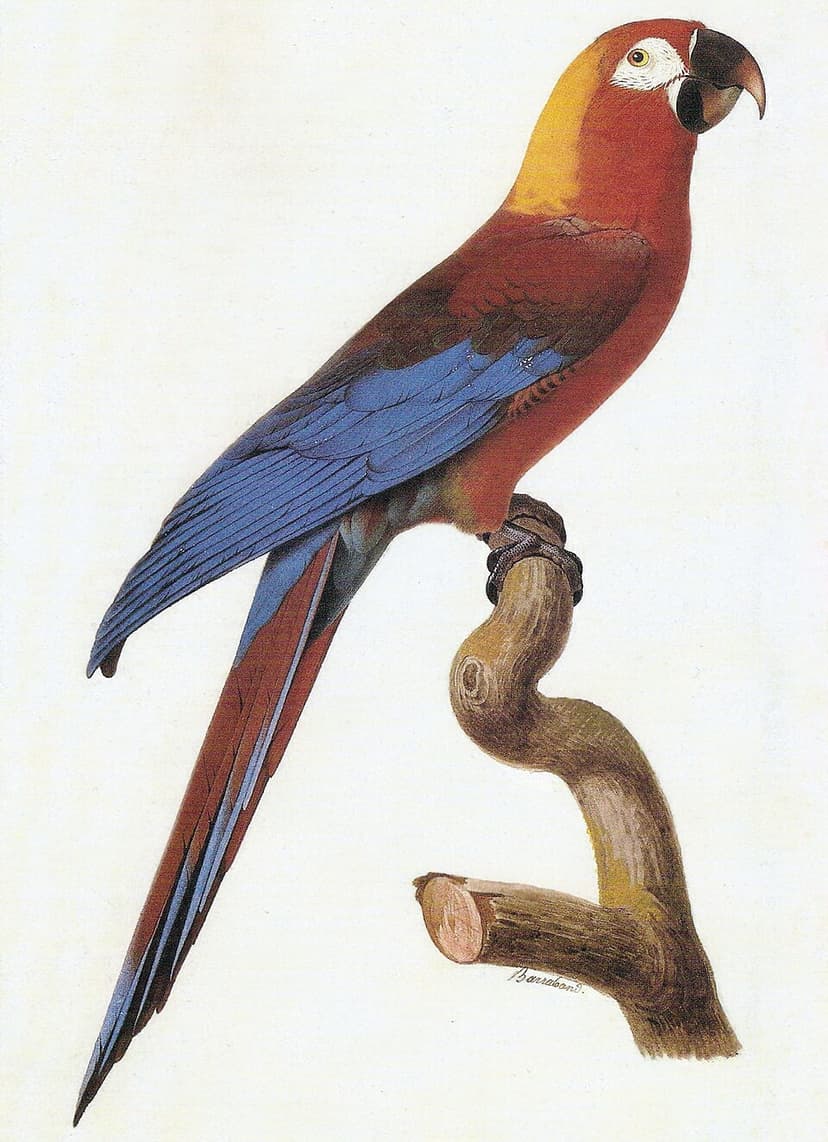
Cuban macaw
The Cuban macaw (Ara tricolor) was a species of macaw native to Cuba and Isla de la Juventud, becoming extinct in the late 19th century. It was one of the smallest macaws, characterized by a vibrant plumage of red, orange, yellow, green, brown, and blue. Its demise was attributed to hunting, habitat destruction, and possibly hurricanes, despite limited knowledge of its behavior.