
Blossom-headed parakeet
The Blossom-headed parakeet is a vibrant parrot species native to Southeast Asia, characterized by its lime-green body and a distinctive pink or bluish-grey head. It is known for its social behavior, often seen in small flocks, and its fondness for fruits and blossoms. This species is also referred to as the rosy-headed parakeet and faces threats from habitat loss and the illegal cage-bird trade.
Key Facts
- ›Lime green body with a pink or bluish-grey head, distinguishing it from similar species.
- ›Found in open forests, savannas, and cultivated areas across Southeast Asia.
- ›Typically travels in small flocks or family groups.
- ›Nests in tree cavities and lays clutches of 4-5 white eggs.
- ›Threatened by habitat loss and trapping for the cage-bird trade.
- ›Can cause damage to agricultural crops, particularly marigolds.

Rosy-Headed Parakeet
Southeast Asia
Lowland and Foothill Open Forests, Savannas, Secondary Growth Forests, Forest Edges, Clearings, Cultivated Areas
Lime Green, Pink, Bluish Grey, Pale Blue, Pale Blue Grey, Reddish Brown, Blue, Pale Yellow, Yellow Green
Male's Pink Head, Female's Pale Blue-Grey Head, Narrow Black Neck Collar, Yellow-Green Neck Collar, Red Shoulder Spot, Black Chin Stripe
Fruits, Blossoms
- Generally Non-Aggressive To Other Captive Birds
Raucous Calls, Gregarious and Noisy, Soft and Melodic
Holes In Trees
About Blossom-headed parakeet
The Blossom-headed parakeet, scientifically known as Psittacula roseata (and proposed as Himalayapsitta roseata), is a striking parrot species found throughout Southeast Asia. Its common name derives from the male's distinctive pink head, which contrasts with its lime-green body and fades to a pale blue on the crown and nape. Females exhibit a similar pattern but with a pale blue-grey head and a yellow-green neck collar.
Distribution and Habitat
This non-migratory species is a resident breeder across a wide range, including eastern Bangladesh, Bhutan, northeast India, Nepal, Cambodia, Laos, Myanmar, Thailand, Vietnam, and parts of China. Blossom-headed parakeets inhabit open forests at low and foothill altitudes, preferring environments such as savannas, secondary growth forests, forest edges, clearings, and cultivated areas.
Behavior and Ecology
Blossom-headed parakeets are social birds, typically observed moving in small flocks or family groups, often in the company of other parakeet species. Their diet consists primarily of fruits and blossoms, and their movements are often dictated by food availability. They are known for a range of vocalizations, from raucous calls to softer, melodic sounds.
Breeding and Captivity
Nesting occurs in tree cavities, where females lay clutches of 4 to 5 white eggs. The incubation period lasts approximately 24 days, and young birds fledge after seven to eight weeks. While uncommon in overseas aviculture, the species has been historically kept and bred in captivity. Recommended diets for captive birds include millet, oats, and various seeds.
Conservation Status
Classified as Near Threatened by the IUCN Red List in 2013, the Blossom-headed parakeet faces significant threats from habitat loss due to agricultural expansion and deforestation, as well as persistent trapping for the illegal cage-bird trade. These pressures have led to moderately rapid population declines in some parts of its range.
Identification
Distinguishing features include the unique head coloration and a yellow tip on the tail, which help differentiate it from similar species like the Plum-headed parakeet. Males possess a narrow black neck collar and chin stripe, while females have a smaller red shoulder spot compared to males.
Source: Wikipedia ↗
Frequently Asked Questions
What are the main physical characteristics of the Blossom-headed parakeet?
The Blossom-headed parakeet has a lime-green body and is about 30 cm long. Males are distinguished by a pink head that fades to pale blue, a black neck collar, and a black chin stripe. Females have a pale blue-grey head with a yellow-green neck collar.
Where is the Blossom-headed parakeet found?
This species is a resident breeder in Southeast Asia, with its range extending from eastern Bangladesh and India eastwards into Cambodia, Laos, Myanmar, Thailand, Vietnam, and China. It inhabits lowland and foothill open forests.
What is the diet of the Blossom-headed parakeet?
The diet of the Blossom-headed parakeet primarily consists of fruits and blossoms. In captivity, recommended staple diets include millet, oats, canary seeds, and sunflower seeds.
What are the conservation concerns for this species?
The Blossom-headed parakeet is classified as near threatened due to rapid declines caused by trapping for the cage-bird trade and habitat loss. Populations in some areas have declined very rapidly over the past three decades.
How does the Blossom-headed parakeet differ from the Plum-headed parakeet?
The different head coloration and the yellow tip to the tail are key features that distinguish the Blossom-headed parakeet from the similar Plum-headed parakeet.
What are the nesting habits of the Blossom-headed parakeet?
Blossom-headed parakeets nest in holes found in trees. They typically lay a clutch of 4 to 5 white eggs. In captivity, a clutch of two to four eggs is common.
Related Parrot species

Blood-eared parakeet
The blood-eared parakeet is a species of parrot endemic to Venezuela, found in cloudforest and wooded savanna habitats. It is distinctive for its bright terracotta ear coverts, slaty gray head, and a mix of green, yellow, and reddish-brown plumage. These parakeets are typically found foraging in small flocks and are known for their noisy, harsh vocalizations.
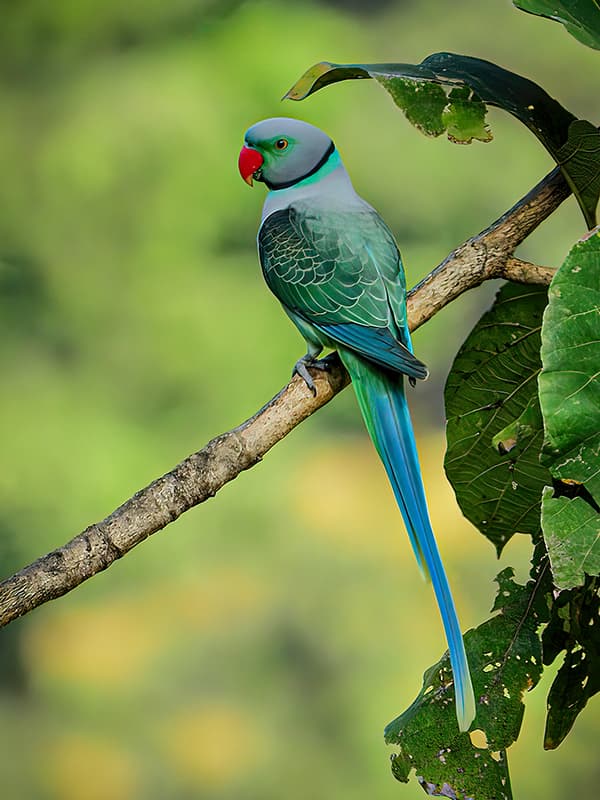
Blue-winged parakeet
The blue-winged parakeet, also known as the Malabar parakeet, is a species of parakeet native to the Western Ghats of southern India. This species is distinctive for its long blue tails tipped in yellow, contrasting with their dark wings and dull grey head and body. Adult males and females are easily differentiated by the color of their beaks.

Leaf lorikeet
The Leaf lorikeet, also known as the Flores lorikeet or Weber's lorikeet, is a parrot species endemic to the Indonesian island of Flores. It is distinguished by its predominantly green plumage, a trait not found in other members of the rainbow lorikeet group, and is the smallest among them. This species inhabits various forest types and woodlands.