
Blue-backed parrot
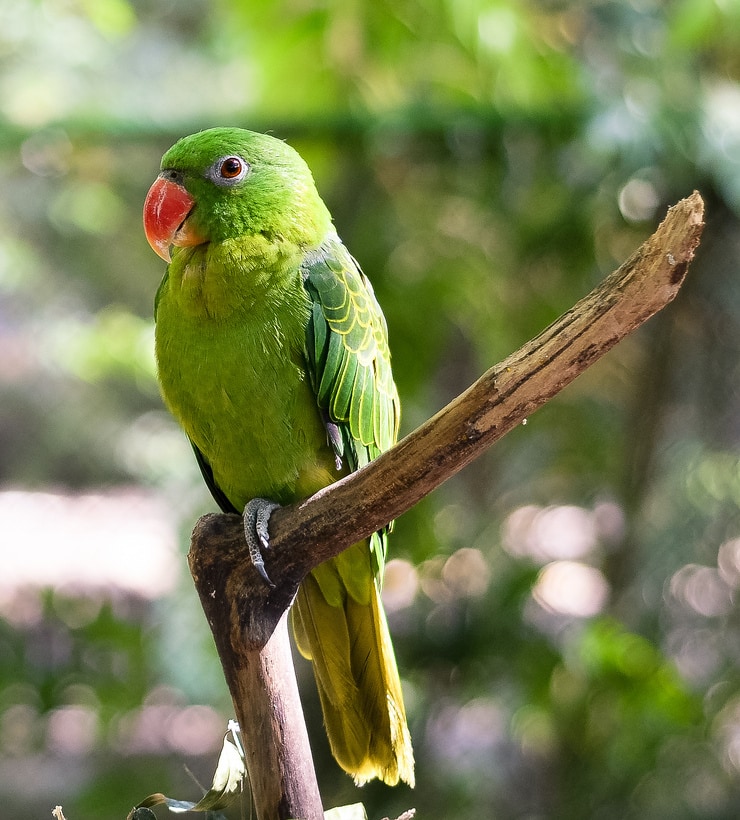
The blue-backed parrot is a large, endangered parrot species endemic to the Philippines. Primarily green with distinctive blue rump and wing bends, it is often confused with the blue-naped parrot but can be differentiated by its red iris, more pronounced sexual dimorphism, and vocalizations. Its main threats are habitat loss and trapping for the pet trade, leading to a critically low population.
Key Facts
- ›Endemic to the Philippines, with recent confirmed records only in Samar, Mindanao, and Tawi-tawi.
- ›Primarily green plumage with yellowish wing edging, a blue rump, and blue wing bends.
- ›Sexually dimorphic: males have red beaks, while females have pale yellow or horn-colored beaks.
- ›Differentiated from the Blue-naped parrot by its red iris, plain green wings, and more pronounced sexual dimorphism.
- ›Considered endangered, with population estimates potentially below 250 individuals.
- ›Threatened by habitat loss and illegal trapping for the pet trade.
MüLler's Parrot, Mueller's Parrot, Burbridge's Parrot
Philippines
Tropical Moist Lowland Forest, Tropical, Lowland, and Montane Forests, Mangrove Swamps, Degraded Forests
Blue Rump, Blue Wing Bends, Red Iris, Red Beak, Pale Yellow Or Horn-Colored Beak
Fruits, Seeds
Tree Cavities High Up the Ground
About Blue-backed parrot
The blue-backed parrot (Tanygnathus everetti), also known by aliases such as Müller's parrot and Burbridge's parrot, is a large parrot species endemic to the Philippines. It is characterized by its predominantly green plumage, accented by yellowish edging on the wings, a distinctive blue rump, and blue wing bends. A notable feature is its sexual dimorphism: males possess a red beak, while females have a pale yellow or horn-colored beak, and both sexes have a red iris.
Habitat and Ecology
This species is typically found in tropical moist lowland forests, though it may also inhabit tropical, lowland, and montane forests, mangrove swamps, and degraded forests, most commonly below 500 meters elevation. While detailed ecological information is scarce, its diet is presumed to be similar to that of the blue-naped parrot, consisting of fruits and seeds. They have been reported nesting in tree cavities high above the ground, with breeding observed in April on Samar.
Conservation Concerns
The blue-backed parrot is facing severe population decline, leading to its classification as endangered. Population estimates suggest fewer than 250 mature individuals remain, with some sources indicating the number could be critically low, possibly below 250. The primary threats driving this decline are habitat loss, particularly deforestation, and illegal trapping for the pet trade. The species is legally protected under Philippine Law RA 9147, making it illegal to hunt, capture, or possess these parrots. Urgent conservation actions include comprehensive surveys to assess current populations and ecological needs, protection of remaining forest habitats, and the initiation of a captive-breeding program. The species is confirmed present in only one protected area, Samar Island Natural Park, where deforestation and poaching remain ongoing issues.
Taxonomy and Identification
Previously considered conspecific with the azure-rumped parrot, the blue-backed parrot was recognized as a distinct species by major ornithological bodies in recent years. It can be distinguished from the azure-rumped parrot by its blue back and red iris, compared to the azure-rumped parrot's plain green back and yellow iris. It is also often confused with the blue-naped parrot, from which it differs by its red iris, more plain green wings, more pronounced sexual dimorphism, slightly larger size, and distinct vocalizations. Four subspecies have been recognized, though ongoing research may lead to further taxonomic reclassifications. The blue-backed parrot is now feared to be locally extinct in large parts of its former range, including Negros, Panay, Leyte, Luzon, and Polilio, with only recent records from Samar, Mindanao, and Tawi-tawi.
Source: Wikipedia ↗
Frequently Asked Questions
What are the main threats to the blue-backed parrot?
The primary threats to the blue-backed parrot are habitat loss due to deforestation and illegal trapping for the pet trade. These pressures have significantly reduced its population across its native range.
How can the blue-backed parrot be distinguished from similar species?
The blue-backed parrot is often confused with the blue-naped parrot. Key distinguishing features include the blue-backed parrot's red iris, more uniform green plumage on the wings, more pronounced sexual dimorphism, slightly larger size, and different vocalizations.
What is the conservation status of the blue-backed parrot?
The blue-backed parrot is listed as endangered by the IUCN, with population estimates suggesting fewer than 250 mature individuals. Some sources consider it critically endangered due to its extremely low numbers and ongoing threats.
Where is the blue-backed parrot found?
This species is endemic to the Philippines. While once found across many islands, recent records are primarily from Samar, Mindanao, and Tawi-tawi, with fears of local extinction in other areas.
What are the physical characteristics of the blue-backed parrot?
It is a medium-sized parrot, measuring around 32 cm. Its plumage is predominantly green with yellow edging on the wings, a blue rump, and blue wing bends. Males and females exhibit sexual dimorphism in beak color.
Related Parrot species
El Oro parakeet
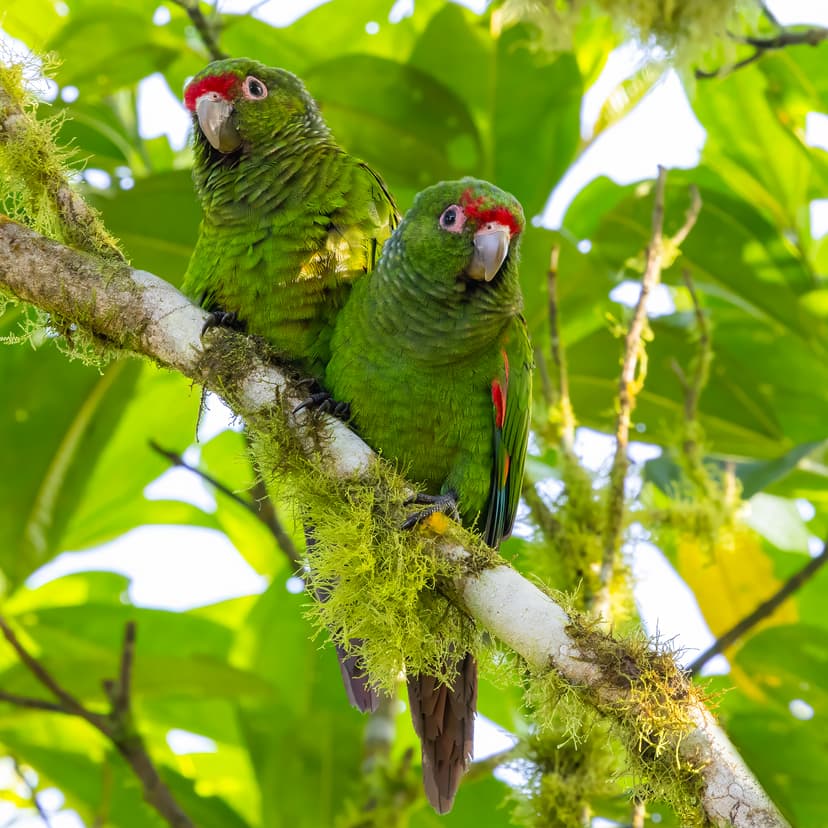
The El Oro parakeet is an endangered parrot species endemic to the west slope of the Ecuadoran Andes. Its most distinctive features include a predominantly green plumage with a red forehead and lores in males, and a maroon tail. These birds are known to forage in flocks and exhibit cooperative breeding behaviors.

Fuertes's parrot
Fuertes's parrot, also known as the indigo-winged parrot, is an endangered species endemic to the west slope of Colombia's Central Andes. This parrot is distinguished by its striking blue and green plumage, accented with red and violet-blue markings on its wings and tail. It inhabits wet temperate cloudforests and is known to feed in flocks, with conservation efforts focusing on nest box programs to aid its population recovery.
Pfrimer's parakeet
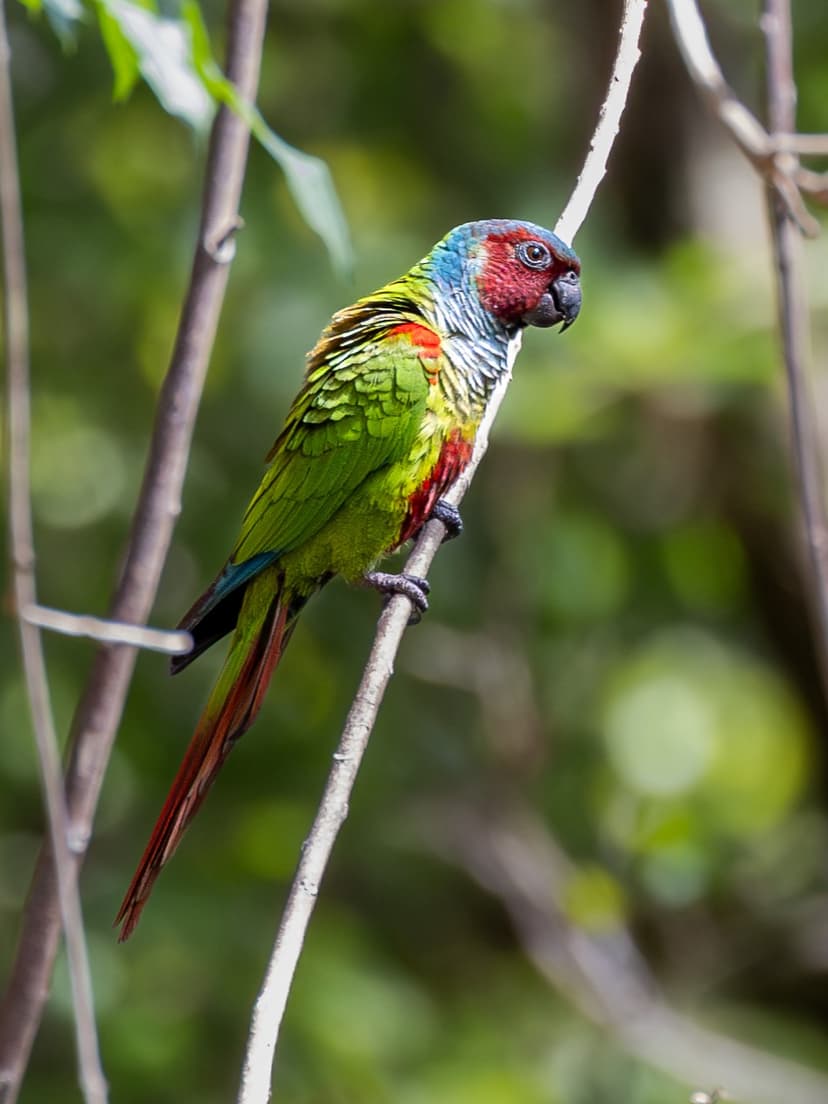
Pfrimer's parakeet, also known as Pfrimer's conure or maroon-faced conure, is a non-migratory parrot species endemic to the Caatinga forest of Brazil's Goiás and Tocantins regions. It is distinguished by its brown and red face, blue crown, and maroon tail, and is currently classified as endangered due to significant habitat loss from deforestation for agriculture.