
Fuertes's parrot
Fuertes's parrot, also known as the indigo-winged parrot, is an endangered species endemic to the west slope of Colombia's Central Andes. This parrot is distinguished by its striking blue and green plumage, accented with red and violet-blue markings on its wings and tail. It inhabits wet temperate cloudforests and is known to feed in flocks, with conservation efforts focusing on nest box programs to aid its population recovery.
Key Facts
- ›Found exclusively on the west slope of Colombia's Central Andes.
- ›Inhabits wet temperate cloudforests characterized by epiphytes and oaks.
- ›Feeds in flocks of up to about 15 individuals, with a diet favoring fruit.
- ›Breeds between January and may, laying a clutch of three or four eggs.
- ›Reclassified from Critically Endangered to Endangered by the IUCN in 2021.
- ›Population is estimated to be between 230 and 300 mature individuals and is increasing.

Indigo-Winged Parrot
Colombia
- Wet temperate cloudforest
- Ecosystems characterized by many epiphytes and oaks
Green, Blue, Red, Olive-Yellow, Violet-Blue, Black, Crimson
- Thin red band just above the bill
- Olive-yellow forecrown and face
- Blue crown
- Green hindneck
- Pale fringes on mantle feathers
- Golden-olive tinge on throat and breast
- Yellowish green belly, thighs, and undertail coverts with variable dull red on belly
- Red bend of the wing and leading edge
- Dark violet-blue median and greater coverts
- Black primaries with purplish blue edges
- Blue secondaries with some green edges
- Crimson underwing coverts
- Greenish blue underside of the wing
- Blue tail with red on the inner webs of central feathers
- Horn-colored bill with darker mandible base
- Yellowish eyes
- Dark gray legs and feet
Fruit, Antidaphne Viscoidea Fruit
- Flight call is a rather nasal, grating "Krraa"
- Makes a similar call when perched
Nest Boxes, Natural Cavities In Trees
About Fuertes's parrot
Fuertes's parrot, scientifically known as Hapalopsittaca fuertesi and also called the indigo-winged parrot, is a critically endangered species of bird native to Colombia. This parrot is distinguished by its vibrant plumage, featuring a striking combination of green, blue, and red, particularly evident in the violet-blue wing coverts and blue tail. It inhabits the high-altitude wet temperate cloudforests of the Central Andes, specifically in the departments of Quindío and Risaralda.
Distribution and Habitat
The natural range of Fuertes's parrot is confined to the west slope of Colombia's Central Andes. Its preferred habitat is wet temperate cloudforest, characterized by abundant epiphytes and oak trees. Most sightings occur at elevations between 2,900 and 3,150 meters, although it has been observed at lower and higher altitudes as well. Following its rediscovery between 1992 and 2002, several natural reserves have been established to protect its dwindling habitat.
Diet and Behavior
Fuertes's parrots are social birds that typically feed in flocks of up to fifteen individuals. Their diet consists primarily of fruits, with the fruit of Antidaphne viscoidea being a favored food source. The species' movements are not extensively documented, but elevational shifts are considered probable.
Breeding and Conservation
Extensive studies have been conducted on the breeding biology of Fuertes's parrot, often in conjunction with conservation initiatives. The breeding season occurs between January and May, with pairs utilizing both provided nest boxes and natural tree cavities. Females lay clutches of three to four eggs, which they incubate for approximately 24 to 27 days. Both parents then care for the young until fledging, which occurs 55 to 65 days after hatching. Once assessed as Critically Endangered, Fuertes's parrot was reclassified as Endangered by the IUCN in 2021. Despite an estimated population of only 230 to 300 mature individuals, the population trend is increasing, largely due to successful nest box programs and habitat protection efforts. Approximately 50% of its original habitat has been lost to deforestation, though the rate has slowed outside protected areas.
Source: Wikipedia ↗
Frequently Asked Questions
What is Fuertes's parrot?
Fuertes's parrot is a species of bird in the parrot family, Psittacidae. It is known for its distinctive blue and green plumage and is endemic to a specific region in Colombia.
Where does Fuertes's parrot live?
This parrot is found only on the west slope of Colombia's Central Andes, specifically in the departments of Quindío and Risaralda. It inhabits wet temperate cloudforests.
What does Fuertes's parrot eat?
Fuertes's parrot primarily feeds on fruit. The fruit of Antidaphne viscoidea is particularly favored by the species.
What is the conservation status of Fuertes's parrot?
Fuertes's parrot was reclassified as Endangered by the IUCN in 2021, having previously been assessed as Critically Endangered. Its population is estimated to be between 230 and 300 mature individuals and is currently increasing due to conservation efforts.
What are the distinctive features of Fuertes's parrot?
Adult Fuertes's parrots are about 23-24 cm long and have a striking appearance with an olive-yellow forecrown and face, a blue crown, and green hindneck. Their wings feature dark violet-blue coverts and black primaries with purplish-blue edges, and their underwing coverts are crimson.
When does Fuertes's parrot breed?
Fuertes's parrot nests between January and May. They utilize both nest boxes provided through conservation programs and natural cavities in trees for nesting.
Related Parrot species

Australian ringneck
The Australian ringneck is a medium-sized parrot native to Australia, found in diverse environments except for extreme tropical and highland regions. It is characterized by a green basic plumage, a distinctive yellow ring around its hindneck, and variations in color across its four subspecies. This gregarious bird is known for its varied vocalizations and is generally not considered a threatened species, though some subspecies face local competition.
Lilac-crowned amazon
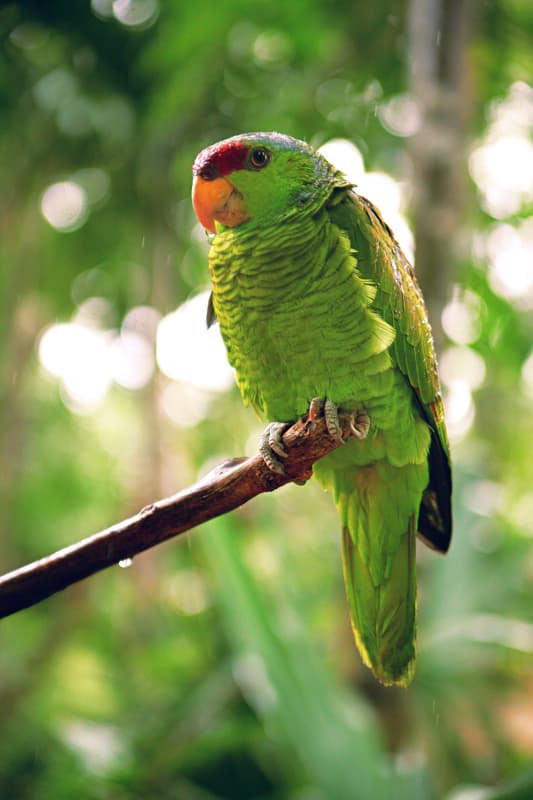
The lilac-crowned amazon, also known as Finsch's parrot, is a parrot species endemic to the Pacific slopes of Mexico. It is distinguished by its predominantly green plumage, a maroon forehead, and a striking violet-blue crown and neck. Unfortunately, this vibrant parrot has faced significant population decline, leading to its classification as Endangered by the IUCN.
New Caledonian lorikeet
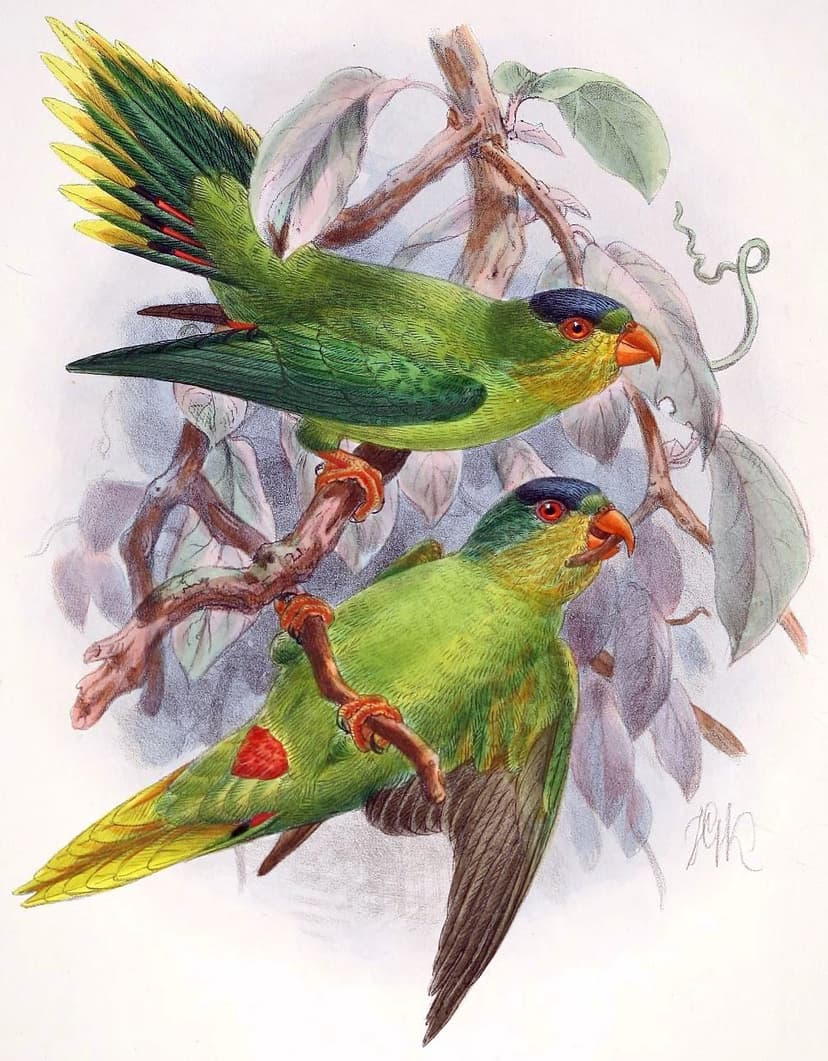
The New Caledonian lorikeet is a lorikeet species endemic to the Melanesian island of New Caledonia, possibly extinct. Historically assigned to the genus Charmosyna, it was moved to Vini based on molecular phylogenetic studies. This small, elusive bird is characterized by its green plumage with violet-blue and dark blue markings, and a distinctive red anal region.