
Pfrimer's parakeet
Pfrimer's parakeet, also known as Pfrimer's conure or maroon-faced conure, is a non-migratory parrot species endemic to the Caatinga forest of Brazil's Goiás and Tocantins regions. It is distinguished by its brown and red face, blue crown, and maroon tail, and is currently classified as endangered due to significant habitat loss from deforestation for agriculture.
Key Facts
- ›Endemic to the Caatinga forest in Goiás and Tocantins, Brazil.
- ›Characterized by brown and red faces, blue crowns, and maroon tails.
- ›Classified as Endangered by the IUCN and Birdlife International.
- ›Population is decreasing due to deforestation for agriculture.
- ›Flocks typically consist of up to 10 birds.
- ›Diet includes fruits, berries, seeds, flowers, and insects.
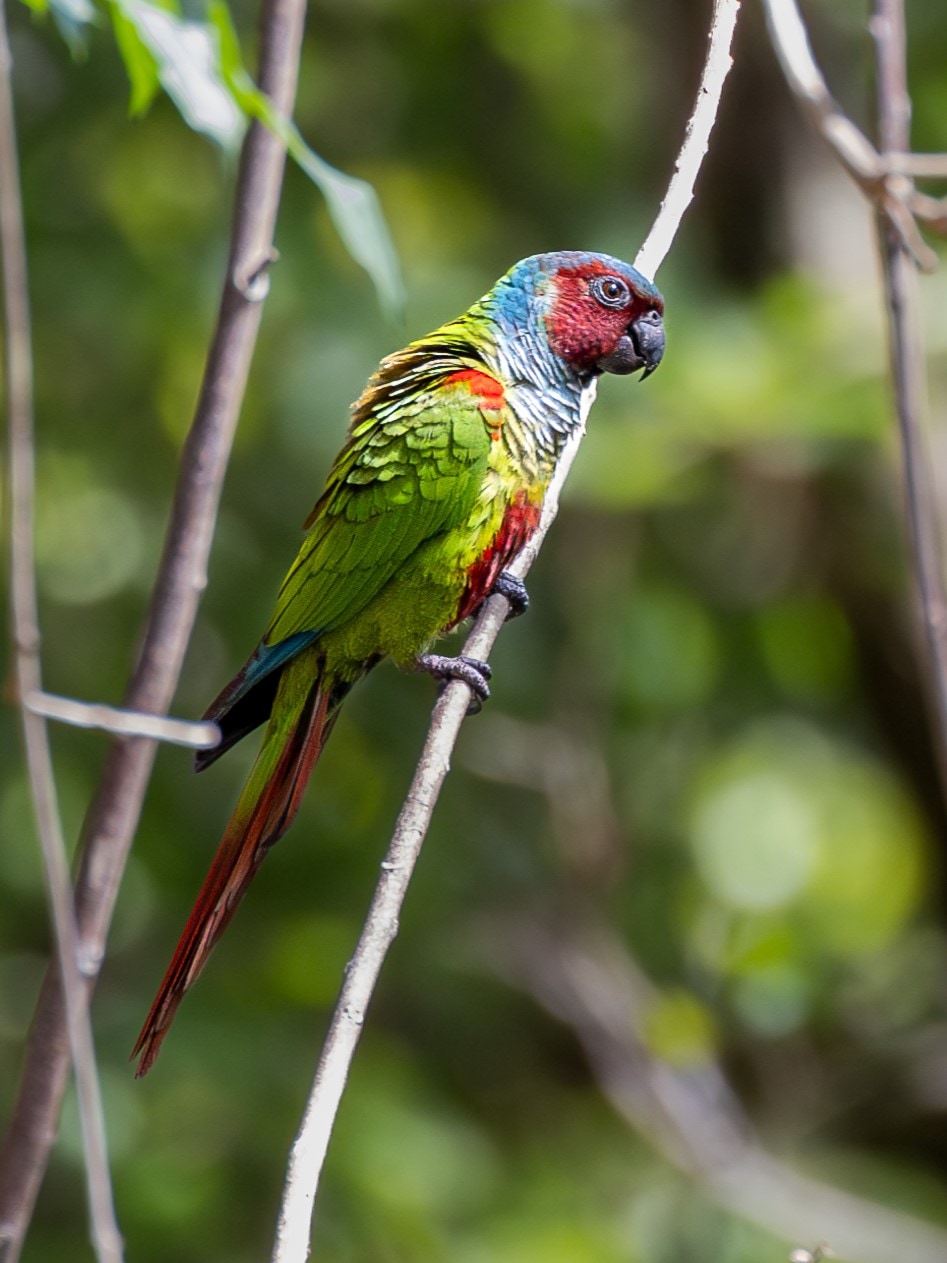
Pfrimer's Conure, Goias Parakeet, Maroon-Faced Conure
Brazil
Dry Deciduous Forests, Semi-Deciduous Forests, Caatinga Forest
Brown and Red Faces, Blue Crown, Maroon Tail, Reduced Pale Patch On Ear-Coverts
Fruits, Berries, Seeds, Flowers, Insects, Insect Larvae
Noisy When In Flight, Quiet When Resting Or Feeding
About Pfrimer's parakeet
Pfrimer's parakeet, scientifically known as Pyrrhura pfrimeri, is a non-migratory species belonging to the parrot family, Psittacidae. It is also commonly referred to as Pfrimer's conure, Goias parakeet, and maroon-faced conure. This species is endemic to the Caatinga forest regions of Goiás and Tocantins in Brazil, primarily inhabiting dry deciduous and semi-deciduous forest environments. Historically considered a subspecies of the white-eared parakeet, genetic studies have confirmed its status as a distinct species, differentiated by its range, habitat preferences, and specific plumage characteristics, particularly a greatly reduced pale patch on its ear-coverts.
Morphology and Appearance
Adult and juvenile Pfrimer's parakeets exhibit similar plumage. They are characterized by brown and red coloration on their faces and ear coverts, complemented by a striking blue crown. Their eyes are surrounded by white or grey rings, and they possess grey or black beaks. The neck feathers are typically green or blue. The breast displays a blend of blue or green with hints of white and brown, while the abdomen is a reddish-brown. The wings feature a mix of red, green, and blue, and their tails are predominantly maroon with a green base. Adult individuals typically measure around 22–23 cm in length from head to tail.
Ecology and Behavior
These parakeets are social creatures, commonly observed in flocks of up to 10 individuals. While generally noisy during flight, they tend to be quiet when resting or foraging within the forest canopy. The breeding season is believed to occur from April to June, with females typically laying between 3 to 8 eggs per nest. Their diet is varied, consisting mainly of fruits, berries, and seeds, but they have also been documented consuming flowers and insects, including their larvae.
Conservation Status
Pfrimer's parakeet is classified as Endangered by the International Union for Conservation of Nature (IUCN) and BirdLife International. The population, estimated to be between 20,000 and 49,000 individuals, is currently in decline. The primary driver of this decrease is extensive deforestation for agricultural purposes, which has led to habitat loss and degradation. Their range is also severely fragmented, further exacerbating conservation challenges. While occasional capture for the exotic pet trade occurs, it is not the main threat. Conservation efforts are limited, with a focus on protecting its native habitat, though more general research is needed to fully understand and protect the species.
Source: Wikipedia ↗
Frequently Asked Questions
What is Pfrimer's parakeet known for?
Pfrimer's parakeet is known for its distinctive plumage, including a brown and red face, blue crown, and maroon tail. It is also recognized for its endangered status, primarily due to habitat loss.
Where is Pfrimer's parakeet found?
This parakeet species is endemic to the Caatinga forest in the Goiás and Tocantins regions of Brazil. They inhabit dry deciduous and semi-deciduous forest areas.
What are the main threats to Pfrimer's parakeet?
The primary threat to Pfrimer's parakeet is deforestation for agricultural expansion, which has led to significant habitat degradation and fragmentation. Mining and hunting also contribute to population decline.
What is the conservation status of Pfrimer's parakeet?
Pfrimer's parakeet is classified as Endangered by the IUCN and BirdLife International. Its population is decreasing, and its natural habitat has shrunk considerably.
What do Pfrimer's parakeets eat?
Their diet primarily consists of fruits, berries, and seeds. They are also known to consume certain flowers and insects, including their larvae.
Are Pfrimer's parakeets social birds?
Yes, Pfrimer's parakeets are social birds and are typically found in flocks. These flocks can comprise up to 10 individuals and are often noisy when flying but quiet when resting or feeding.
Related Parrot species
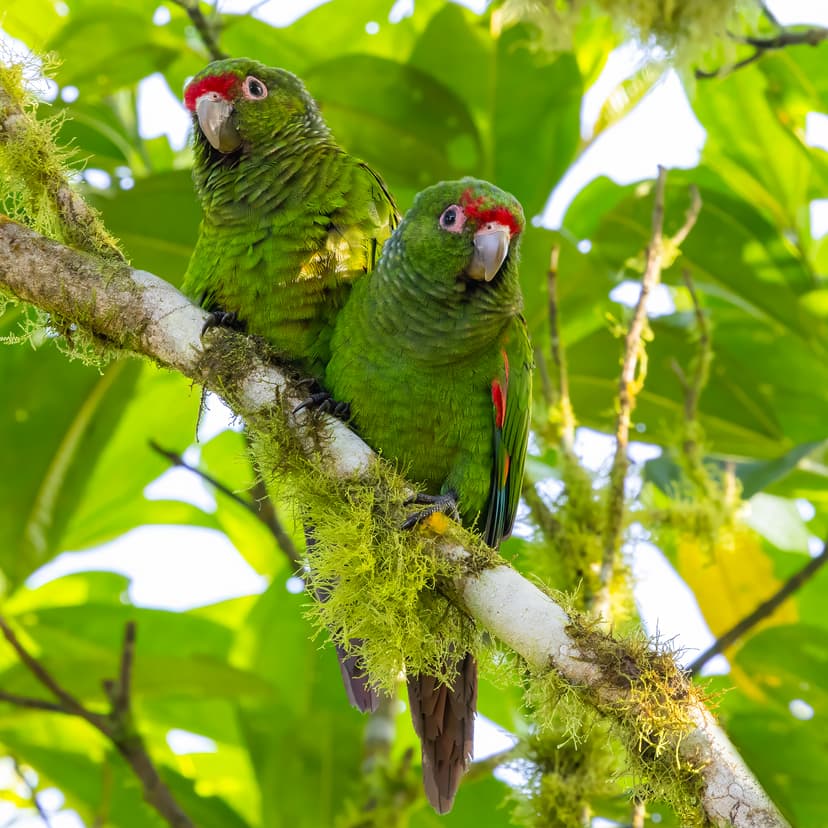
El Oro parakeet
The El Oro parakeet is an endangered parrot species endemic to the west slope of the Ecuadoran Andes. Its most distinctive features include a predominantly green plumage with a red forehead and lores in males, and a maroon tail. These birds are known to forage in flocks and exhibit cooperative breeding behaviors.
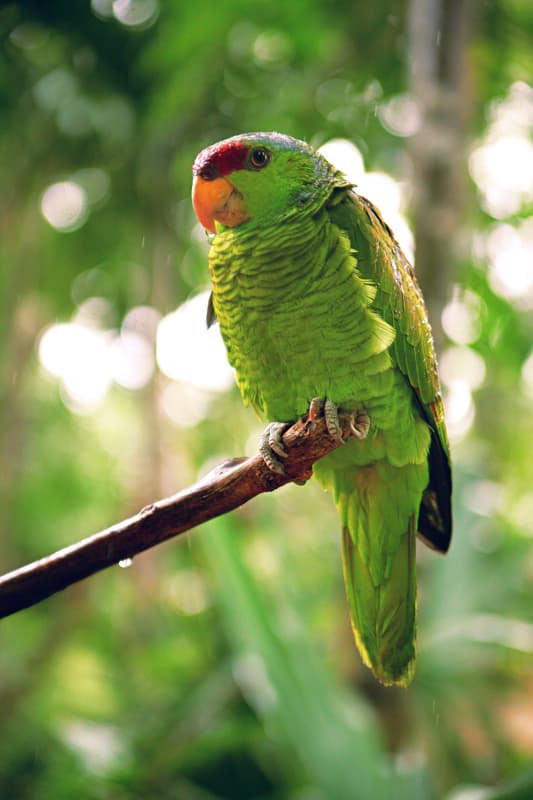
Lilac-crowned amazon
The lilac-crowned amazon, also known as Finsch's parrot, is a parrot species endemic to the Pacific slopes of Mexico. It is distinguished by its predominantly green plumage, a maroon forehead, and a striking violet-blue crown and neck. Unfortunately, this vibrant parrot has faced significant population decline, leading to its classification as Endangered by the IUCN.
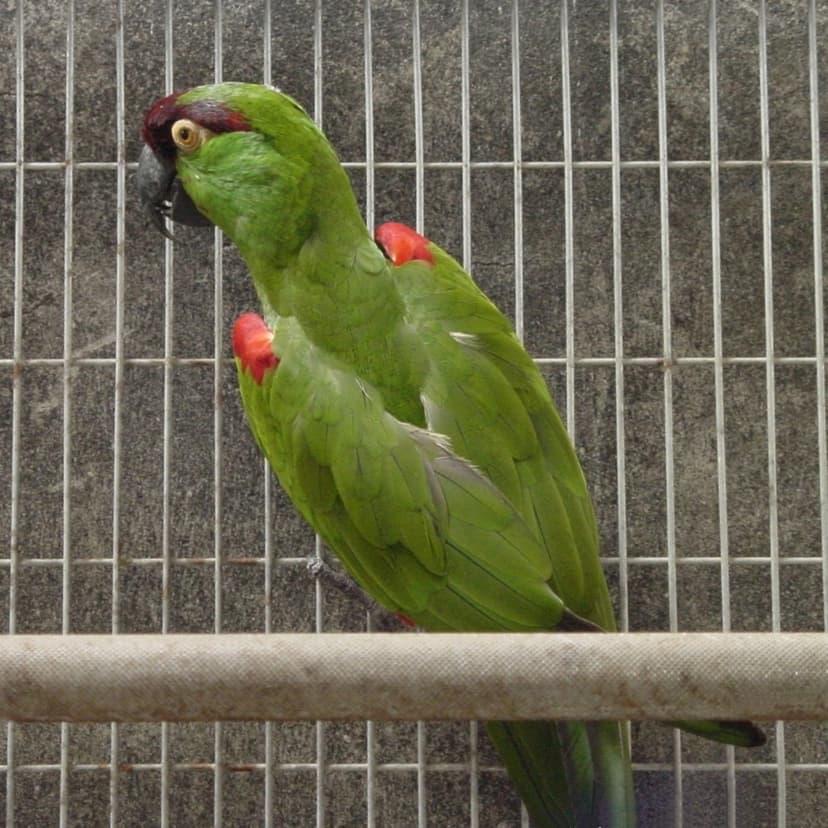
Maroon-fronted parrot
The maroon-fronted parrot is a large, macaw-like parrot native to northeastern Mexico. It is distinguished by its dark green plumage, maroon forehead, and red shoulder patches. These parrots are known for their distinctive "cr-a ak" vocalizations and their tendency to nest in large cliffside colonies.