
Blue-crowned hanging parrot
Loriculus galgulus·Psittaculidae·12·28
The blue-crowned hanging parrot is a small parrot species found in Southeast Asia, known for its vibrant green plumage and a distinctive blue crown on the male's head. These parrots are notable for their unique habit of sleeping upside down, a behavior believed to be an adaptation for predator avoidance. They play a cultural role in some regions, symbolizing love and courage.
Key Facts
- ›Endemic to southern Burma and Thailand, Malaya, Singapore, and Indonesia.
- ›Adult males have a blue crown, red throat, and red rump bordered by yellow.
- ›Females are duller green with less apparent blue crown and no red throat mark.
- ›Known for sleeping upside down by hanging from branches for camouflage and safety.
- ›Diet primarily consists of fruits, supplemented by palm oil nuts, seeds, nectar, and flowers.
- ›Culturally significant in Riau, symbolizing love and courage.

Serindit Melayu
Southeast Asia
Forests, Forest Edges, Swamps, Riverine Forest, Bamboo Patches, Mangrove Wooded Gardens, Coconut Groves, Plantations
Blue crown patch on males, Red throat mark on males, Red rump bordered by yellow on males, Hanging sleeping position
Fruits, Papaya, Rambutan, Palm Oil Nuts, Seeds, Nectar, Flowers
Shrill and squeaky calls when flying, Rapid and ringing calls when flying in flocks, Shrill two-syllable calls when foraging
- Nests built in natural cavities
- Nests made from substrate like bark and leaves
- Nest material carried in contour feathers
About Blue-crowned hanging parrot
The blue-crowned hanging parrot (Loriculus galgulus) is a small parrot species native to the forests and diverse habitats of Southeast Asia, including southern Burma, Thailand, Malaysia, Singapore, Sumatra, Borneo, and nearby islands. This species is readily identified by its predominantly green plumage and, in adult males, a striking blue crown patch on its head, complemented by a red throat mark and a red rump bordered by yellow. Females exhibit duller green plumage and less pronounced or absent blue crown markings.
Unique Adaptations and Behavior
One of the most distinctive behaviors of the blue-crowned hanging parrot is its habit of sleeping upside down, hanging from tree branches by its feet. This unusual posture, coupled with their green coloration, serves as camouflage amongst foliage, offering protection from nocturnal predators. Young and sick birds, lacking the full development for hanging, perch upright to sleep. When in flight, they produce shrill and squeaky calls, which become rapid and ringing when in flocks, and they utter shrill two-syllable calls while foraging.
Diet and Reproduction
The diet of the blue-crowned hanging parrot in the wild consists primarily of fruits such as papaya and rambutan, supplemented by palm oil nuts, seeds, nectar, and flowers. They exhibit varied feeding techniques, often carrying food to a perch using their feet or bills. The breeding season typically occurs from January to July, during which males perform elaborate courtship displays involving fluffing their red rump feathers and vocalizing. Pairs maintain their bond through courtship feeding, where the male regurgitates food for the female. Nests are constructed in natural cavities using bark and leaves, and a female will incubate a clutch of up to four eggs. Chicks fledge approximately 33 days after hatching, following a 20-day incubation period.
Cultural Significance
Beyond its ecological role, the blue-crowned hanging parrot holds cultural significance in regions like Riau, where it is known as Serindit Melayu. It is symbolically associated with love and courage and is featured in local folklore, traditional clothing, and poetry. The species is also commonly kept as a pet.
Source: Wikipedia ↗
Frequently Asked Questions
What is the blue-crowned hanging parrot's scientific name?
The scientific name for the blue-crowned hanging parrot is *Loriculus galgulus*. It was first described by Carl Linnaeus in 1758, initially placed in the genus *Psittacus* before being moved to the genus *Loriculus*.
Where are blue-crowned hanging parrots found naturally?
These parrots are native to southern Thailand, western Malaysia, Singapore, Sumatra, Borneo, and other nearby islands. They inhabit a variety of forest types, including swamps, bamboo patches, and mangrove areas.
What makes the blue-crowned hanging parrot distinctive?
The blue-crowned hanging parrot is distinguished by its green plumage and, in males, a characteristic blue crown patch on its head, a red throat mark, and a red rump. Their unique habit of sleeping upside down, hanging from branches, is also a notable characteristic.
What do blue-crowned hanging parrots eat?
In the wild, their diet mainly comprises fruits like papaya and rambutan. They also consume palm oil nuts, seeds, nectar, and fresh flowers. They employ various feeding methods, often carrying food to a perch using their feet or bills.
How do blue-crowned hanging parrots sleep?
A distinctive behavior of the blue-crowned hanging parrot is sleeping upside down by hanging from tree branches, using either one or both feet. This posture, combined with their green plumage, helps them camouflage among foliage to avoid nighttime predators.
Are there differences between male and female blue-crowned hanging parrots?
Yes, there is sexual dimorphism. Adult males exhibit a prominent blue crown, a red throat mark, and a red rump with a yellow lower back. Females have duller green plumage, a less apparent or absent blue crown, and lack the red throat mark.
Related Parrot species

Australian king parrot
The Australian king parrot is a striking parrot species native to the humid, forested eastern regions of Australia. It is distinguished by the vibrant red plumage of the adult male, contrasting with the predominantly green female. These parrots are known for their relatively quiet nature and devotion to their human companions when kept as pets.
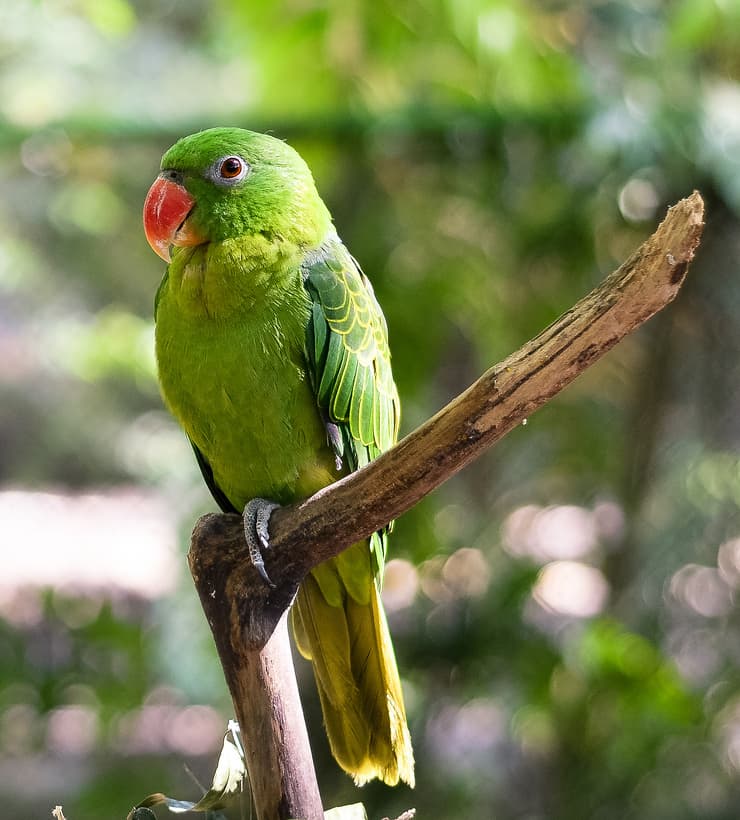
Blue-backed parrot
The blue-backed parrot is a large, endangered parrot species endemic to the Philippines. Primarily green with distinctive blue rump and wing bends, it is often confused with the blue-naped parrot but can be differentiated by its red iris, more pronounced sexual dimorphism, and vocalizations. Its main threats are habitat loss and trapping for the pet trade, leading to a critically low population.

Goldie's lorikeet
Goldie's lorikeet is a distinctive parrot species native to the highlands of New Guinea. It is recognized for its vibrant, multi-colored head plumage, which includes red, blue, and purple, contrasting with its predominantly green body and yellowish-streaked chest. This species is known for its quiet and non-aggressive temperament, making it a well-regarded pet.