
Blue-crowned parakeet
Thectocercus acuticaudatus·Psittacidae·37·140-190
The blue-crowned parakeet, also known as the blue-crowned conure or sharp-tailed conure, is a small green parrot native to South America. It is distinguished by its vibrant blue head, pale beak, and a long, pointed tail. These birds inhabit savannas and woodland edges, avoiding dense rainforests.
Key Facts
- ›Predominantly green plumage with a distinctive blue head.
- ›Native to a wide range of South America, from Colombia to northern Argentina.
- ›Inhabits savannas, woodlands, and forest margins, but not dense rainforests.
- ›Measures approximately 37 cm (14.5 in) in length and weighs between 140-190 g.
- ›Nests in tree holes, laying clutches of 3-4 white eggs.
- ›Popular as pets due to their social nature and ability to talk, though they require significant attention.
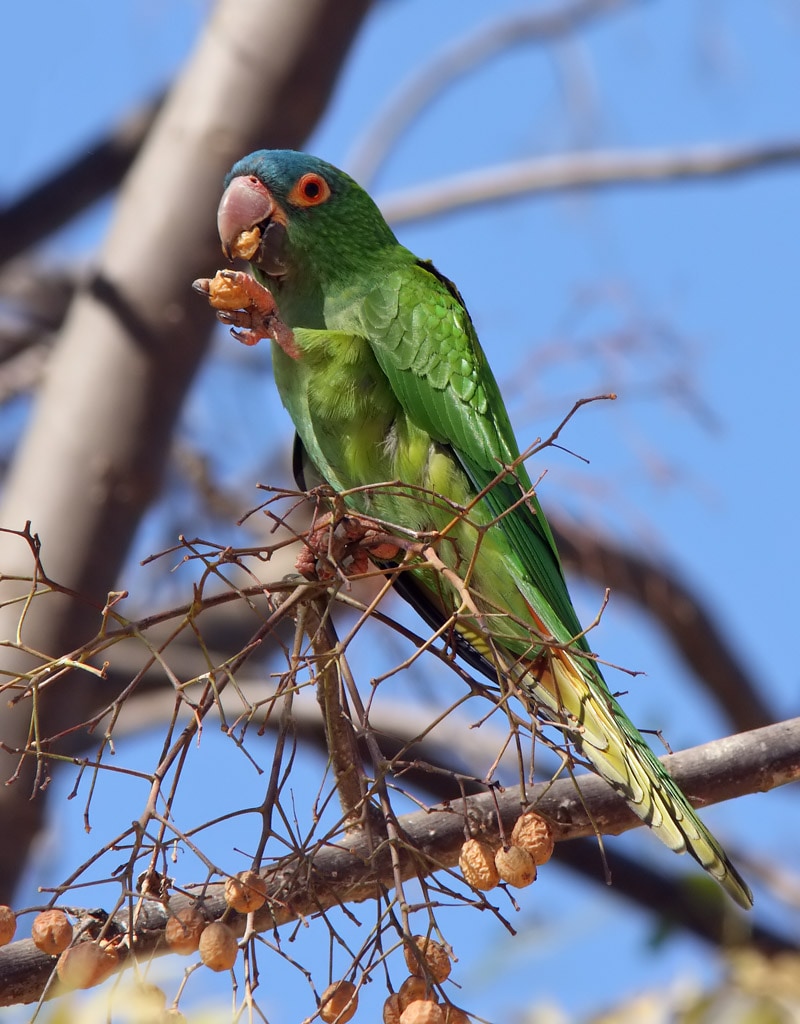
Blue-Crowned Conure, Sharp-Tailed Conure
South America
Savanna-Like Habitats, Woodland, Forest Margins
- Blue Crown
- Pale Beak
- Sharp-Tailed
- White Ring of Featherless Skin Around the Eyes
Social, Intelligent, High-Energy, Requires Attention
- Relatively good talkers compared to other conures
- Can be quite loud
Hole In A Tree
About Blue-crowned parakeet
The blue-crowned parakeet, scientifically known as Thectocercus acuticaudatus, is a vibrantly colored parrot native to South America. It is also recognized by common names such as the blue-crowned conure and sharp-tailed conure.
Physical Description
This species is predominantly green with a distinctive blue coloration adorning its forehead, crown, cheeks, and ears. A notable feature is a ring of white, featherless skin encircling each eye, although this can be bright orange-yellow in certain subspecies. The parrot measures approximately 37 cm (14.5 inches) in length and typically weighs between 140 and 190 grams (4.9 to 6.7 ounces). Its tail feathers are green on top and feature a maroon to red-brown underside that can iridesce to bright orange and scarlet under direct light.
Distribution and Habitat
Blue-crowned parakeets inhabit a broad geographical range across South America, extending from eastern Colombia to the northern regions of Argentina, and including islands like Curacao in the southern Caribbean. They are found in savanna-like environments, woodlands, and forest margins. However, they tend to avoid the dense, humid conditions of true rainforests.
Breeding and Reproduction
In the wild, the blue-crowned parakeet nests in cavities found in trees. A clutch typically consists of three to four white eggs. The female undertakes the incubation for about 26 days, and the young birds, known as chicks, typically fledge and leave the nest around 52 days after hatching.
In Captivity and Aviculture
In aviculture, the blue-crowned parakeet is widely known as the blue-crowned conure. They are popular as pets due to their social nature and their ability to mimic speech, often being considered relatively good talkers among conures. While they are described as one of the more manageable parrots for keepers, they are also intelligent and energetic birds that require significant attention, ample space, and plenty of enrichment. Their capacity for loud vocalizations means they are best suited for experienced bird enthusiasts rather than casual owners.
Taxonomy
The blue-crowned parakeet is the sole species within the monotypic genus Thectocercus. Historically, it was classified under the genus Aratinga, but phylogenetic studies led to its reclassification into distinct genera. The species itself is further divided into five recognized subspecies.
Source: Wikipedia ↗
Frequently Asked Questions
What are the different names for the blue-crowned parakeet?
The blue-crowned parakeet is also commonly referred to as the blue-crowned conure or the sharp-tailed conure. In scientific literature, it is known by its binomial name, Thectocercus acuticaudatus.
What is the typical size and weight of a blue-crowned parakeet?
These parakeets are medium-sized birds, measuring around 37 cm (14.5 inches) in length. Their weight typically ranges between 140 and 190 grams (4.9 to 6.7 ounces).
Where do blue-crowned parakeets live in the wild?
Blue-crowned parakeets are found across large parts of South America, from eastern Colombia extending to northern Argentina. Their preferred habitats include savannas, woodlands, and the edges of forests, but they tend to avoid very dense and humid jungle environments.
What are the nesting and breeding habits of this species?
Their nests are typically found in holes within trees. Females usually lay a clutch of three to four white eggs, which are incubated for about 26 days. The chicks fledge from the nest approximately 52 days after hatching.
Are blue-crowned parakeets good pets?
Yes, blue-crowned parakeets are quite popular as pets and are considered relatively good talkers compared to other conures. They are known for being social and are often described as one of the 'easier' parrots to care for, though they are intelligent and energetic.
What are the distinctive physical characteristics of the blue-crowned parakeet?
These parrots are predominantly green with a striking blue coloration on their forehead, crown, cheeks, and ears. They also have a ring of white, featherless skin around their eyes, and their tail feathers exhibit iridescence.
Related Parrot species
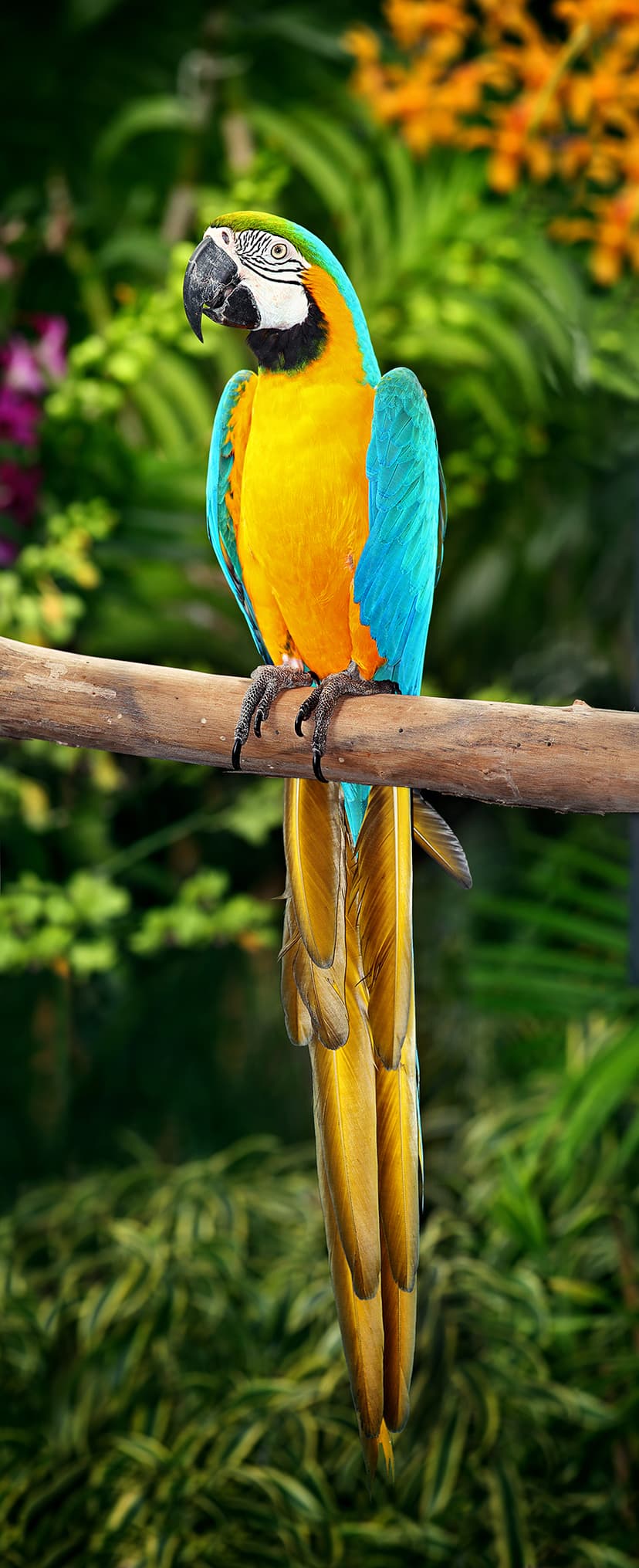
Blue-and-yellow macaw
The blue-and-yellow macaw, also known as the blue-and-gold macaw, is a large Neotropical parrot native to the forests, woodlands, and savannahs of tropical Central and South America, including Trinidad. It is distinguished by its vibrant blue upperparts, yellow to orange underparts, and a green crown, making it one of the most popular and commonly kept macaw species in aviculture due to its striking appearance and ability to bond with humans.

Budgerigar
The budgerigar, also known as the common parakeet or budgie, is a small, seed-eating parrot native to Australia. Naturally green and yellow with black markings, captive breeding has produced a wide array of colors. These nomadic, social birds are highly popular pets worldwide due to their small size, affordability, and remarkable ability to mimic human speech.

Chestnut-fronted macaw
The chestnut-fronted macaw, also known as the severe macaw (Ara severus), is one of the larger mini-macaws, distinguished by a chestnut brown patch above its beak and unique feathered lines around its eyes. Native to a broad swathe of northern South America, this species is known for its gregarious nature, which can become more assertive at puberty, earning it the "severe" moniker.