
Chestnut-fronted macaw
Ara severus·Psittacidae·45-50·300-410
The chestnut-fronted macaw, also known as the severe macaw (Ara severus), is one of the larger mini-macaws, distinguished by a chestnut brown patch above its beak and unique feathered lines around its eyes. Native to a broad swathe of northern South America, this species is known for its gregarious nature, which can become more assertive at puberty, earning it the "severe" moniker.
Key Facts
- ›Reaches approximately 45 cm in length, with half of that being tail length.
- ›Found across northern South America, from Panama to Amazonian Brazil and central Bolivia.
- ›Possesses a distinctive chestnut brown patch on its head and feathered lines in its white eye patches.
- ›Lifespan can range significantly from 30 to 80 years.
- ›Nests in tree cavities, typically laying two to three white eggs per clutch.

Severe Macaw
Northern South America, Panama, Amazonian Brazil, Central Bolivia
Forests, Woodlands
- Lines of feathers in the bare patches around the eyes
Gregarious, Can Become Aggressive At Puberty
Nests in a hole in a tree
About Chestnut-fronted macaw
The Chestnut-fronted Macaw
The chestnut-fronted macaw, scientifically known as Ara severus and often called the severe macaw, is one of the largest members of the mini-macaw group. This striking bird measures approximately 45 to 50 cm (17.5 to 19.5 inches) in length, with its tail accounting for about half of its total size. Its plumage is predominantly green, accented with patches of red and blue on the wings. A distinctive feature is the chestnut brown patch located just above its beak, and uniquely among miniature macaws, it possesses lines of small black feathers within its white eye patches.
Geographic Distribution and Habitat
These macaws are native to a significant portion of northern South America, with their range extending from Panama southward through the Amazonian regions of Brazil and into central Bolivia. They are typically found in forest and woodland environments. A feral population has also been established in Florida, indicating their adaptability.
Behavior and Temperament
In their natural habitat, chestnut-fronted macaws are known to be gregarious, often seen in social groups. However, a notable behavioral shift occurs as they mature; at puberty, their temperament can become more aggressive, which is the origin of their common name, 'severe macaw'. While this tendency can be managed and curbed in captive environments, it necessitates significant handling and socialization to ensure they become tame pets.
Breeding and Lifespan
The breeding habits of the chestnut-fronted macaw involve nesting in tree cavities. A typical clutch consists of two to three white eggs, which the female incubates for approximately 28 days. The young macaws remain in the nest until they are about 70 days old, at which point they fledge. The lifespan of this species is remarkably long, with recorded ranges from 30 to as many as 80 years, both in the wild and in captivity.
Source: Wikipedia ↗
Frequently Asked Questions
What are the defining physical characteristics of the chestnut-fronted macaw?
The chestnut-fronted macaw is primarily green with red and blue wing patches. It is notably identified by a chestnut brown patch above its beak and unique lines of small black feathers within its white eye patches, a feature not found in other miniature macaws.
Where is the natural habitat of the chestnut-fronted macaw?
This macaw is found across a wide area of northern South America, inhabiting regions from Panama south into the Amazonian parts of Brazil and central Bolivia. A feral population has also been established in Florida.
What is the typical lifespan of a severe macaw?
The lifespan of the chestnut-fronted macaw is quite variable, with records indicating a range from 30 to 80 years of age.
How does the temperament of the chestnut-fronted macaw change?
In the wild, chestnut-fronted macaws are generally gregarious. However, their personality can become more aggressive as they reach puberty, leading to their common name 'severe macaw'. This tendency can be managed in captivity with significant handling.
What are the nesting and breeding habits of this species?
Chestnut-fronted macaws nest in holes found in trees. A typical clutch consists of two or three white eggs, which the female incubates for about 28 days. The chicks then fledge from the nest approximately 70 days after hatching.
Related Parrot species
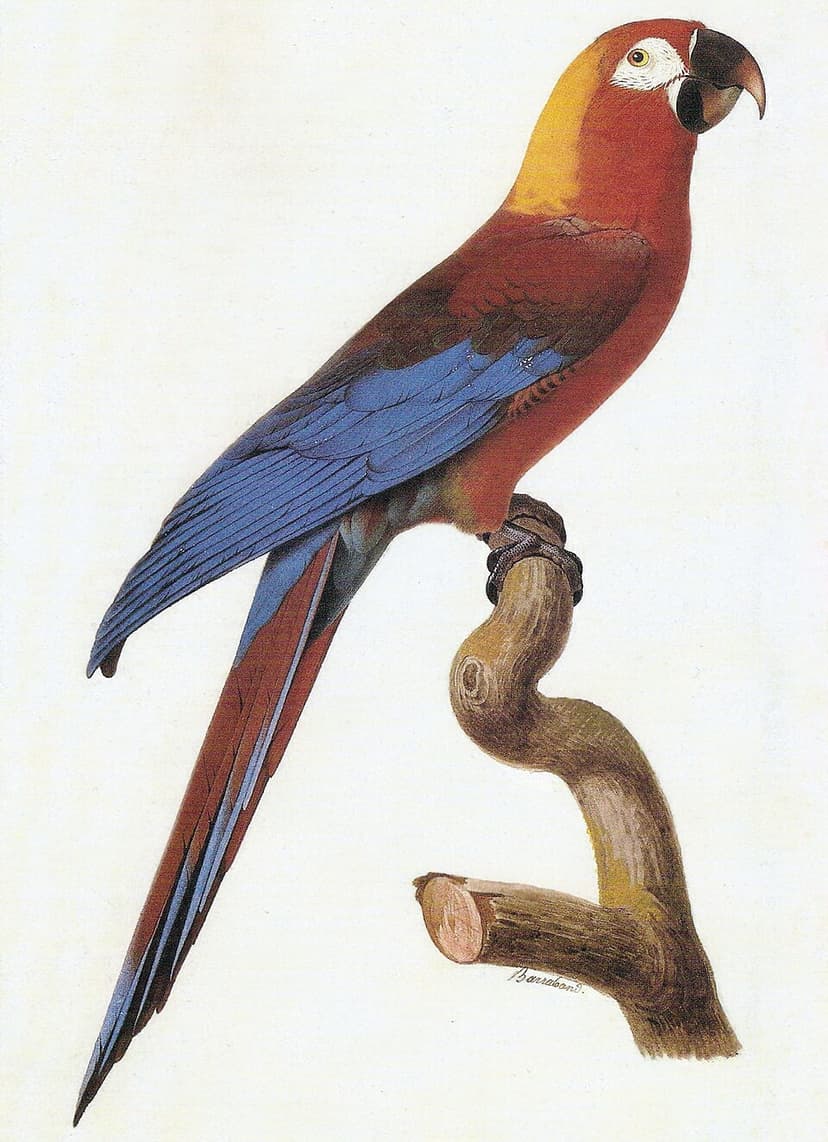
Cuban macaw
The Cuban macaw (Ara tricolor) was a species of macaw native to Cuba and Isla de la Juventud, becoming extinct in the late 19th century. It was one of the smallest macaws, characterized by a vibrant plumage of red, orange, yellow, green, brown, and blue. Its demise was attributed to hunting, habitat destruction, and possibly hurricanes, despite limited knowledge of its behavior.

Fischer's lovebird
Fischer's lovebird is a small parrot species native to a limited area of east-central Africa, south and southeast of Lake Victoria. Named after German explorer Gustav Fischer, this species is distinguished by its vibrant plumage, featuring a green body, yellow neck, orange chest, and a striking red beak. They are known for their strong pair bonds and are popular in aviculture, though they require specialized care.
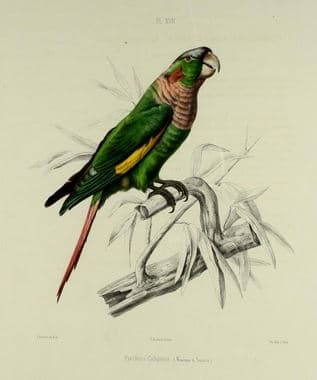
Flame-winged parakeet
The flame-winged parakeet, also known as the brown-breasted parakeet, is a medium-sized parrot endemic to the eastern Andean slopes of Colombia. This species is distinguished by its bright yellow primary coverts and bluish primaries, with vivid yellow and orange-red wing markings visible in flight, which give it its common name. It is currently facing threats from habitat loss and fragmentation, leading to a declining population.