
Blue-and-yellow macaw
The blue-and-yellow macaw, also known as the blue-and-gold macaw, is a large Neotropical parrot native to the forests, woodlands, and savannahs of tropical Central and South America, including Trinidad. It is distinguished by its vibrant blue upperparts, yellow to orange underparts, and a green crown, making it one of the most popular and commonly kept macaw species in aviculture due to its striking appearance and ability to bond with humans.
Key Facts
- ›Reaches a length of 81–91 cm (32–36 in) and weighs 1.0–1.5 kg (2–3 lb).
- ›Features bright aqua blue feathers on its back and wings, with a lime green head and a rich yellow underside.
- ›Inhabits forest, woodland, and savannah environments across tropical Central and South America and Trinidad.
- ›Has a lifespan of 30–35 years in the wild and can live 60 or more years in captivity.
- ›Breeds primarily in dead palm trees, with females laying two to three eggs.
- ›Listed as Least Concern by Birdlife International, though trade is restricted under CITES Appendix II.
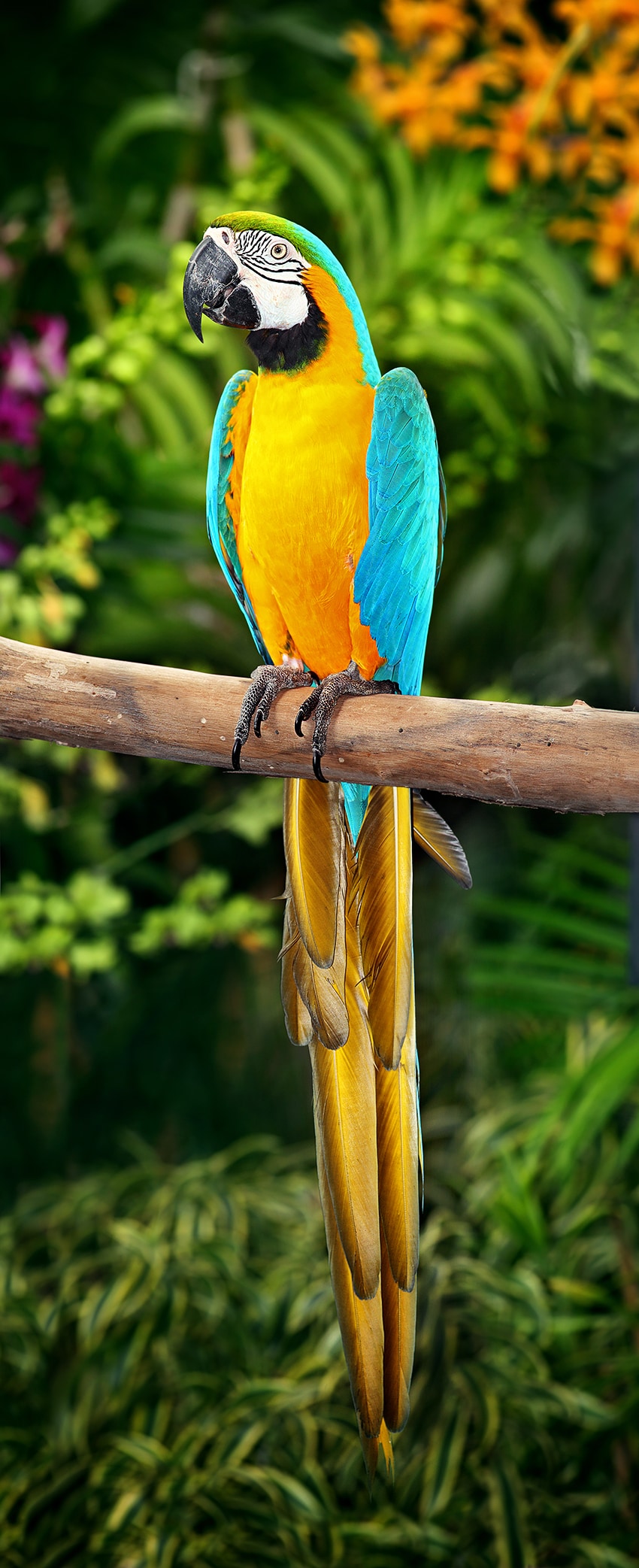
Blue-and-Gold Macaw
Central America, South America, Caribbean
Forest, Woodland, Savannah
- Striking blue upperparts and yellow/orange underparts
- Green crown
- Bare white facial skin with fine black feather stripes around the eyes
- Black beak
- Gray feet with black talons
- Pale light yellow irises
Nuts, Seeds, Fruits, Vegetable Matter, Bark, Leaves, Insects, Snails
- Bond closely to humans
- Can 'scream' for attention
- May blush bare facial skin and fluff cheek feathers when interacting with humans
- Loud Vocalizations, Including 'Screams' and 'Flock Calls'
- Ability To Talk
- Nest almost exclusively in dead palms, most commonly in Mauritia flexuosa palms.
About Blue-and-yellow macaw
The blue-and-yellow macaw (Ara ararauna), also widely known as the blue-and-gold macaw, is a large and striking parrot species native to the tropical regions of Central and South America, extending to the island of Trinidad. Its distinctive plumage features a vibrant blue dorsum, a bright yellow to orange venter, and a gradient of green hues on its head, often complemented by a black beak and a bare white facial patch with fine black feather stripes.
Habitat and Distribution
This species inhabits a variety of environments, including forests, particularly seasonally flooded areas (varzea), as well as open sections of unflooded forests (terra firme), woodlands, and savannahs. Its natural range spans across numerous South American countries, including Panama, Colombia, Venezuela, Brazil, and Paraguay, and it is also found on Trinidad. While most populations breed in rural and forested areas, some have adapted to urban environments, nesting in ornamental dead palms within cities.
Physical Characteristics and Diet
Blue-and-yellow macaws are substantial birds, typically measuring between 81 and 91 cm (32–36 in) in length and weighing between 1.0 and 1.5 kg (2–3 lb). Their powerful beaks are used for breaking open hard-shelled nuts, a staple of their diet, which also includes seeds, fruits, vegetable matter, bark, and leaves. They have been observed to consume insects and snails, though these are less common food sources.
Breeding Behavior
These macaws generally form lifelong pair bonds. They exhibit a strong preference for nesting in dead palm trees, particularly the Mauritia flexuosa species. A female typically lays two or three eggs, which she incubates for approximately 28 days. A notable aspect of their breeding is that often only one chick survives, as it is dominant and receives the majority of the food, leading to the demise of its siblings in the nest. Chicks fledge around 97 days after hatching.
Conservation Status and Aviculture
The blue-and-yellow macaw is listed as Least Concern by BirdLife International, indicating it is not currently facing immediate threats of extinction across its widespread range. However, its trade is restricted under CITES Appendix II. In aviculture, the blue-and-yellow macaw is exceptionally popular due to its colorful appearance, intelligence, and strong ability to bond with humans, making it the most commonly kept macaw species globally. They are known for their loud vocalizations and require ample space and attention in captivity. Their lifespan in captivity can exceed 60 years, a significant commitment for owners.
Distinctive Features
A unique characteristic observed in blue-and-yellow macaws during interactions with humans is their ability to blush their bare facial skin and fluff the feathers on their cheeks, head, and nape. This behavior is believed to be an expression of their emotional state, adding another layer to their complex social interactions.
Source: Wikipedia ↗
Frequently Asked Questions
What are the primary colors of a blue-and-yellow macaw?
The blue-and-yellow macaw is vividly colored with bright aqua blue feathers on its upper body, including its wings and back. Its head is lime green, and its underside, from the chest down, is a rich, deep yellow to light orange.
Where does the blue-and-yellow macaw live?
This species is found across tropical Central and South America, inhabiting forests, woodlands, and savannahs. Its range includes countries such as Panama, Colombia, Venezuela, Brazil, and Paraguay, as well as the island of Trinidad.
How long do blue-and-yellow macaws live?
In the wild, blue-and-yellow macaws typically live for 30 to 35 years. In captivity, with good care, a well-tended macaw can live for 60 years or more, potentially outliving their owners.
What do blue-and-yellow macaws eat?
Their diet consists primarily of nuts, seeds, fruits, and vegetable matter. They also consume bark and leaves, and have been reported to eat insects and snails, though this is rare.
Are blue-and-yellow macaws good pets?
Blue-and-yellow macaws are very popular in aviculture due to their striking colors, ability to talk, and capacity for close bonding with humans. They are the most commonly kept macaw species in captivity worldwide.
What are the vocalization characteristics of a blue-and-yellow macaw?
These macaws are known for their loud vocalizations, often described as 'screams,' which they use to seek attention. Destructive chewing and loud 'flock calls' are natural behaviors that are expected in captivity.
Related Parrot species
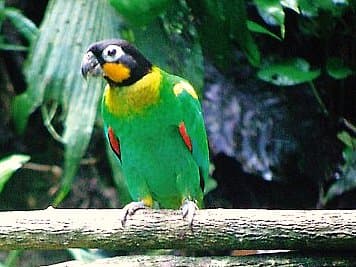
Orange-cheeked parrot
The orange-cheeked parrot, also known as Barraband's parrot, is a species of parrot native to the Amazonian Andes and humid lowland forests of the Amazon Basin in South America. Its distinctive features include an olive throat and breast, yellow thighs, and varying shades of orange on its wings and cheeks, with a notable white eye-ring. This species faces threats from habitat loss due to deforestation in its native range.

Orange-chinned parakeet
The orange-chinned parakeet (Brotogeris jugularis), also known as the Tovi parakeet, is a species of parrot found from southern Mexico through Central America into Colombia and Venezuela. This small, predominantly green parrot is distinctive for its bright orange chin patch, though this can be difficult to see. They inhabit semi-open to open landscapes and are often observed in pairs or small flocks.

Blue-fronted fig parrot
The blue-fronted fig parrot is a species of parrot found in the lowland forests of New Guinea, the Bird's Head Peninsula, and Salawati. It is primarily green with distinctive orange markings on the males' breasts and females' faces. This species is known for its diet of fig seeds and its nesting habits within arboreal termite mounds.