
Brown-throated parakeet
The brown-throated parakeet is a species of parrot found in Central and South America, as well as Caribbean islands. It is known for its distinctive yellow forehead and face, and its adaptability to various habitats, from savannas to forests. This vocal species plays a role in seed dispersal and is sometimes considered a crop pest.
Key Facts
- ›Found in Costa Rica, Panama, northern South America, and associated islands.
- ›Measures 23 to 28 cm (9.1 to 11 in) in length and weighs 76 to 102 g (2.7 to 3.6 oz).
- ›Diet includes seeds, fruits, nuts, flowers, leaves, and occasionally insects.
- ›Nests are typically excavated in termite mounds or tree cavities.
- ›Vocalization includes high-pitched screeching and harsh grating cries.
- ›IUCN conservation status is Least Concern.

St. Thomas Conure, Brown-Throated Conure
Costa Rica, Panama, South America, Caribbean Islands
Savannas, Arid Scrublands, Mangroves, Tropical Deciduous Forests, Gallery Forests, Evergreen Forests, Cultivated Areas, Pastures With Trees
- Yellow forehead, face, and chin
- Orange patch on the belly
- Dullish blue edges and tips on flight and tail feathers
Seeds, Fruits, Nuts, Flowers, Leaves, Insects
Vocal
- High-Pitched Screeching
- Harsh Grating 'Scraart Scraart' Cries
- Shorter, Bisyllabic 'Tchrit Tchrit' and 'Cherr Cheedit' Calls
- Chattering Notes From A Perch
- Contact Calls Show Character Shifts Between Locations
Cavities In Arboreal Termite Nests, Natural Cavities In Trees, Cliff Faces, Earthen Banks
About Brown-throated parakeet
The brown-throated parakeet, scientifically known as Eupsittula pertinax, is a vibrant parrot species inhabiting a broad geographical range that extends from Costa Rica and Panama into the northern parts of South America and numerous offshore islands. This species, also sometimes referred to as the St. Thomas conure or brown-throated conure in aviculture, is recognized for its adaptability, thriving in diverse environments such as savannas, arid scrublands, mangroves, and various types of forests, including cultivated areas with scattered trees.
Physical Characteristics
Adult brown-throated parakeets typically measure between 23 to 28 cm (9.1 to 11 inches) in length, with a weight range of 76 to 102 grams (2.7 to 3.6 ounces). The sexes are visually alike. The nominate subspecies, E. p. pertinax, displays a distinctive yellow forehead, face, and chin, complemented by green upperparts, a dull olive breast, and a grass-green belly featuring an orange central patch. Their wings and tail feathers are predominantly green, accented with dullish blue edges and tips. Immature birds exhibit much less yellow coloration.
Diet and Behavior
The diet of the brown-throated parakeet is varied, consisting of seeds, fruits, nuts, flowers, and leaves, with occasional insect consumption. Notably, a significant portion of their food in some areas originates from agricultural crops, leading to their classification as a crop pest, particularly for maize and fruit plantations. They are social birds, typically foraging in pairs or small flocks, and communicate through a range of vocalizations. These include high-pitched screeches, harsh grating cries, and shorter, bisyllabic calls. Contact calls can vary geographically, with island populations often exhibiting more distinct call patterns.
Reproduction and Conservation
Nesting behaviors vary across the species' range. In Suriname and the Antilles, breeding can occur almost year-round, while in Colombia and Venezuela, it is more concentrated between February and April. Nests are commonly constructed by excavating cavities within arboreal termite mounds or utilizing natural tree hollows, cliff faces, or earthen banks. A clutch typically contains two to seven eggs. The incubation period is around 23 days, and young birds fledge approximately 36 to 37 days after hatching. The brown-throated parakeet is assessed by the IUCN as Least Concern due to its large range and stable population, estimated at over five million mature individuals. However, concerns exist for specific subspecies, and some mainland populations face persecution due to agricultural damage, while nest poaching affects island populations.
Source: Wikipedia ↗
Frequently Asked Questions
What is the scientific name of the brown-throated parakeet?
The scientific name of the brown-throated parakeet is Eupsittula pertinax. It was first described by Carl Linnaeus in 1758 as Psittacus pertinax before being placed in the genus Eupsittula.
Where is the brown-throated parakeet found?
This species is found across a wide range, including Costa Rica, Panama, the northern mainland of South America, and various islands off the South American coast such as Aruba, Bonaire, Curaçao, and Margarita Island.
What does the brown-throated parakeet eat?
Its diet is varied and includes seeds, fruits, nuts, flowers, and leaves. In some areas, a significant portion of their food comes from human-planted crops, making them a notable crop pest.
How does the brown-throated parakeet reproduce?
They typically excavate cavities in arboreal termite nests or natural tree hollows for nesting. Clutch sizes usually range from two to seven eggs, with an incubation period of about 23 days in captivity and a fledging period of 36 to 37 days in the wild.
What are the conservation concerns for the brown-throated parakeet?
The overall population is considered stable and of Least Concern by the IUCN. However, some subspecies, like E. p. tortugensis, may be declining, and populations in Venezuela face persecution due to crop damage. Nest poaching is also a concern for island populations.
Related Parrot species
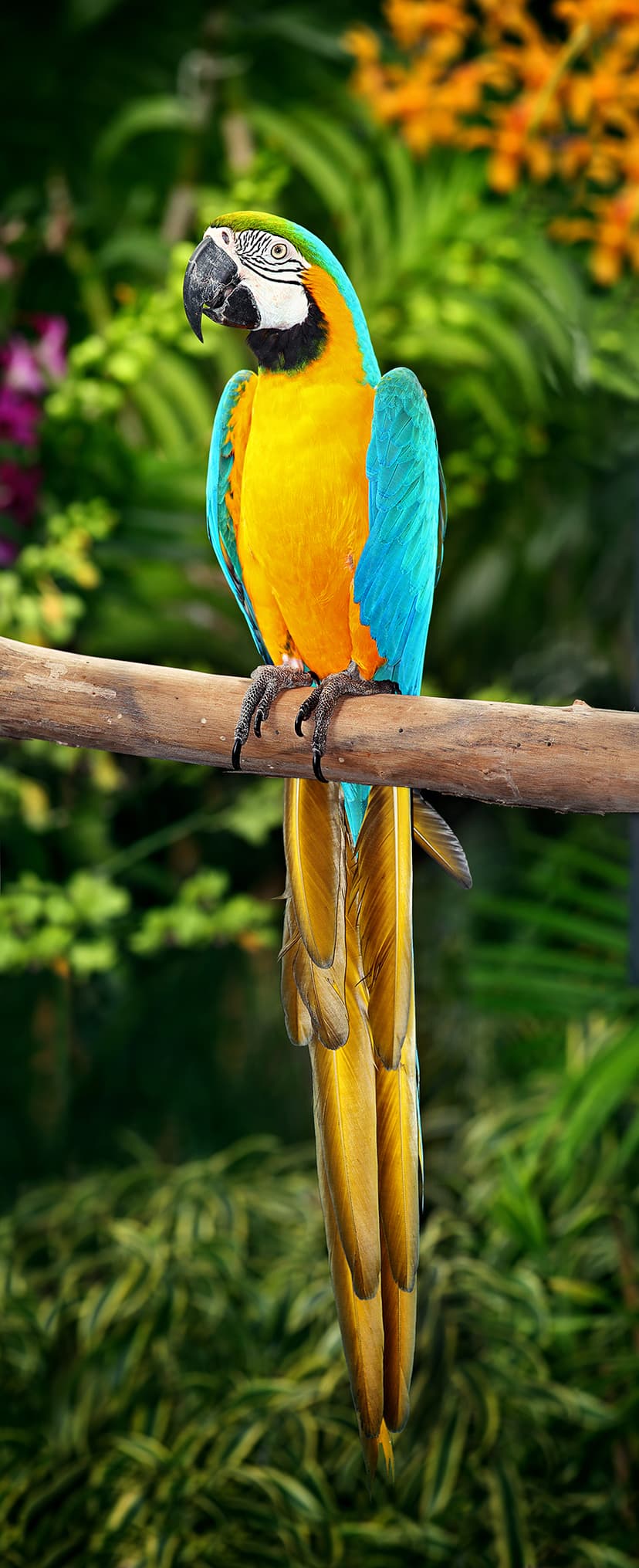
Blue-and-yellow macaw
The blue-and-yellow macaw, also known as the blue-and-gold macaw, is a large Neotropical parrot native to the forests, woodlands, and savannahs of tropical Central and South America, including Trinidad. It is distinguished by its vibrant blue upperparts, yellow to orange underparts, and a green crown, making it one of the most popular and commonly kept macaw species in aviculture due to its striking appearance and ability to bond with humans.

Jandaya parakeet
The Jandaya parakeet, scientifically known as Aratinga jandaya, is a small Neotropical parrot native to the wooded habitats of northeastern Brazil. It is distinguished by its vibrant plumage, featuring a yellow head and neck, reddish-orange body, and green wings and tail. While common in aviculture, where it is often called a "jenday conure," the species is considered locally rare in the wild.

Philippine hanging parrot
The Philippine hanging parrot, also known as the colasisi, is a small parrot species endemic to the Philippines. It is characterized by its predominantly green plumage with varying accents of red, orange, yellow, and blue depending on the subspecies. This adaptable species inhabits various forest types and even human-modified areas, but faces significant threats from habitat loss and the illegal pet trade, with some subspecies feared to be extinct.