
Jandaya parakeet
The Jandaya parakeet, scientifically known as Aratinga jandaya, is a small Neotropical parrot native to the wooded habitats of northeastern Brazil. It is distinguished by its vibrant plumage, featuring a yellow head and neck, reddish-orange body, and green wings and tail. While common in aviculture, where it is often called a "jenday conure," the species is considered locally rare in the wild.
Key Facts
- ›Native to northeastern Brazil, specifically in states like Piauí, Maranhão, Tocantins, and Ceará.
- ›Possesses striking plumage with a yellow head and neck, reddish-orange body, and green wings and tail.
- ›Measures approximately 30 cm (12 inches) in length and weighs between 125-140 grams.
- ›Known for its loud, shrill vocalizations and ability to MIMIC sounds.
- ›Nests in tree hollows, typically at least 15 meters (50 feet) above the ground.
- ›Listed as 'Least Concern' by the IUCN, but is protected under Brazilian law.

Jenday Conure, Yellow-Headed Conure, Flaming Conure
Brazil
Wooded Habitats, Lowland Deciduous Woodland, Palm Groves
Yellow head and neck, Reddish-orange body, Green wings and tail, Orange cheeks, Black bill, Whitish orbital ring, Ends of tail feathers tinged in blue
Fruits, Palm Nuts, Cultivated Plants
Intelligent, Trainable, Social, Loud
Very Loud, Shrill Call, Mimic Sounds, Words, and Phrases
Tree hollows, Typically at least 15 m from the ground
About Jandaya parakeet
The Jandaya parakeet (Aratinga jandaya), also known colloquially as the "jenday conure," is a small, vibrantly colored parrot native to the northeastern regions of Brazil. Its striking appearance features a bright yellow head and neck, a reddish-orange body, and contrasting green wings and tail, with the ends of its tail feathers often tinged in blue. This distinctive coloration, coupled with its black bill, makes it easily identifiable among Neotropical parrots.
Distribution and Habitat
The Jandaya parakeet has a wide range primarily within northeastern Brazil, inhabiting states such as Piauí, Maranhão, Tocantins, and Ceará. They are typically found in lowland deciduous woodlands and palm groves, preferring arboreal environments.
Diet and Behavior
In the wild, the Jandaya parakeet's diet consists mainly of fruits, including mangoes and cashew apples, along with palm nuts. They are also noted to be attracted to various cultivated plants. These birds are known for their social nature, generally living and traveling in flocks. They are also characterized by their loud, shrill calls and their ability to mimic sounds, including words and phrases, which contributes to their popularity in aviculture.
Breeding and Conservation
Jandaya parakeets nest in tree hollows, often at significant heights above the ground. In captivity, hens typically lay three to six eggs, with incubation lasting around 26 days. The young fledge approximately two months after hatching. While considered locally rare in some parts of its historical range, the species is listed as 'Least Concern' by the IUCN. It is protected under Brazilian law, with export and trade being forbidden, and is also listed on CITES Appendix II.
Aviculture
The Jandaya parakeet is a common sight in aviculture, appreciated for its intelligence and trainability. They can learn various pet-like behaviors and are known to be engaging companions. Their lifespan in captivity can extend up to 30 years.
Source: Wikipedia ↗
Frequently Asked Questions
What are the main physical characteristics of the Jandaya parakeet?
The Jandaya parakeet is a small parrot with a distinctive reddish-orange body, green wings and tail, and a bright yellow head and neck. It also features orange cheeks and a black bill.
Where does the Jandaya parakeet naturally live?
This species is found in the wooded habitats of northeastern Brazil, inhabiting states such as Piauí, Maranhão, Tocantins, and Ceará. They prefer lowland deciduous woodlands and palm groves.
What do Jandaya parakeets eat in the wild?
In their natural environment, Jandaya parakeets feed on a variety of fruits, including mangoes and cashew apples, as well as palm nuts. They are also known to be attracted to cultivated crops.
What is the conservation status of the Jandaya parakeet?
The Jandaya parakeet is currently listed as 'Least Concern' by the IUCN. However, it is protected under Brazil's Wildlife Protection Act, which prohibits its export and trade.
What is the typical lifespan of a Jandaya parakeet?
In captivity, Jandaya parakeets are known to live for up to 30 years. Information on their lifespan in the wild is less commonly documented.
Are Jandaya parakeets social birds?
Yes, Jandaya parakeets are social creatures and typically live in flocks. They are known to be very vocal and frequently call to each other.
Related Parrot species
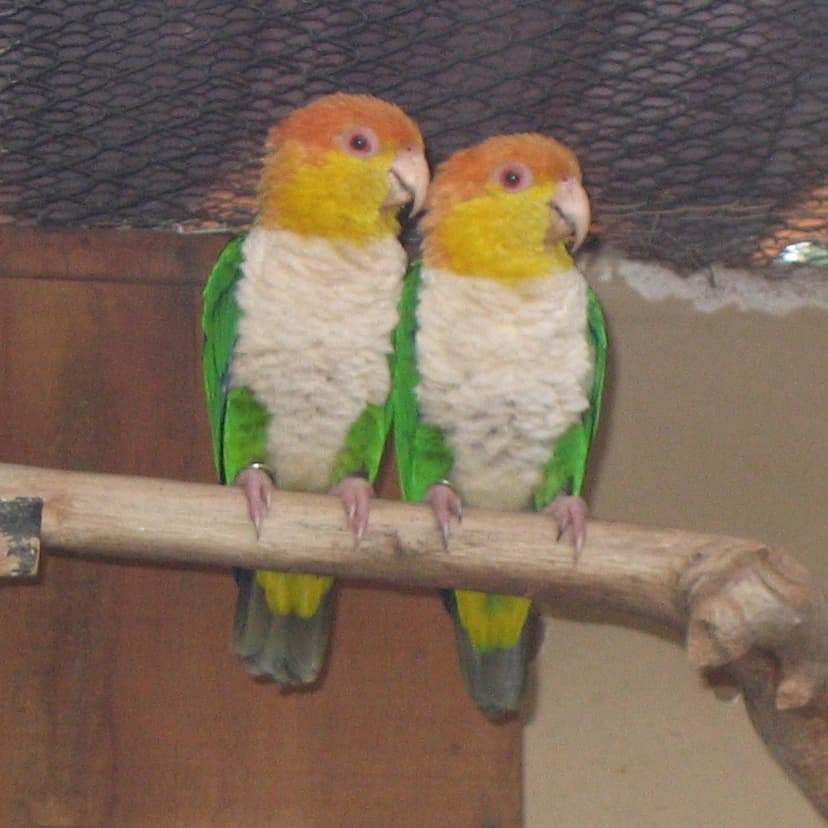
Green-thighed parrot
The white-bellied parrot, also known as the white-bellied caique, is a species of parrot found in the humid tropical forests of South America, including Bolivia, Brazil, Colombia, and Peru. It is characterized by its short, stout body, bright green rump, white belly often stained chestnut, and distinctive green thigh feathers, which give it one of its common names. While its diet includes fruits and flowers, much about its breeding behavior and movements remains unknown.
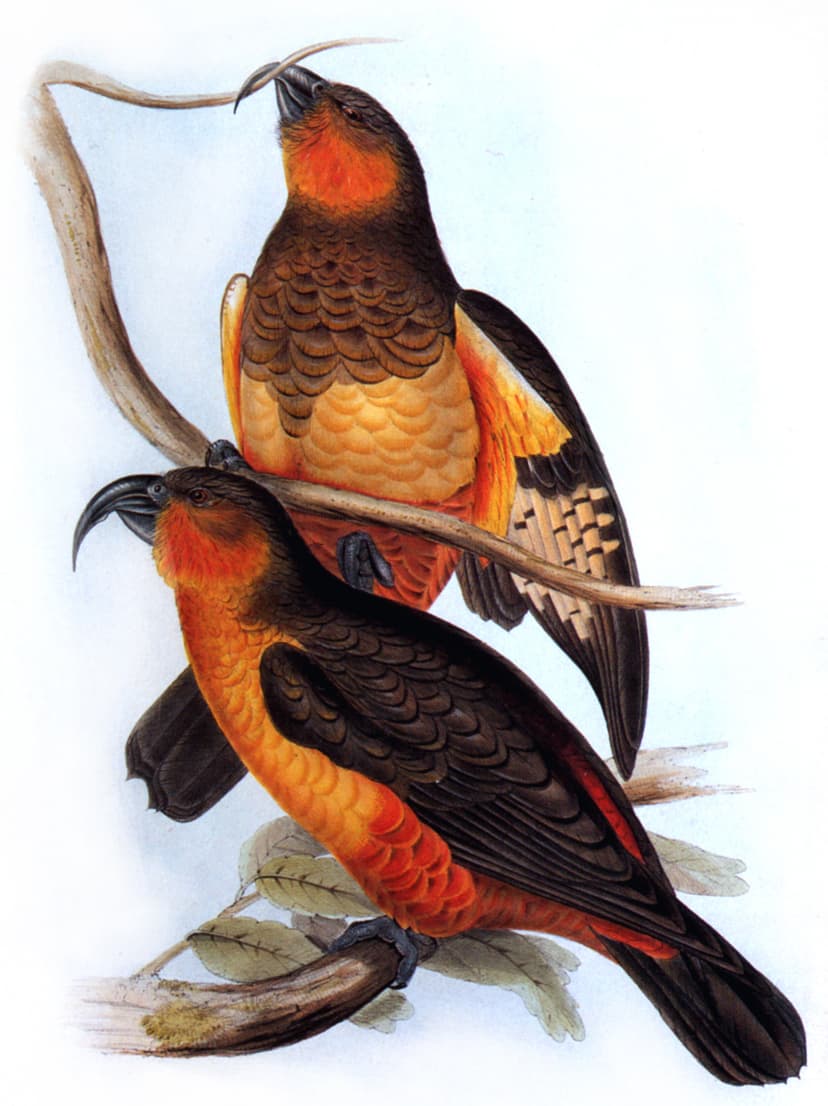
Norfolk kākā
The Norfolk kākā was a large parrot species native to Norfolk Island and Phillip Island, characterized by its olive-brown upperparts and distinct reddish-orange cheeks and throat. It belonged to the same family as the New Zealand kākā and inhabited both rocky areas and treetops. Sadly, this species is now extinct, with its decline attributed to hunting for food and capture as pets, exacerbated by the establishment of penal colonies on the islands.

Philippine hanging parrot
The Philippine hanging parrot, also known as the colasisi, is a small parrot species endemic to the Philippines. It is characterized by its predominantly green plumage with varying accents of red, orange, yellow, and blue depending on the subspecies. This adaptable species inhabits various forest types and even human-modified areas, but faces significant threats from habitat loss and the illegal pet trade, with some subspecies feared to be extinct.