
Carnaby's black cockatoo
Carnaby's black cockatoo is a large parrot species endemic to southwest Australia, distinguished by its greyish-black plumage, prominent white cheek patches, and a white tail band. It primarily feeds on seeds from Proteaceae and Myrtaceae plants and nests in tree hollows, facing significant conservation challenges due to habitat loss.
Key Facts
- ›Endemic to southwest Australia, found in areas receiving over 300 mm of rainfall annually.
- ›Plumage is greyish-black with scalloped edges, white cheek patches, and a white tail band.
- ›Diet consists mainly of seeds from plants in the Proteaceae and Myrtaceae families.
- ›Nests in tree hollows, typically in large Eucalyptus trees.
- ›Classified as endangered by both Australian governments and the IUCN due to habitat destruction and fragmentation.
- ›Forms flocks when not breeding, with more migratory behavior in drier parts of its range.

Short-Billed Black Cockatoo
Australia
Eucalyptus Woodland, Pine Plantations, Sandplains, Kwongan Heath
Short Crest, Prominent White Cheek Patches, White Tail Band, Scalloped Appearance of Body Feathers
Seeds of Proteaceae Plants, Seeds of Myrtaceae Plants, Seeds of Eucalyptus, Seeds of Banksia, Seeds of Hakea, Seeds of Grevillea, Seeds of Western Sheoak, Seeds of Orange Wattle, Seeds of Balga, Seeds of Monterey Pine, Seeds of Maritime Pine, Seeds of Erodium Species, Seeds of Doublegee, Fruit of Umbrella Tree, Seeds of Liquidambar, Sunflower Seeds, Jacaranda Seeds, Almond Seeds, Onion Grass Seeds, White Cedar, Hibiscus Flowers
Wailing Wy-Lah Call, Interrogative Call, Soft Chuck Call, Female Whistling Call, Male Soft Shot Wy-Lah Call, Harsh Screeching Alarm Call, Loud Squawk, Harsh Chattering Squeak, Sequence of Short Squeaks, Consecutive Ah Notes, Noisy Grating Begging Call, Grating Call
- Nests in hollows situated high in trees with fairly large diameters, generally Eucalyptus
- Nests are generally located about 5.7 metres above the ground
About Carnaby's black cockatoo
Carnaby's black cockatoo (Zanda latirostris), also known as the short-billed black cockatoo, is a large parrot species endemic to the southwest of Australia. Described in 1948, this striking bird measures between 53 and 58 cm in length and is characterized by its predominantly greyish-black plumage, which features a scalloped appearance due to white edging on the feathers. Notable features include a short crest on its head, prominent white cheek patches, and a distinctive white band across its tail. Adult males can be identified by their dark grey beaks and pink eye-rings, whereas adult females have bone-coloured beaks, grey eye-rings, and more pronounced white ear patches.
Habitat and Distribution
This species inhabits a broad area of southwest Australia, primarily within the Wheatbelt region, typically in locations receiving over 300 mm of annual rainfall. Its range extends from Cape Arid in the east to Kalbarri in the north, with breeding occurring in areas receiving between 350 and 700 mm of rainfall annually. Carnaby's black cockatoo favors Eucalyptus woodlands, particularly those dominated by wandoo or salmon gum, and can also be found in nearby pine plantations and sandplains rich in Hakea, Banksia, and Grevillea shrubs.
Diet and Feeding Habits
The diet of Carnaby's black cockatoo is largely based on seeds from plants in the Proteaceae family, such as Banksia, Hakea, and Grevillea, with a secondary reliance on seeds from the Myrtaceae family, including Eucalyptus. They are known to consume seeds and flowers from over fifty native plant species. When feeding, they typically perch in trees, cracking seed pods or cones and extracting the seeds. They also forage for fallen seeds and fruits on the ground and have been observed to consume seeds from non-native plants, including those found in pine plantations.
Behavior and Breeding
Carnaby's black cockatoos are social birds, forming flocks when not engaged in breeding. They fly with deep, slow wingbeats, often at considerable heights. Vocalizations are varied, with a common call being a wailing 'wy-lah'. They nest in hollows high up in mature Eucalyptus trees, usually around 5.7 meters above the ground. The breeding season extends from late winter to summer, during which the female lays a clutch of one to two white eggs. The female incubates the eggs for 28 to 29 days, and the young fledge ten to eleven weeks after hatching. Young birds often remain with their family group until at least the following breeding season.
Conservation Status
Carnaby's black cockatoo is recognized as an endangered species by both the federal and Western Australian governments, and is also listed as endangered by the International Union for Conservation of Nature (IUCN). Major threats include the clearance of their feeding and nesting habitats, destruction of nesting hollows, competition for nest sites, and poaching. Significant habitat loss has occurred since European settlement, primarily for agriculture, and further development on the Swan Coastal Plain poses an ongoing risk. Their low reproductive rate and long period of immaturity also make them vulnerable to environmental changes.
Source: Wikipedia ↗
Frequently Asked Questions
What is Carnaby's black cockatoo?
Carnaby's black cockatoo is a large parrot species endemic to southwest Australia. It is characterized by its greyish-black plumage, white cheek patches, and a distinctive white tail band.
Where does Carnaby's black cockatoo live?
This species is found across a broad swathe of southwest Australia, primarily within the Wheatbelt region, in areas that receive over 300 mm of annual rainfall. Breeding occurs in areas with 350–700 mm of rainfall.
What does Carnaby's black cockatoo eat?
Their diet is largely composed of seeds from proteaceous plants like Banksia, Hakea, and Grevillea, and secondarily from myrtaceous plants such as Eucalyptus. They also consume seeds and fruits from over fifty native plant species.
How does Carnaby's black cockatoo nest?
Carnaby's black cockatoos nest in hollows situated high in tall trees, typically Eucalyptus species with fairly large diameters. Competition for these nesting sites can occur with other bird species and feral honeybees.
What is the conservation status of Carnaby's black cockatoo?
Carnaby's black cockatoo is classified as an endangered species by the Federal and Western Australian governments, as well as by the International Union for Conservation of Nature (IUCN). Habitat loss and fragmentation are major threats.
How can you tell the difference between male and female Carnaby's black cockatoos?
Adult males have a dark grey beak and pink eye-rings, while adult females possess a bone-coloured beak and grey eye-rings. Females also have ear patches that are whiter and more distinctive than those of males, with more pronounced white margins on their underpart feathers.
Related Parrot species

Baudin's black cockatoo
Baudin's black cockatoo is a species of parrot endemic to the southwest of Australia, named in honor of French explorer Nicolas Baudin. It is distinguished by its mostly greyish-black plumage, prominent white cheek patches, and a white tail band, with males and females exhibiting differences in beak color and eye-ring coloration.
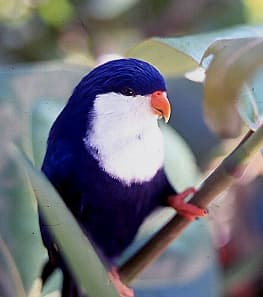
Blue lorikeet
The blue lorikeet (Vini peruviana) is a small lorikeet native to French Polynesia and the Cook Islands, also known as the Tahiti lorikeet or indigo lory. It is distinguished by its predominantly dark blue plumage with a white chest, throat, and face, and is known for its active nature and diet of nectar, pollen, and insects.
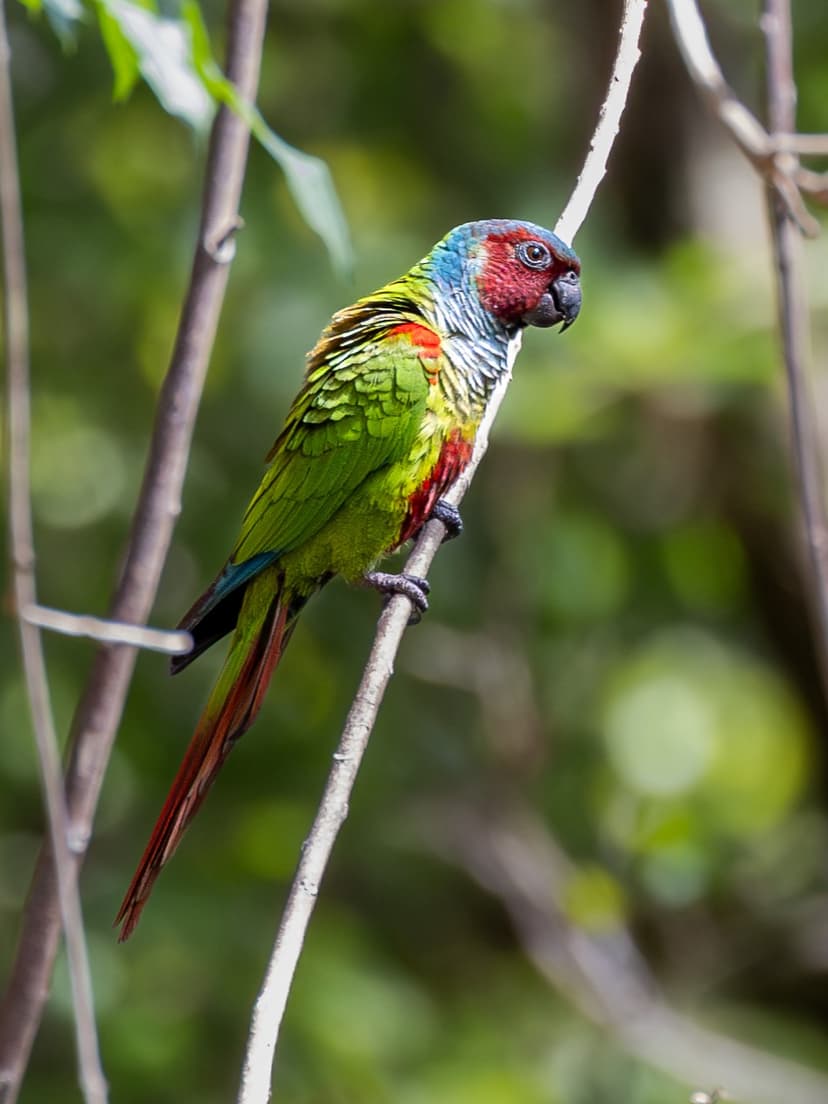
Pfrimer's parakeet
Pfrimer's parakeet, also known as Pfrimer's conure or maroon-faced conure, is a non-migratory parrot species endemic to the Caatinga forest of Brazil's Goiás and Tocantins regions. It is distinguished by its brown and red face, blue crown, and maroon tail, and is currently classified as endangered due to significant habitat loss from deforestation for agriculture.