
Blue lorikeet
The blue lorikeet (Vini peruviana) is a small lorikeet native to French Polynesia and the Cook Islands, also known as the Tahiti lorikeet or indigo lory. It is distinguished by its predominantly dark blue plumage with a white chest, throat, and face, and is known for its active nature and diet of nectar, pollen, and insects.
Key Facts
- ›Native to French Polynesia and the Cook Islands.
- ›Plumage is primarily dark blue with white markings on the chest, throat, and face.
- ›Feeds on nectar, pollen, insects, and soft fruits.
- ›Typically found in small flocks of less than ten birds.
- ›Endangered due to invasive species and avian malaria.
- ›Length is approximately 18 cm with a short, rounded tail.
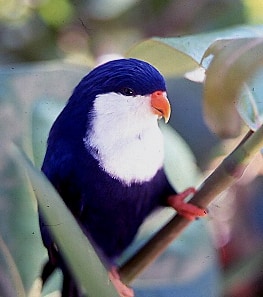
Tahiti Lorikeet, Violet Lorikeet, Tahitian Lory, Blue Lory, Nunbird, Indigo Lory
French Polynesia, Cook Islands
- Wooded Habitats
- Cultivated Areas
- Mixed Stands of Coconuts and Heliotropium Foertherianum
- White area over upper chest, throat, and face
- Erectile feathers on the top of its head with light blue streaks
- Orange beak and legs in adults
Nectar, Pollen, Insects, Leaf Shoots, Soft Fruits
Active
About Blue lorikeet
What is the Blue Lorikeet?
The blue lorikeet, scientifically known as Vini peruviana, is a small species of lorikeet native to the islands of French Polynesia and the Cook Islands. It is also recognized by several other common names, including Tahiti lorikeet, violet lorikeet, Tahitian lory, blue lory, nunbird, and the indigo lory. These birds are characterized by their striking plumage, which is predominantly dark blue with a distinct white area covering their upper chest, throat, and face. Adult males and females share identical external appearances, though juveniles have a darker grey-blue face and lower parts and a black bill.
Distribution and Habitat
Historically, the blue lorikeet was found on numerous islands around Tahiti. However, its current range is significantly more restricted, possibly limited to as few as eight islands, including Aitutaki and Rangiroa. While present in the Cook Islands, evidence suggests it may have been introduced there, as fossil records have not uncovered its remains alongside other extinct Vini lorikeet species on those islands. The blue lorikeet thrives in any wooded environment within its range, with a preference for mixed stands of coconut palms and Heliotropium foertherianum.
Behavior and Diet
These active birds typically roost in coconut palm trees and become active at dawn. They engage in calling and preening before feeding, and are usually observed in small flocks, generally numbering fewer than ten individuals. During the hottest part of the day, they rest in shaded areas before resuming their feeding activities in the afternoon. As dusk approaches, groups will fly and call until dark before retreating to roost for the night. Their diet is varied, consisting of nectar and pollen from various flowering plants, as well as insects found on leaves and the ground, and soft fruits. They are known to use their brush-like tongues to lap up nectar and pollen, and will use their bills to open flowers if necessary.
Conservation Status
The blue lorikeet faces significant threats, primarily from invasive species such as cats, rats, and swamp harriers. Additionally, mosquitoes that carry avian malaria pose a serious risk to the species' survival, leading to its endangered conservation status.
Source: Wikipedia ↗
Frequently Asked Questions
What are the common names for the blue lorikeet?
The blue lorikeet is also known by several other names, including the Tahiti lorikeet, violet lorikeet, Tahitian lory, blue lory, nunbird, and the indigo lory.
Where does the blue lorikeet naturally occur?
This species is native to the islands of French Polynesia and is also present in the Cook Islands. Historically, it was found on many islands around Tahiti, but its range is now restricted.
What is the blue lorikeet's habitat?
Blue lorikeets inhabit any wooded environment within their range, including cultivated areas. They are most commonly found in mixed forests of coconut palms and Heliotropium foertherianum.
What does the blue lorikeet eat?
Their diet consists of nectar and pollen from various flowering plants, including coconut palms. They also consume insects found among leaves and on the forest floor, as well as leaf shoots and soft fruits.
What is the conservation status of the blue lorikeet?
The blue lorikeet is considered endangered. The primary threats to its survival are invasive species such as cats and rats, swamp harriers, and mosquitoes that transmit avian malaria.
What are the physical characteristics of the blue lorikeet?
Measuring about 18 cm in length, the blue lorikeet has mostly dark blue plumage with a distinctive white area on its upper chest, throat, and face. Males and females appear externally identical.
Related Parrot species
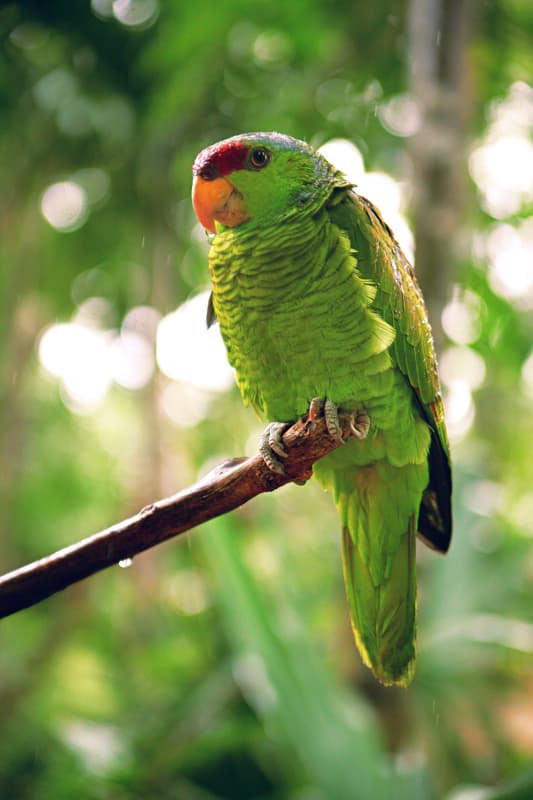
Lilac-crowned amazon
The lilac-crowned amazon, also known as Finsch's parrot, is a parrot species endemic to the Pacific slopes of Mexico. It is distinguished by its predominantly green plumage, a maroon forehead, and a striking violet-blue crown and neck. Unfortunately, this vibrant parrot has faced significant population decline, leading to its classification as Endangered by the IUCN.
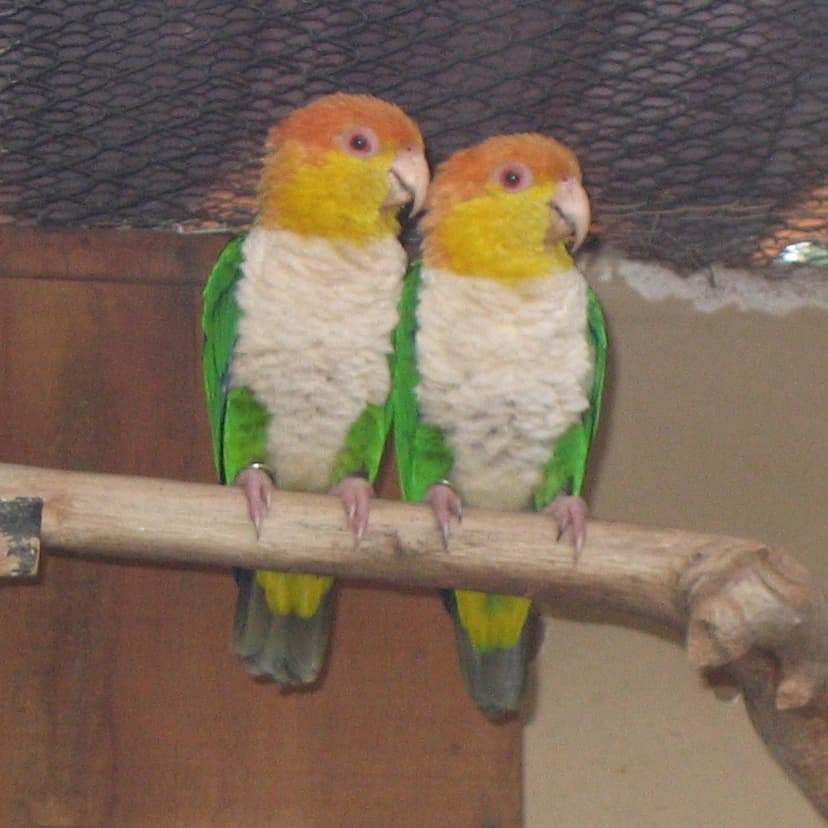
Green-thighed parrot
The white-bellied parrot, also known as the white-bellied caique, is a species of parrot found in the humid tropical forests of South America, including Bolivia, Brazil, Colombia, and Peru. It is characterized by its short, stout body, bright green rump, white belly often stained chestnut, and distinctive green thigh feathers, which give it one of its common names. While its diet includes fruits and flowers, much about its breeding behavior and movements remains unknown.

Elegant parrot
The elegant parrot (Neophema elegans) is a small parrot species native to Australia, belonging to the Psittaculidae family. It is distinguished by its predominantly golden olive plumage, with a distinctive blue frontal band and yellow abdomen, and is one of six species of grass parrots in the genus Neophema.