
Carolina parakeet
The Carolina parakeet (Conuropsis carolinensis) was the only parrot species indigenous to the eastern and midwestern United States, characterized by its vibrant green plumage, yellow head, and orange face. This distinctive neotropical parrot inhabited old-growth forests along rivers and swamps, feeding on seeds, fruits, and buds. Sadly, due to habitat destruction, hunting, and potentially disease, the Carolina parakeet became extinct in the early 20th century, with the last confirmed wild sighting in 1910 and the last captive bird dying in 1918.
Key Facts
- ›Native to the eastern, Midwest, and Plains States of the United States.
- ›The only indigenous parrot species within its native range.
- ›Small green parrots with bright yellow heads and reddish-orange faces.
- ›Inhabited old-growth forests along rivers and swamps.
- ›Diet consisted of seeds, fruits, buds, and occasionally insects.
- ›Declared extinct in 1939 after the last known specimen died in 1918.

Carolina Conure
United States
Old-Growth Forests Along Rivers, Swamps, Wetland Forests
Bright Yellow Head, Reddish-Orange Face, Pale Flesh-Colored Beak, White Skin Rings Around Eyes
Seeds of Forest Trees and Shrubs, Thistles, Sandspurs, Fruits, Flower Buds, Insects, Cockleburs
Noisy Flocks
Hollow Trees
About Carolina parakeet
The Carolina Parakeet: A Lost Voice of North America
The Carolina parakeet (Conuropsis carolinensis), also known as the Carolina conure, holds a unique and tragic place in ornithological history as the only parrot species indigenous to the eastern and midwestern United States. These small, vibrantly colored birds were characterized by their predominantly green plumage, a striking bright yellow head, and a distinctive reddish-orange face. Their range extended across a significant portion of eastern North America, from southern New York and Wisconsin down to the Gulf of Mexico, and westward to eastern Colorado, inhabiting old-growth forests along rivers and in swampy areas.
Description and Behavior
Measuring around 33 cm (13 inches) in length with wingspans of 56-58 cm (21-23 inches), Carolina parakeets were easily identifiable by their colorful heads and pale beaks. While males and females were identical in plumage, males were slightly larger. These parrots were highly social creatures, living in large, noisy flocks that were a common sight and sound in their native habitats. Their diet was varied, consisting of seeds from various trees and shrubs, fruits, flower buds, and occasionally insects. They were particularly known for consuming the seeds of cockleburs, a plant containing a toxin, leading to speculation that the parakeets themselves may have been poisonous.
Decline and Extinction
Despite their former prevalence, the Carolina parakeet experienced a rapid and devastating decline. The precise reasons for their extinction are multifaceted and debated, but key factors include extensive deforestation in the 18th and 19th centuries, driven by settlement and habitat alteration. Hunting also played a significant role, both for the decorative use of their feathers and for perceived crop predation. Their unique flocking behavior, which led them to gather around injured or deceased members, made them vulnerable to mass slaughter. While no definitive cause has been identified, theories include the introduction of domestic poultry diseases. The last confirmed wild sighting occurred in 1910, and the final known captive individual, named Incas, died at the Cincinnati Zoo on February 21, 1918. The species was officially declared extinct in 1939.
Legacy
The Carolina parakeet is now a symbol of avian extinction in North America. Most of our knowledge about this species comes from anecdotal accounts, museum specimens, and a few scientific descriptions from the 18th and 19th centuries. The loss of the Carolina parakeet serves as a poignant reminder of the impact human activities can have on biodiversity and the importance of conservation efforts for endangered species.
Source: Wikipedia ↗
Frequently Asked Questions
What was the Carolina parakeet?
The Carolina parakeet was a species of small green neotropical parrot that was native to the eastern and midwestern United States. It was the only parrot species indigenous to its range.
Where did the Carolina parakeet live?
This parrot had the northernmost range of any known parrot, extending from southern New York and Wisconsin down to the Gulf of Mexico and westward to eastern Colorado. They inhabited old-growth forests along rivers and in swamps.
What did the Carolina parakeet eat?
Their diet primarily consisted of seeds from forest trees and shrubs, such as cypress, hackberry, and oak. They also ate fruits like apples and grapes, flower buds, and occasionally insects, with a particular fondness for cockleburs.
Why did the Carolina parakeet go extinct?
The extinction of the Carolina parakeet is attributed to multiple factors, including deforestation, hunting for their colorful feathers, and capture for the pet trade. Their flocking behavior, which caused them to return to downed birds, also facilitated wholesale slaughter.
When did the Carolina parakeet go extinct?
The last confirmed sighting of a Carolina parakeet in the wild was in 1910. The last known captive individual, named Incas, died at the Cincinnati Zoo in 1918, and the species was officially declared extinct in 1939.
What were the physical characteristics of the Carolina parakeet?
These small parrots were predominantly green with lighter green underparts. They featured a bright yellow head and an orange forehead and face. Their shoulders were also yellow, extending down the outer edge of their wings.
Related Parrot species
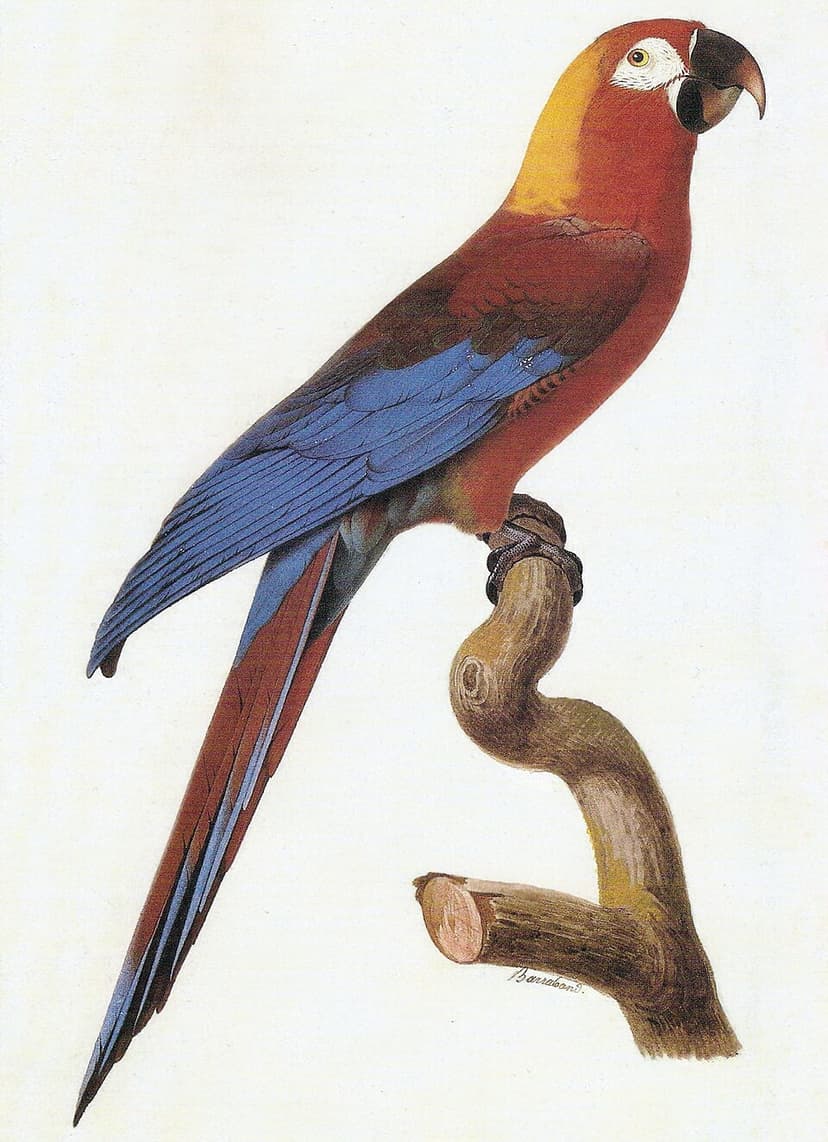
Cuban macaw
The Cuban macaw (Ara tricolor) was a species of macaw native to Cuba and Isla de la Juventud, becoming extinct in the late 19th century. It was one of the smallest macaws, characterized by a vibrant plumage of red, orange, yellow, green, brown, and blue. Its demise was attributed to hunting, habitat destruction, and possibly hurricanes, despite limited knowledge of its behavior.

Broad-billed parrot
The broad-billed parrot, also known as the raven parrot, was a large extinct parrot endemic to the Mascarene island of Mauritius. Distinguished by its unusually large beak and a prominent frontal crest, this species was described as having multiple colors, possibly including a blue head, and was thought to be a weak flier. It became extinct in the late 17th century due to habitat loss, introduced predators, and hunting.

Newton's parakeet
Newton's parakeet, also known as the Rodrigues parakeet, was an extinct species of parrot endemic to the island of Rodrigues in the western Indian Ocean. Distinctive for its unusual greyish or slate blue plumage, a rarity in its predominantly green genus, it was also noted for its tame nature and ability to mimic speech. Its lineage is believed to be closely related to the rose-ringed parakeet, and it may have been ancestral to other Mascarene island parakeets.