
Flame-winged parakeet
The flame-winged parakeet, also known as the brown-breasted parakeet, is a medium-sized parrot endemic to the eastern Andean slopes of Colombia. This species is distinguished by its bright yellow primary coverts and bluish primaries, with vivid yellow and orange-red wing markings visible in flight, which give it its common name. It is currently facing threats from habitat loss and fragmentation, leading to a declining population.
Key Facts
- ›Endemic to the eastern Andean slopes of Colombia.
- ›Measures approximately 22-23 cm in length.
- ›Distinctive plumage includes bright yellow primary coverts, bluish primaries, and visible yellow and orange-red wing markings in flight.
- ›Habitat includes upper subtropical and temperate zone montane forests, forest edges, cloud forests, elfin forests, subpáramo, and peatbog páramo.
- ›Exhibits cooperative breeding, with groups of 4-9 birds assisting in raising young.
- ›Listed as Vulnerable on the IUCN Red List due to habitat loss and fragmentation.
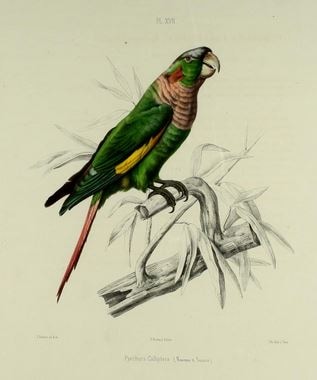
Brown-Breasted Parakeet
Colombia
Forest Edge, Shrubland, Upper Subtropical Montane Forests, Temperate Montane Forests, Cloud Forest, Elfin Forest, SubpáRamo, Peatbog PáRamo
- Prominent white orbital ring around the eye
- Bright yellow primary coverts
- Bluish primaries
- Dull red tail
- Visible yellow and orange-red wing markings in flight
Fruit, Seeds, Flower Parts, Grass Leaves
Tree Cavities
About Flame-winged parakeet
The flame-winged parakeet, scientifically known as Pyrrhura calliptera and also commonly referred to as the brown-breasted parakeet, is a species of parrot native to the eastern Andean slopes of Colombia. This medium-sized parakeet is characterized by its distinctive plumage, which includes bright yellow primary coverts, bluish primaries, and striking yellow and orange-red wing markings visible during flight, giving rise to its common name. Its habitat preference lies within upper subtropical and temperate zone montane forests, forest edges, cloud forests, elfin forests, subpáramo, and peatbog páramo, typically at altitudes between 1,700 and 3,400 meters.
Behaviour and Ecology
Flame-winged parakeets exhibit a fascinating cooperative breeding strategy, where groups of 4 to 9 adult birds and juveniles collaborate in raising each clutch of chicks. These birds utilize tree cavities for both overnight roosting and nesting. Mating and nesting site selection occur during September, with eggs typically laid in October. The incubation period is primarily during October and November, and the maturation process from egg to fledged juvenile takes approximately 60 to 70 days, concluding by January each year.
Their diet consists of fresh and dried fruits, seeds, and flower parts from a variety of native plants. They are also observed feeding on grass leaves and seeds in open areas. This diet sometimes brings them into conflict with local farmers, as they have been known to feed on cultivated maize crops.
Distribution and Conservation
The species is endemic to Colombia, with its range now fragmented on the eastern slope of the Eastern Andes. It is found in departments such as Boyacá, Cundinamarca, and Casanare. Historically, its range was more extensive, but it has been extirpated from its former territories on the western slope of the Eastern Andes.
The flame-winged parakeet is listed as Vulnerable on the IUCN Red List due to significant threats from habitat loss and fragmentation, largely attributed to the encroachment of roads and agriculture. The species has lost a substantial portion of its historical habitat, and its population is declining rapidly. Conservation efforts are underway, involving various organizations and initiatives such as ecological restoration activities and the installation of artificial nest cavities to mitigate the impact of habitat loss.
Source: Wikipedia ↗
Frequently Asked Questions
What is the scientific name of the flame-winged parakeet?
The scientific name of the flame-winged parakeet is Pyrrhura calliptera. The genus name Pyrrhura comes from Ancient Greek words for 'red' and 'tail', while the species epithet calliptera is derived from Greek words meaning 'beauty' and 'winged'.
Where is the flame-winged parakeet found?
The flame-winged parakeet is endemic to Colombia, specifically found on the eastern slope of the Eastern Andes. It inhabits fragmented populations in the departments of Boyacá, Cundinamarca, and Casanare, and possibly Meta, Santander, and Norte de Santander.
What does the flame-winged parakeet eat?
This species feeds on a variety of native plants, including fresh and dried fruits, seeds, and flower parts. They have also been observed eating grass leaves and seeds in open areas and have been known to consume cultivated maize crops.
What are the main threats to the flame-winged parakeet?
The primary threats are habitat loss and fragmentation caused by the expansion of roads and agriculture into their montane forest habitat. Their reluctance to move far from forested areas makes them susceptible to isolation. They are also persecuted as agricultural pests for feeding on maize.
What is the conservation status of the flame-winged parakeet?
The flame-winged parakeet is rated as Vulnerable on the IUCN Red List and the Red Book of the Birds of Colombia. Its population is declining rapidly due to habitat loss and fragmentation.
Related Parrot species
New Zealand kākā
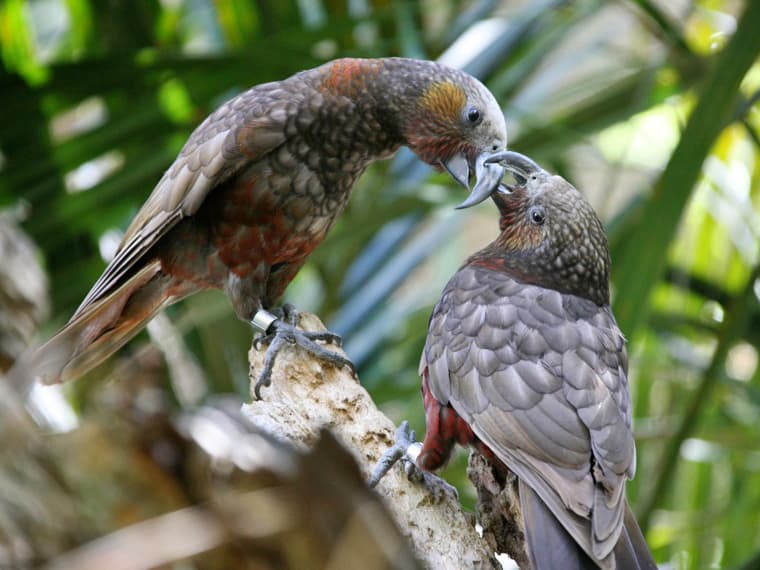
The New Zealand kākā (Nestor meridionalis) is a large, endangered parrot native to the forests of New Zealand. Known for its distinctive brown and green plumage with scarlet flashes, it is an arboreal species that plays a vital role in its ecosystem through its varied diet, which includes fruits, seeds, nectar, and sap. Its conservation is a priority due to significant population declines caused by habitat loss and introduced predators.
Pfrimer's parakeet
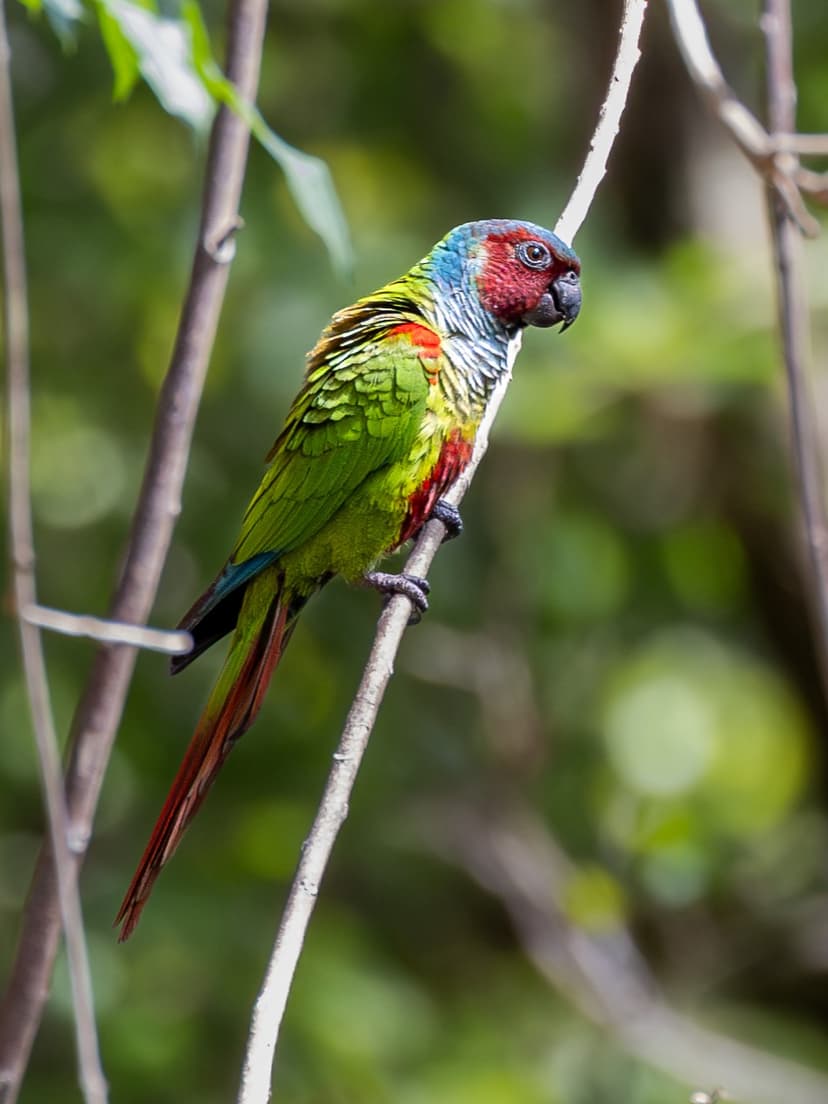
Pfrimer's parakeet, also known as Pfrimer's conure or maroon-faced conure, is a non-migratory parrot species endemic to the Caatinga forest of Brazil's Goiás and Tocantins regions. It is distinguished by its brown and red face, blue crown, and maroon tail, and is currently classified as endangered due to significant habitat loss from deforestation for agriculture.

Budgerigar
The budgerigar, also known as the common parakeet or budgie, is a small, seed-eating parrot native to Australia. Naturally green and yellow with black markings, captive breeding has produced a wide array of colors. These nomadic, social birds are highly popular pets worldwide due to their small size, affordability, and remarkable ability to mimic human speech.