
Cockatiel
Nymphicus hollandicus·Cacatuidae·30 to 33·12 to 25+
The cockatiel is a small to medium-sized parrot native to Australia, and the smallest member of the cockatoo family. Recognized for its distinctive crest, long tail feathers, and sociable nature, it is one of the most popular pet birds globally, though improper care leads to high surrender rates. Its unique characteristics and ability to form strong bonds with humans have cemented its place as a beloved companion.
Key Facts
- ›Native to Australia, cockatiels inhabit arid and semi-arid regions, favoring areas near water sources.
- ›They are known for their expressive crests, which change position to indicate emotional states.
- ›Cockatiels are the smallest members of the cockatoo family (Cacatuidae).
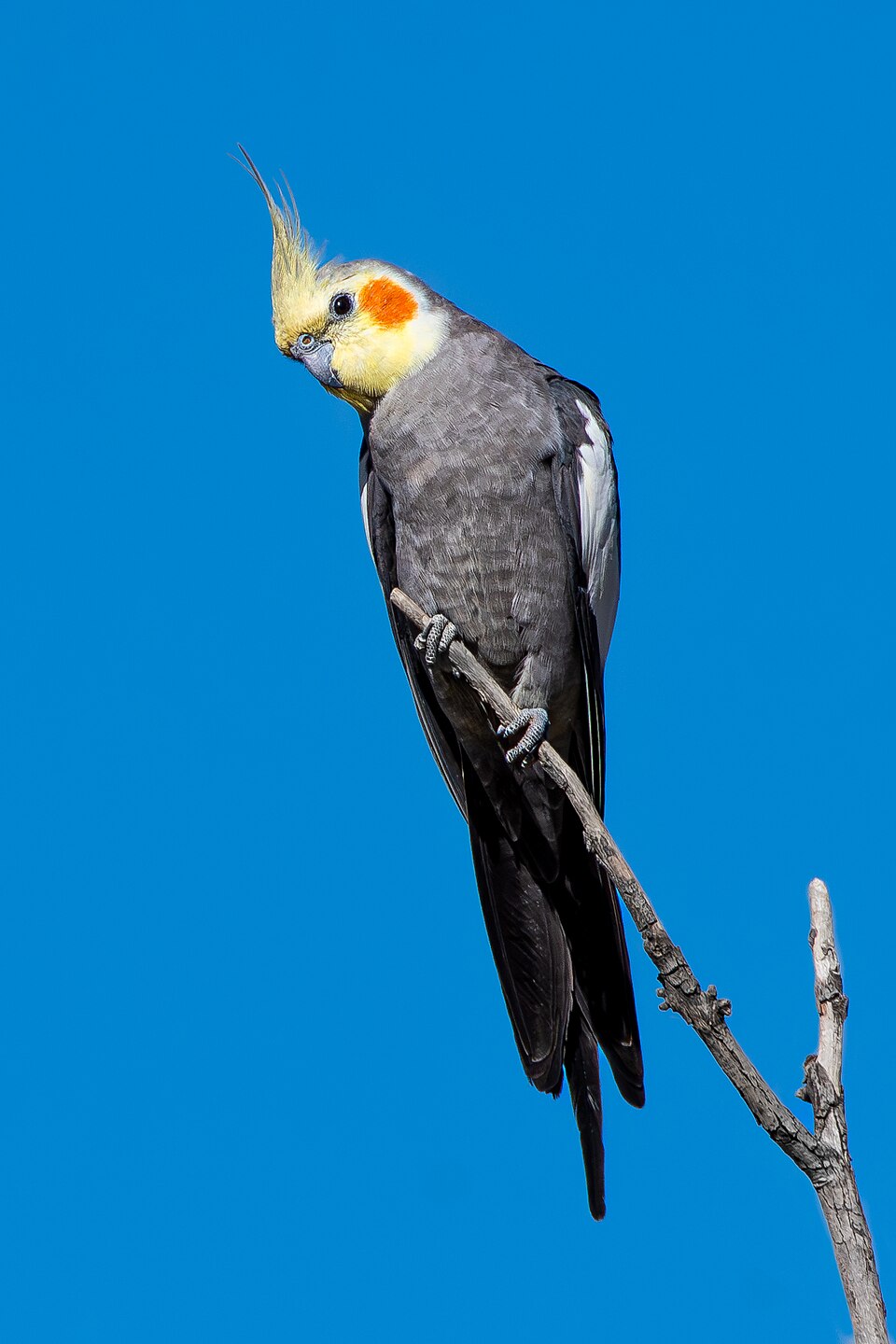
- ›Males typically develop brighter yellow faces and more vibrant orange cheek patches after their first molt, distinguishing them from females.
- ›These birds can be very vocal, with males often learning more words and phrases and having more varied calls.
- ›Their average lifespan is 12-15 years, but they can live 16-25 years in captivity with proper care.
Weero, Weiro, Quarrion
Australia
Wetlands, Scrublands, Bushlands, Arid Country, Semi-Arid Country
Expressive Crest, Long Tail Feathers, Orange Cheek Patches
Seeds, Cultivated Crops
Sociable, Playful, Affinity For Human Interaction
Can Mimic Spoken Words and Phrases, Males Often Have Louder and More Varied Calls, Can Learn To Sing Melodies, Can Mimic Household Sounds
Tree Hollows, Near A Source of Fresh Water
About Cockatiel
The Cockatiel: A Beloved Australian Parrot
The cockatiel (Nymphicus hollandicus), also known as the weero or quarrion, is a small to medium-sized parrot that holds the distinction of being the smallest member of the cockatoo family, Cacatuidae. Native to Australia, this species is the sole representative of its genus, Nymphicus. Cockatiels are widely admired for their highly expressive crests, which can be erected or flattened to communicate a range of emotions, and their notably long tail feathers, which are unusual for their family. Their inherently sociable and playful disposition, coupled with a strong affinity for human interaction, has led to their immense popularity as companion parrots worldwide, making them one of the most commonly kept pet bird species.
Distribution and Habitat
In their natural environment, cockatiels are predominantly found across the Australian continent, favoring arid or semi-arid regions. They are always observed in proximity to water sources, often inhabiting wetlands, scrublands, and bushlands. Wild populations are largely nomadic, migrating to areas where food and water are readily available. While commonly seen in pairs or small flocks, hundreds of cockatiels may congregate around a single body of water during dry periods. They are absent from the most fertile southwestern and southeastern parts of the country, deep desert regions, and the Cape York Peninsula.
Appearance and Dimorphism
The typical wild-type cockatiel is primarily grey with distinct white flashes on the outer edges of its wings. A key characteristic is the round orange area on each cheek, often called "cheddar cheeks," which is typically more vibrant in adult males than in females. The male's face is usually yellow or white, contrasting with the female's predominantly grey face. Sexual dimorphism is most apparent after the bird's first molt, around six to nine months of age. At this time, males develop brighter yellow faces and crests, their orange cheek patches become more vivid, and they lose the horizontal barring on the underside of their tail feathers. Females generally retain a more muted grey face and crest, less vibrant cheek patches, and often keep the tail barring. This dimorphism is less pronounced in some of the many color mutations that have arisen in captivity.
Behavior, Diet, and Vocalization
Cockatiels are known for their intelligence and their ability to mimic sounds, including human speech and various household noises. Males are typically more inclined to learn speech and singing, often developing more complex vocal repertoires. In the wild, their diet consists mainly of seeds from plants such as Acacia, wheat, sunflower, and sorghum. They are also known to consume cultivated crops. Their lifespan averages 12 to 15 years in the wild, but with appropriate care in captivity, they can live for 16 to 25 years, with some individuals reportedly reaching over 30 years.
Captivity and Conservation
Despite their popularity as pets, a significant challenge in cockatiel ownership is the high rate of surrender. This is often attributed to owners' insufficient understanding of their complex care requirements, which include regular social interaction, a nutritionally appropriate diet, environmental enrichment, and prompt veterinary attention. These factors can lead to malnutrition and behavioral issues, contributing to their relinquishment within a relatively short period after adoption. While not currently listed with a specific conservation status, responsible pet ownership is crucial for the well-being of captive populations.
Source: Wikipedia ↗
Frequently Asked Questions
What makes the cockatiel's crest distinctive?
The cockatiel's crest is a unique physical feature that dramatically changes position to express its emotional state. It can be vertical when startled or excited, oblique when relaxed, flattened when angry or defensive, and held halfway up when tired.
How can I tell a male cockatiel from a female?
In the wild-type coloring, adult males typically develop bright yellow heads and more vibrant orange cheek patches after their first molt, while females retain more grey on their heads and have less intense cheek coloration. Males also lose the horizontal barring on their tail feathers, which females often keep.
What is the natural habitat of the cockatiel?
Cockatiels are native to Australia and are found mainly in arid or semi-arid regions. They prefer to live close to water sources, such as wetlands, scrublands, and bushlands.
Are cockatiels social birds?
Yes, cockatiels are highly social creatures. In the wild, they are typically seen in pairs or small flocks, and they will often gather in large numbers around water sources.
What do wild cockatiels eat?
Wild cockatiels primarily feed on seeds, including those from Acacia, wheat, sunflower, and sorghum. They are also known to consume cultivated crops, which can be problematic for farmers.
Can cockatiels mimic human speech?
Yes, cockatiels are capable of mimicking human speech and learning many words and phrases. Males are generally quicker to learn speech and singing, and their vocalizations are often more complex.
What are the common health concerns for pet cockatiels?
A significant concern for pet cockatiels is the high rate of surrender due to insufficient knowledge of their care requirements. Malnutrition and behavioral problems are common, often stemming from a lack of regular social interaction, proper diet, and enrichment.
Related Parrot species

Budgerigar
The budgerigar, also known as the common parakeet or budgie, is a small, seed-eating parrot native to Australia. Naturally green and yellow with black markings, captive breeding has produced a wide array of colors. These nomadic, social birds are highly popular pets worldwide due to their small size, affordability, and remarkable ability to mimic human speech.
Pfrimer's parakeet
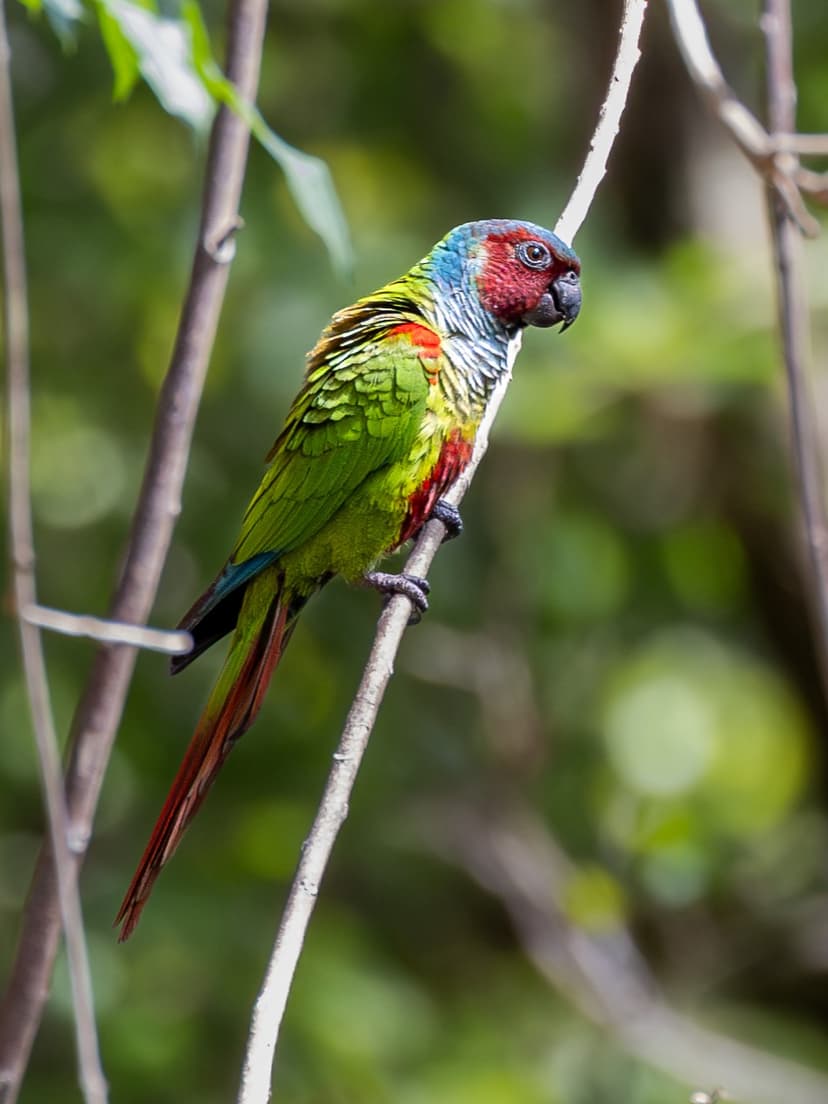
Pfrimer's parakeet, also known as Pfrimer's conure or maroon-faced conure, is a non-migratory parrot species endemic to the Caatinga forest of Brazil's Goiás and Tocantins regions. It is distinguished by its brown and red face, blue crown, and maroon tail, and is currently classified as endangered due to significant habitat loss from deforestation for agriculture.
Cacatuidae
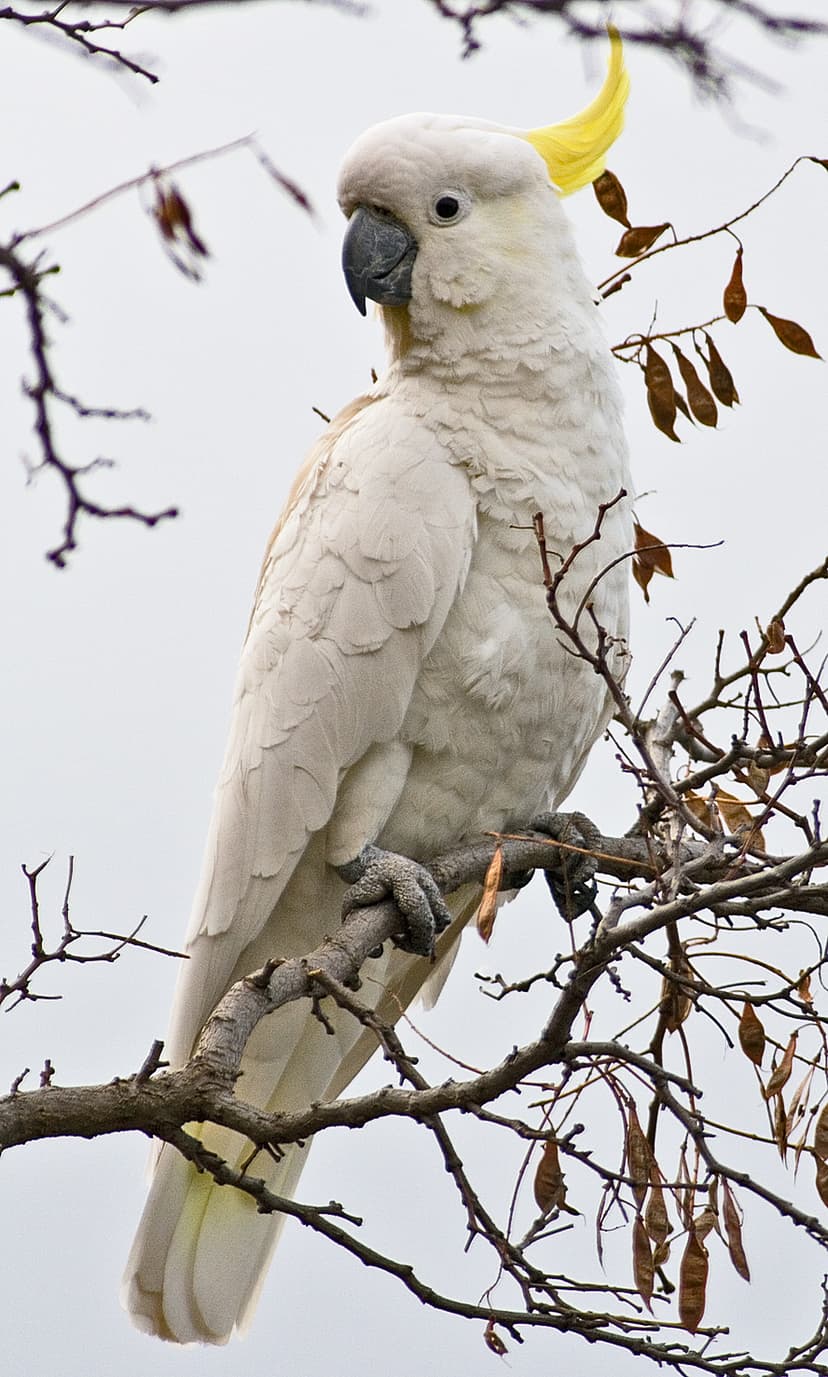
Cacatuidae, commonly known as cockatoos, are a family of parrots native to Australasia, characterized by their distinctive erectile crests and curved bills. While generally less colorful than other parrots, often displaying white, grey, or black plumage with colorful accents, they are typically larger and possess a striking appearance. Cockatoos are known for their social nature, monogamous breeding habits, and preference for nesting in tree hollows, feeding on a diet of seeds, tubers, fruits, and insects.