
Cacatuidae
Not specified in the text
Cacatuidae, commonly known as cockatoos, are a family of parrots native to Australasia, characterized by their distinctive erectile crests and curved bills. While generally less colorful than other parrots, often displaying white, grey, or black plumage with colorful accents, they are typically larger and possess a striking appearance. Cockatoos are known for their social nature, monogamous breeding habits, and preference for nesting in tree hollows, feeding on a diet of seeds, tubers, fruits, and insects.
Key Facts
- ›Native to Australasia, including Australia, Indonesia, and the Philippines.
- ›Distinguished by prominent, erectile head crests and strong, curved bills.
- ›Plumage is predominantly white, grey, or black, often with colorful features on the crest, cheeks, or tail.
- ›Social birds that typically feed and roost in flocks, sometimes numbering in the thousands.
- ›Monogamous breeders that nest in tree hollows.
- ›Diet consists of seeds, tubers, corms, fruit, flowers, and insects.
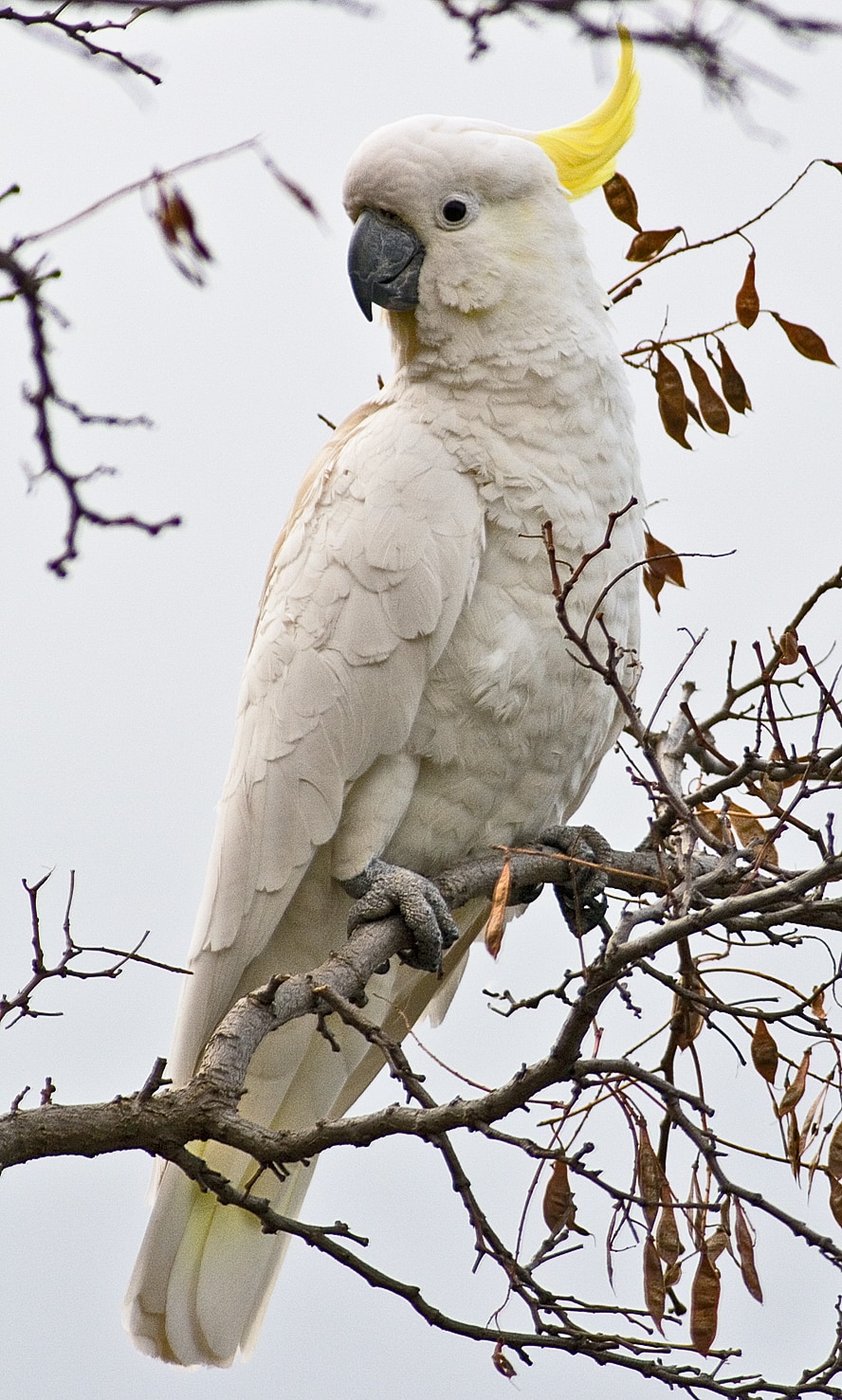
Cockatoo
Australasia, Australia, Indonesia, Philippines, New Guinea, Solomon Islands
Forests, Subalpine Regions, Mangroves, Woodlands, Rainforests, Shrublands, Open Country, Agricultural Areas, Urban Environments
Erectile Head Crest, Curved Bill, Periophthalmic Ring
Seeds, Tubers, Corms, Fruit, Flowers, Insects
- Intelligent
- Social
- Can be noisy
- Some species can be adapted to human environments
- Loud and harsh vocalisations
- Used for recognition, alarm, mood indication, flock cohesion, and defense
- Some species have many distinct calls, while others have fewer
- Some species are comparatively quiet with softer growling calls
- Produce a characteristic hissing sound when threatened
- Palm cockatoos communicate by drumming on branches with sticks
- Cavity nesters
- Nest in holes in trees
- Prefer nesting sites over 7-8 meters above the ground
- Prefer nesting sites close to water and food
- Nesting hollows are lined with sticks, wood chips, and branches with leaves
About Cacatuidae
What are Cockatoos?
Cockatoos are a distinctive group of 21 parrot species belonging to the family Cacatuidae, found exclusively in Australasia. They are easily recognized by their prominent, erectile head crests and strong, curved beaks, which differ from the plumage and feather structure of true parrots. While generally less vibrant in color than many other parrots, often exhibiting white, grey, or black plumage, many species possess striking accents of color on their crests, cheeks, or tails.
Distribution and Habitat
These birds inhabit a range of environments across Australia, Indonesia, the Philippines, New Guinea, and the Solomon Islands. Their habitats vary widely, from forests and subalpine regions to mangroves, shrublands, and open country. Some species have adapted well to human-modified landscapes, becoming common in agricultural areas and even cities, while others are more specialized and occupy restricted ranges.
Behavior and Diet
Cockatoos are highly social and diurnal, typically feeding and roosting in flocks that can range from small groups to thousands of individuals, especially when food is scarce. Their diet is varied, comprising seeds, tubers, corms, fruits, flowers, and insects. They are known for their intelligence, with some species exhibiting complex social and cognitive abilities, including spontaneous dance-like movements.
Reproduction
These birds are monogamous, forming long-lasting pair bonds. They are cavity nesters, utilizing tree hollows for their nests, often situated at considerable heights and near food and water sources. The clutch size varies by species, and incubation and brooding duties may be shared or undertaken by one parent, depending on the species. Young cockatoos often remain with their parents for an extended period, learning essential survival skills.
Source: Wikipedia ↗
Frequently Asked Questions
What are the defining physical characteristics of cockatoos?
Cockatoos are most recognizable by their prominent, erectile head crests, which they raise when aroused or landing. They also possess strong, curved bills adapted for manipulating food and climbing, and zygodactyl feet with two toes forward and two back.
Where are cockatoos found naturally?
The natural distribution of cockatoos is primarily Australasian, ranging from the Philippines and eastern Indonesian islands to New Guinea, the Solomon Islands, and Australia. Eleven species are found exclusively in Australia.
What do cockatoos eat?
Their diet consists of a variety of food sources, including seeds, tubers, corms, fruit, flowers, and insects. They often forage in large flocks, especially when feeding on the ground.
How do cockatoos reproduce and nest?
Cockatoos are monogamous and form pair bonds that can last for many years. They are cavity nesters, typically nesting in holes in trees, which they do not excavate themselves. Both male and female cockatoos may share incubation and brooding duties, depending on the species.
What is the typical plumage coloration of cockatoos?
Cockatoo plumage is generally less brightly colored than that of other parrots, with species typically being black, grey, or white. Many species have smaller areas of color, such as yellow, pink, or red, often on the crest or tail.
Are cockatoos social animals?
Yes, all cockatoo species are generally highly social. They roost, forage, and travel in flocks, which can vary significantly in size depending on food availability, sometimes swelling to thousands of individuals during adverse conditions.
Related Parrot species
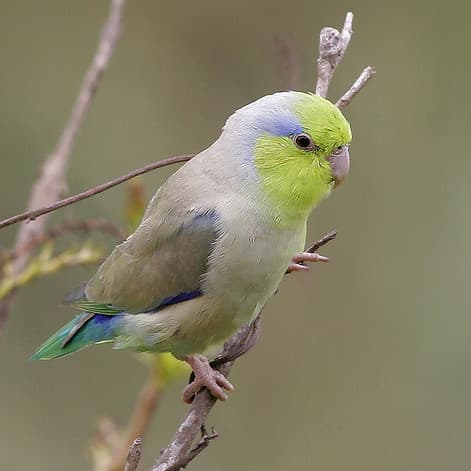
Pacific parrotlet
The Pacific parrotlet, scientifically known as Forpus coelestis, is a small parrot originating from South America, specifically western Ecuador and northwestern Peru. These birds are distinguished by their small size, often referred to as "pocket parrots," and their often feisty and curious personalities, despite their diminutive stature.

Gang-gang cockatoo
The gang-gang cockatoo is a distinctive parrot native to the cooler, wetter forests and woodlands of southeastern Australia. It is the sole member of its genus, easily recognized by its unique "creaky gate" call and the male's striking red head and crest, contrasting with the female's grey plumage. This species plays a significant role in its ecosystem and is the faunal emblem of the Australian Capital Territory.

Galah
The Galah is a distinctive Australian cockatoo, easily recognized by its vibrant pink and grey plumage. It is one of the most common and widespread bird species across mainland Australia, thriving in a variety of habitats from open country to metropolitan areas. The species is notable for its social nature, tendency to hybridize, and its unique linguistic and cultural associations within Australia.