
Dusky-billed parrotlet
The Dusky-billed parrotlet is a small parrot species found in the Amazon rainforest of South America. It is distinguished by its preference for lowland rainforest edges, riparian zones, and seasonally flooding forests, and its social behavior, often seen in flocks outside the breeding season. Unlike many related species, it is not heavily impacted by the pet trade or deforestation.
Key Facts
- ›Inhabits lowland tropical rainforest edges, clearings, riparian zones, secondary habitats, and savannas in South America.
- ›Typically found in flocks of up to 100 birds outside the breeding season, and in pairs otherwise.
- ›Diet primarily consists of berries and fruits (90%), with seeds, buds, blossoms, and occasional grass making up the remainder.
- ›Nests in tree cavities or similar structures.
- ›Classified as Least Concern by the IUCN Red List, with a stable population.
- ›Not commonly available in aviculture and not commercially available in the U.S.
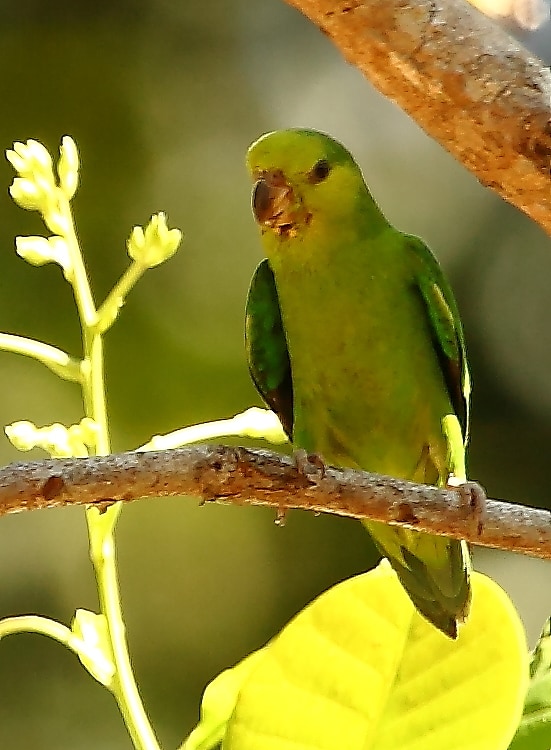
Sclater's Parrotlet
South America
Lowland Tropical Rainforest Edges, Clearings, Riparian Zones, Secondary Habitats, Savanna, Seasonally-Flooding Forests
Berries, Fruits, Seeds, Buds, Blossoms, Grass, Clay
High-Pitched Notes, Soft Wheezing Sounds
Tree Cavities, Similar Structures
About Dusky-billed parrotlet
The Dusky-billed parrotlet, scientifically known as Forpus modestus and also referred to as Sclater's parrotlet, is a small parrot species belonging to the Psittacidae family. This species is native to the Amazon rainforest of South America, inhabiting a range that includes the Amazon River outlet, Marajo Island, the Amazonian foothills, and parts of the Andes. They are characterized by their preference for lowland tropical rainforest edges, clearings, riparian zones, secondary habitats, and savannas, with a notable tendency to favor seasonally flooding forests. Dusky-billed parrotlets are not typically found at altitudes exceeding 1,000 meters above sea level.
These birds are recognized for their social nature, often congregating in flocks of up to 100 individuals outside of the breeding season, though they are typically observed in pairs when breeding. Their vocalizations consist of high-pitched notes or soft wheezing sounds, produced both in flight and while perched. The diet of the Dusky-billed parrotlet is primarily composed of berries and fruits, which constitute about 90% of their food intake. Seeds, buds, and blossoms make up the remaining 10%, with grass also occasionally consumed. Additionally, they have been observed to eat clay, likely as a source of essential minerals.
The Dusky-billed parrotlet breeds around July, nesting in tree cavities or similar natural structures. While the exact clutch size is not documented, the eggs are described as small, white, and roughly spherical. The species is classified as Least Concern on the IUCN Red List, with its population estimated to be stable. Unlike many other species within the Forpus genus, the Dusky-billed parrotlet is not significantly impacted by the pet trade, nor is it heavily affected by deforestation, partly due to the presence of numerous protected areas within its range.
In terms of aviculture, the Dusky-billed parrotlet is not commonly available. It is not commercially traded in the United States and is very rare in Europe, making it an uncommon sight for bird enthusiasts outside its natural habitat. Further research has suggested that the Dusky-billed parrotlet may represent a basal lineage within the Forpus genus, based on patterns of diversification and speciation.
Source: Wikipedia ↗
Frequently Asked Questions
What is the scientific name of the Dusky-billed parrotlet?
The scientific name for the Dusky-billed parrotlet is Forpus modestus. It was previously described under different names, including Forpus sclateri and Psittacula modesta, before being reverted to its current binomial name.
Where can the Dusky-billed parrotlet be found?
The Dusky-billed parrotlet is distributed throughout the Amazon rainforest in South America. It can also be found in the Andes, Amazonian foothills, the Amazon River outlet, and Marajo Island.
What kind of habitat does the Dusky-billed parrotlet prefer?
These parrotlets prefer lowland tropical rainforest edges and clearings, riparian zones, secondary habitats, and savannas. They show a particular fondness for seasonally flooding forests and are not found above 1,000 meters in altitude.
What is the conservation status of the Dusky-billed parrotlet?
The Dusky-billed parrotlet is listed as Least Concern by the IUCN Red List. Its population is believed to be stable, and it is relatively unaffected by deforestation and not captured for the parrot trade.
What do Dusky-billed parrotlets eat?
Their diet is predominantly composed of berries and fruits, making up about 90% of their food intake. The remaining 10% consists of seeds, buds, and blossoms, with grass occasionally consumed. They have also been observed eating clay for minerals.
Are Dusky-billed parrotlets social birds?
Yes, Dusky-billed parrotlets are very social. Outside of their breeding season, they are usually found in flocks that can number up to 100 individuals. During the breeding season, they are more commonly seen in pairs.
Related Parrot species
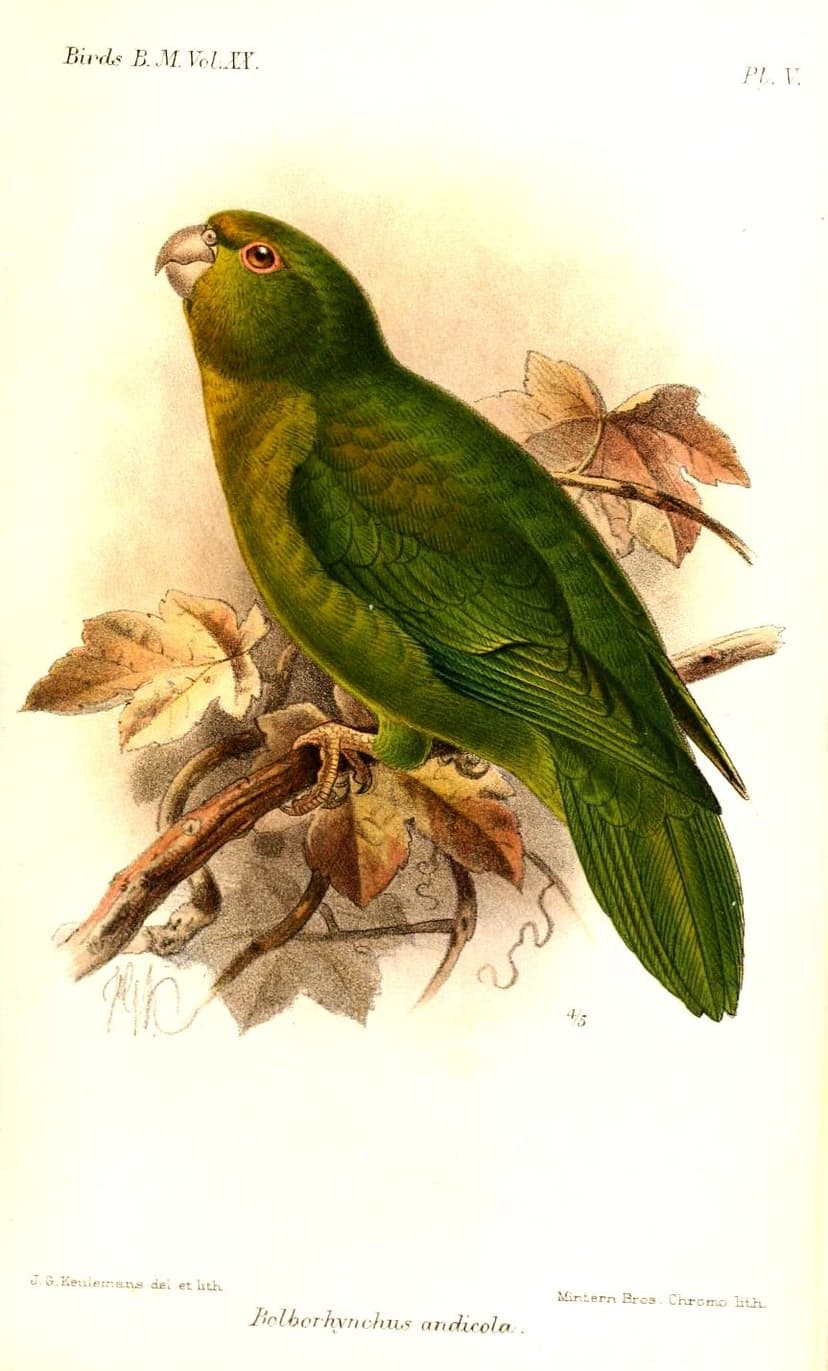
Andean parakeet
The Andean parakeet is a species of parrot found in the Andes mountains of Argentina, Bolivia, and Peru. Adults are predominantly green with a yellow tinge, and they inhabit high-altitude environments such as cloud forests and woodlands.
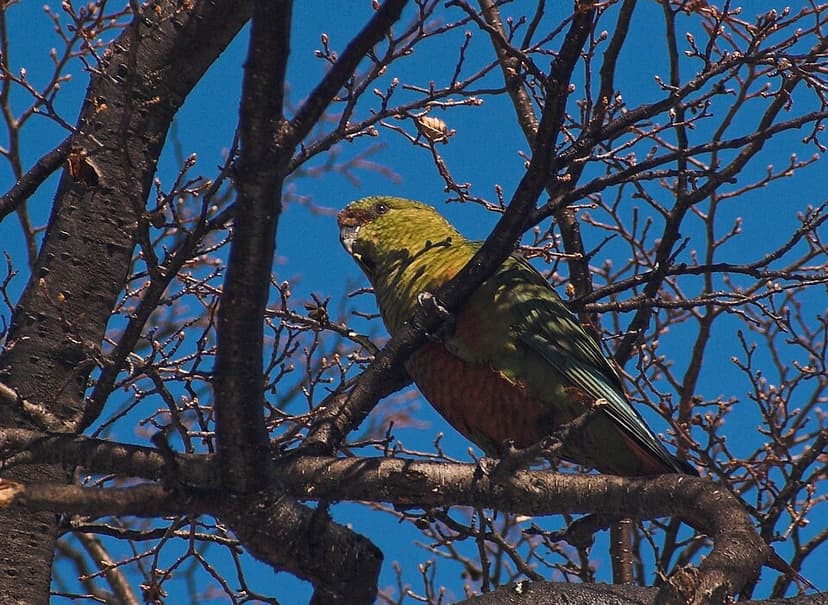
Austral parakeet
The Austral parakeet, also known as the cachaña or emerald parakeet, is a species of parrot native to the southern reaches of South America, primarily Argentina and Chile. It is distinguished by its predominantly green plumage with dull reddish markings on its forehead, belly, and tail, and is notable for being the southernmost parrot species in the world.

Australian ringneck
The Australian ringneck is a medium-sized parrot native to Australia, found in diverse environments except for extreme tropical and highland regions. It is characterized by a green basic plumage, a distinctive yellow ring around its hindneck, and variations in color across its four subspecies. This gregarious bird is known for its varied vocalizations and is generally not considered a threatened species, though some subspecies face local competition.