
Dusky-headed parakeet
The Dusky-headed parakeet is a small, green parrot native to the western Amazon basin of South America, easily identified by its dusty grey head and blue-tipped tail. It thrives in semi-open wooded habitats and is known for its social nature, often found in pairs or small flocks. This species is considered of least concern due to its commonality and habitat adaptability.
Key Facts
- ›Found in the western Amazon basin, including parts of Colombia, Ecuador, Peru, Brazil, and Bolivia.
- ›Characterized by its green plumage, dusty grey head, blue-tipped tail, and a white eye-ring.
- ›Feeds on fruits, seeds, flowers, and insect larvae, supplementing its diet with mineral-rich clay.
- ›Social birds, typically seen in pairs or small groups, but can form large flocks when food is abundant.
- ›Nests in tree cavities or arboreal termite nests, with pairs raising offspring together.
- ›Considered to be of least concern by conservation organizations.

Weddell's Conure, Dusky-Headed Conure
South America
Wooded Habitats, Semiopen Habitats, VáRzea, Forest Edge, Forest Remnants, Coffee Plantations
Dusty grey head, Blue-tipped tail, Broad, bare, white eye-ring, Skin near beaks and eyes similar to macaws
Fruit, Seeds, Flowers, Insect Larvae, Mineral-Rich Soil
Quiet, Energetic, Playful
- Known to be quiet compared to other conure species
Woodpecker Holes In Trees, Arboreal Termite Nests
About Dusky-headed parakeet
The Dusky-headed parakeet (Aratinga weddellii), also referred to as Weddell's conure or dusky-headed conure, is a small, long-tailed parrot found in the western Amazon basin of South America. Its natural range spans southeastern Colombia, eastern Ecuador, eastern Peru, southwest Amazonian Brazil, and central Bolivia. This species is characterized by its predominantly green plumage, a distinctive dusty grey head, and a tail tipped with blue. A notable feature is its broad, bare white or yellow-tinged eye-ring.
Habitat and Diet
This parakeet thrives in semi-open wooded environments, including várzea, forest edges, and forest remnants, and has also been observed in coffee plantations. Its adaptability to these habitats makes it less vulnerable than many other Amazonian parrot species. The Dusky-headed parakeet's diet is varied, consisting of fruits, seeds, and flowers. It also forages for insect larvae in decaying wood and supplements its diet by ingesting mineral-rich soil, which is believed to provide essential nutrients and help neutralize toxins.
Social Behavior and Breeding
Dusky-headed parakeets are inherently social birds, typically encountered in pairs or small groups. They are known to associate with other conure species and can form substantial flocks of up to 100 individuals when food resources are abundant. Pairs work together to raise their young, nesting in natural cavities such as woodpecker holes in trees or in arboreal termite nests.
Conservation and Captivity
Due to its commonality and habitat adaptability, the Dusky-headed parakeet is classified as a species of least concern by BirdLife International and the IUCN. These parrots are also popular in aviculture, where they are considered to be relatively quiet compared to other conure species, while still being energetic and playful. In captivity, they can live for 25 to 50 years, with a typical lifespan of 35 to 40 years. They are also known to breed successfully in captivity when provided with appropriate nesting facilities, capable of producing up to three clutches per year.
Source: Wikipedia ↗
Frequently Asked Questions
What are the distinctive physical features of the Dusky-headed parakeet?
The Dusky-headed parakeet is primarily green with a dusty grey head and a tail tipped with blue. It also possesses a prominent, bare white (sometimes yellow-tinged) eye-ring and a black bill.
What is the natural habitat of the Dusky-headed parakeet?
This parakeet prefers semi-open wooded habitats such as várzea, forest edges, and forest remnants. They can also be found in areas like coffee plantations.
What does the Dusky-headed parakeet eat in the wild?
Their diet consists of fruits, seeds, and flowers. They also search decaying wood for insect larvae and ingest mineral-rich soil, likely for supplements and to neutralize toxins.
Are Dusky-headed parakeets social birds?
Yes, they are highly social and are usually found in pairs or small groups. They may even flock with other conure species and can form large flocks of up to 100 individuals when food is plentiful.
What is the conservation status of the Dusky-headed parakeet?
The Dusky-headed parakeet is considered to be of least concern by BirdLife International and the IUCN. Its commonality and adaptable habitat preferences contribute to this status.
How long do Dusky-headed parakeets live?
In captivity, their lifespans can range from 25 to 50 years, with a typical lifespan usually falling between 35 and 40 years.
Do Dusky-headed parakeets breed easily in captivity?
They are known to do well in captivity and are relatively easy to breed if provided with a durable nest box. Pairs will raise their offspring together.
Related Parrot species

Australian ringneck
The Australian ringneck is a medium-sized parrot native to Australia, found in diverse environments except for extreme tropical and highland regions. It is characterized by a green basic plumage, a distinctive yellow ring around its hindneck, and variations in color across its four subspecies. This gregarious bird is known for its varied vocalizations and is generally not considered a threatened species, though some subspecies face local competition.

Blaze-winged parakeet
The blaze-winged parakeet is a species of parrot found in parts of Brazil, Bolivia, Paraguay, and potentially Argentina. It is characterized by its mostly green plumage with distinctive red and yellow markings on its wings and a maroon belly. This species inhabits the Pantanal and Chaco regions, primarily in deciduous and gallery forests, and is known for its noisy, chattering vocalizations, especially in flight.
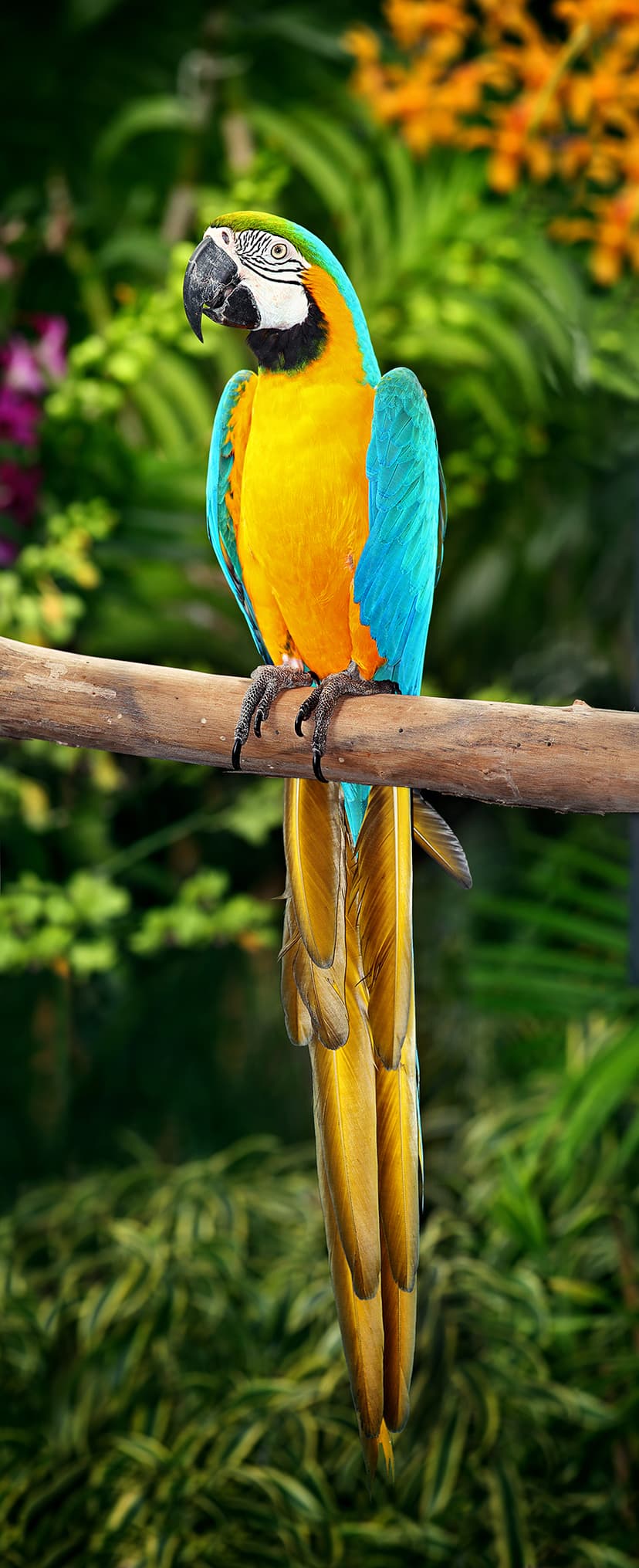
Blue-and-yellow macaw
The blue-and-yellow macaw, also known as the blue-and-gold macaw, is a large Neotropical parrot native to the forests, woodlands, and savannahs of tropical Central and South America, including Trinidad. It is distinguished by its vibrant blue upperparts, yellow to orange underparts, and a green crown, making it one of the most popular and commonly kept macaw species in aviculture due to its striking appearance and ability to bond with humans.