
Eastern rosella
The eastern rosella (Platycercus eximius) is a vibrantly colored parrot native to southeastern Australia. Known for its distinctive red head, yellow and green body, and blue wings, this species is also established in New Zealand. They are cavity nesters and primarily feed on seeds, fruits, and insects.
Key Facts
- ›Native and endemic to southeastern Australia, with a naturalized population in New Zealand.
- ›Characterized by a red head and breast, yellow lower breast, pale green abdomen, and blue wings.
- ›Feeds on a diverse diet including grass seeds, buds, flowers, fruits, insects, and their larvae.
- ›Breeds in the austral summer, nesting in tree hollows, nest boxes, and sometimes human structures.
- ›Females lay 5-6 eggs, incubated for 18-22 days, with chicks fledging about a month after hatching.

Golden-Mantled Rosella
Australia
Lowlands, Edges Or Remnant Patches of Open Forest, Shelter Belts, Gumlands, Orchards, Cultivated Exotic Crops, Urban Areas, Well-Maintained Lawns, Gardens, Golf Courses, Open Areas, Agricultural Land
- White cheeks
- Red head and upper breast
- Yellow lower breast fading to pale green abdomen
- Scalloped look on back and shoulders due to feather margins
- Blue wings
- Underwing stripe
Grass Seeds, Buds, Flowers, Nectars, Fruits, Insects, Insect Larvae
- Territorial
- May Destroy Eggs of Conspecifics Nesting Too Closely
Cavity Nesters, Hollow Trees, Nest Boxes, Human Structures
About Eastern rosella
The eastern rosella (Platycercus eximius) is a striking parrot species native and endemic to the southeastern regions of Australia. It is also a well-established introduced species in New Zealand, found across various parts of the North Island and in the hills around Dunedin in the South Island.
Description and Appearance
This medium-sized parrot measures approximately 30 cm (12 inches) in length. Its most notable features include bright white cheeks, a vibrant red head and upper breast, and a yellow lower breast that fades into a pale green abdomen. The black feathers on its back and shoulders are edged with yellow or green, creating a scalloped appearance that can vary between sexes and subspecies. The wings are a distinct blue, and the tail is dark green, with the legs being grey. Females are generally duller in coloration than males and possess an underwing stripe, a feature also present in juveniles.
Distribution and Habitat
In its native Australia, the eastern rosella is found in Victoria and southern New South Wales, with subspecies also present in northeastern New South Wales, southeastern Queensland, and eastern Tasmania. In New Zealand, the species has become naturalized since its introduction around 1910, establishing populations in areas such as the northern North Island, Taranaki, Waikato, the Hutt Valley, and around Dunedin. Eastern rosellas generally prefer lowland environments. They inhabit the edges of open forests, shelter belts, gumlands, orchards, and cultivated areas. They are also commonly found in urban settings, favoring well-maintained lawns, gardens, and golf courses, and are often seen in open spaces and agricultural land.
Diet and Behavior
As an arboreal bird, the eastern rosella has a diverse diet. It primarily feeds on grass seeds, buds, flowers, nectar, and fruits, but also consumes insects and their larvae. Their diet can include both native and non-native plant species. They are known cavity nesters, utilizing hollow trees, nest boxes, and occasionally human structures for their nests. Eastern rosellas can be territorial, sometimes exhibiting aggression towards other eastern rosellas nesting too close to their own territory. Females lay an average of five to six eggs, with incubation lasting between 18 to 22 days. Chicks typically fledge about a month after hatching, becoming largely independent shortly thereafter.
Source: Wikipedia ↗
Frequently Asked Questions
Where does the eastern rosella live?
The eastern rosella is native to south-eastern Australia. It has also been intentionally released or has escaped into the wild in New Zealand, where it is now established in the North Island and parts of the South Island.
What does an eastern rosella look like?
Eastern rosellas are 30 cm long with white cheeks and a red head and upper breast. Their lower breast is yellow, fading to pale green on the abdomen, with black feathers on the back and shoulders that have yellowish and greenish margins. They have blue wings and a dark green tail.
What do eastern rosellas eat?
Their diet is varied and includes grass seeds, buds, flowers, nectars, fruits, as well as insects and their larvae. They have been reported to feed on seeds from over 50 different plant species and 15 animal species.
How do eastern rosellas breed?
Eastern rosellas are cavity nesters, typically breeding in tree hollows or nest boxes. Females lay an average of 5 to 6 eggs, which are incubated for 18 to 22 days. Chicks usually fledge about a month after hatching.
Are eastern rosellas social birds?
While the article doesn't explicitly state they live in flocks, they are described as being territorial and can be aggressive towards conspecifics nesting too closely. This suggests a degree of social interaction and territorial behavior.
Related Parrot species

Blue-fronted parrotlet
The blue-fronted parrotlet is a small bird found in the cloud forests and mature secondary forests of Colombia, Ecuador, Panama, and Venezuela. Characterized by its predominantly green plumage, it is distinguished by a vibrant blue forehead, a white eye ring, and red markings on its wings. These birds are known for their gregarious nature and can be quite noisy in flight, though they are often overlooked due to their quiet feeding habits.

Budgerigar
The budgerigar, also known as the common parakeet or budgie, is a small, seed-eating parrot native to Australia. Naturally green and yellow with black markings, captive breeding has produced a wide array of colors. These nomadic, social birds are highly popular pets worldwide due to their small size, affordability, and remarkable ability to mimic human speech.
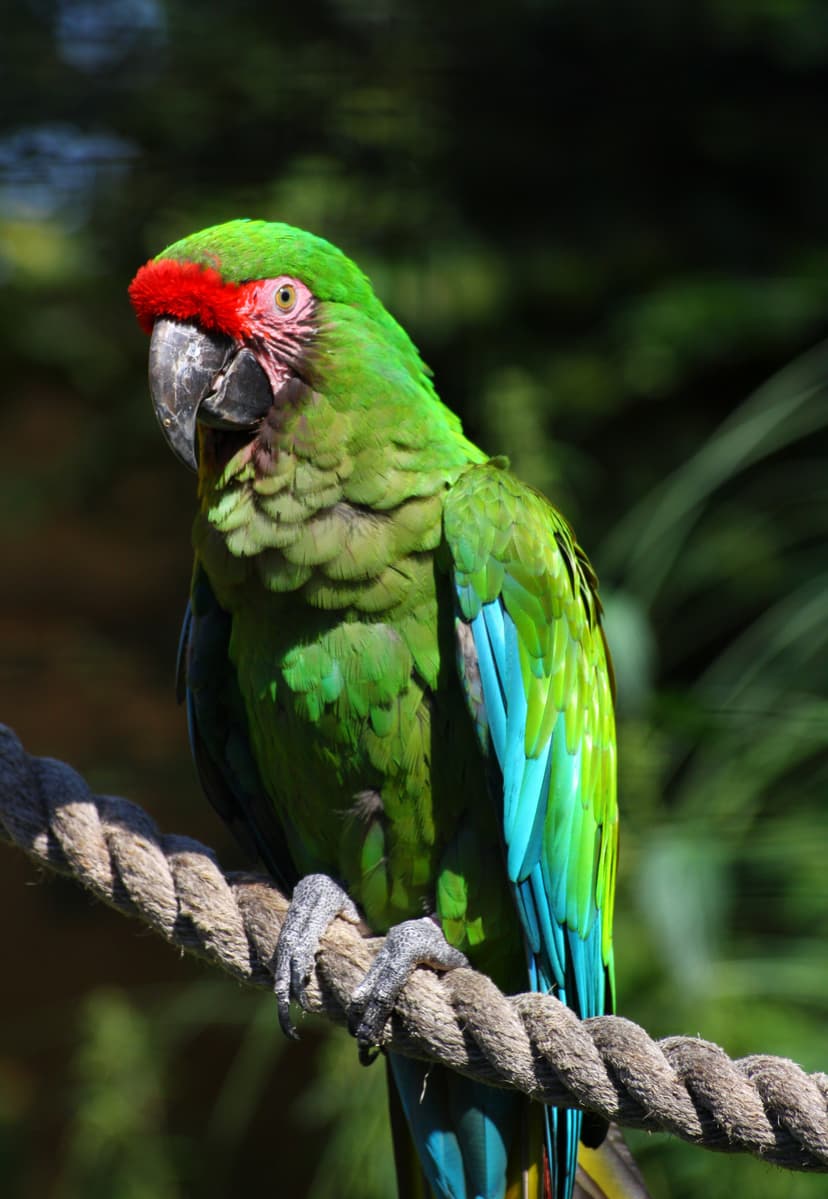
Military macaw
The military macaw (Ara militaris) is a medium to large parrot recognized by its predominantly green plumage accented with blue and yellow, and a distinctive red forehead patch, reminiscent of a military uniform. Native to a range stretching from west-central Mexico down to northern Argentina and Bolivia, these macaws are known for their loud vocalizations and social behavior. While facing conservation challenges, they are also commonly found in captivity due to their relative ease of breeding and long lifespan.