
New Zealand kākā
The New Zealand kākā (Nestor meridionalis) is a large, endangered parrot native to the forests of New Zealand. Known for its distinctive brown and green plumage with scarlet flashes, it is an arboreal species that plays a vital role in its ecosystem through its varied diet, which includes fruits, seeds, nectar, and sap. Its conservation is a priority due to significant population declines caused by habitat loss and introduced predators.
Key Facts
- ›Native to the native forests of New Zealand's three main islands.
- ›Features patterned brown, green, and grey plumage with scarlet and orange flashes under the wings.
- ›Diet is varied, including fruits, seeds, nectar, sap, and invertebrates.
- ›Nests in tree cavities, with females incubating eggs and males provisioning them.
- ›Considered vulnerable due to habitat loss and predation by introduced species.
- ›Two subspecies exist: the North Island kākā and the South Island kākā.
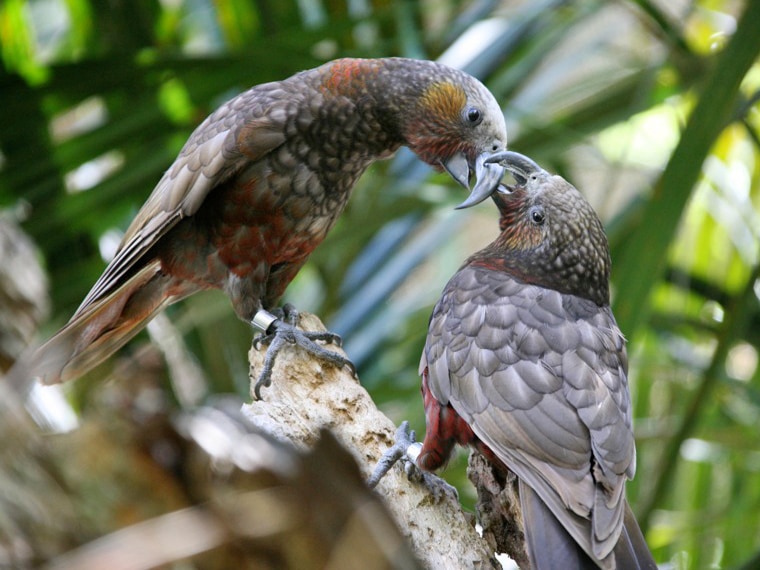
KāKā
New Zealand
Lowland and Mid-Altitude Native Forests, Mature Native Forests With Complex Canopies
Strong Beak, Brush Tongue
Fruits, Berries, Seeds, Flowers, Buds, Nectar, Sap, Plants, Invertebrates, Insect Larvae, Honeydew
Gregarious, Social, Highly Cognitive, Active At Dawn and Dusk
Harsh Ka-Aa, Whistling U-Wiia
- Cavities in hollow trees
- Nest floor lined with small wood chips and powder
About New Zealand kākā
The New Zealand Kākā: A Forest Dweller of Concern
The New Zealand kākā (Nestor meridionalis) is a prominent parrot species native to the indigenous forests of New Zealand's three main islands. This medium-sized parrot, measuring around 45 cm in length and weighing between 390 and 560 grams, is characterized by its predominantly brown, green, and grey plumage, accented by striking scarlet and orange flashes beneath its wings. The kākā shares its name with the extinct Norfolk and Chatham kākā, but the New Zealand variety persists, albeit in a vulnerable state.
Taxonomy and Evolution
First formally described in 1788 by Johann Friedrich Gmelin, the kākā was initially placed in the genus Psittacus before being reclassified into the genus Nestor. It is closely related to the kea, with which it diverged approximately 1.72 million years ago, developing a more specialized affinity for forested environments compared to the kea's adaptation to alpine habitats. The kākā belongs to the ancient parrot superfamily Strigopoidea, an early evolutionary split from other parrot families. Two subspecies are recognized: the North Island kākā (Nestor meridionalis septentrionalis) and the South Island kākā (N. m. meridionalis), though recent research questions significant genetic differences between them.
Description and Distinctive Features
Beyond its striking plumage, the kākā possesses a robust beak that is intermediate in length and sharpness between its relatives, the kea and kākāpō. Evidence suggests sexual dimorphism in the North Island kākā, with males exhibiting larger bills, possibly an adaptation for accessing deep-seated food sources like wood-boring larvae, which they provision for females and hatchlings.
Distribution and Habitat
Historically widespread, the New Zealand kākā now primarily inhabits lowland and mid-altitude native forests, favoring mature forests with complex canopies. Its distribution has significantly contracted due to habitat modification and predation. Strongholds are found on offshore islands such as Kapiti Island, Codfish Island/Whenua Hou, and Little Barrier Island. Reintroduction programs, notably at Zealandia in Wellington, have shown success in increasing local populations and enabling mainland recolonization.
Behavior and Diet
Primarily arboreal, kākā are highly active and gregarious, often seen in flocks. They exhibit complex social behaviors, including social play such as chasing and mock fighting, which contribute to cognitive development and social bonding. Their diet is remarkably varied, adapting to seasonal availability. They consume fruits, berries, seeds, flowers, buds, nectar, sap, and invertebrates. A notable feeding behavior is sap feeding, especially during winter and spring, where they access nutrient-rich sap by gouging or scraping bark. Their specialized brush tongue is adept at lapping up nectar and honeydew, crucial high-energy food sources.
Breeding Habits
Kākā are monogamous and typically nest in hollow trees. The female incubates the clutch of typically four eggs (ranging from four to eight), while the male provides food. The incubation period lasts about 24 days, and the chicks fledge after approximately 70 days. Both parents care for the fledglings.
Conservation Concerns
The New Zealand kākā is classified as vulnerable due to significant population declines. Introduced predators like stoats and possums pose a major threat to nesting adults and young. Habitat loss and competition from introduced species, particularly wasps for honeydew, further exacerbate their precarious situation. Conservation efforts, including predator control through trapping and aerial application of toxins, have demonstrated positive impacts on kākā population recovery in treated areas.
Source: Wikipedia ↗
Frequently Asked Questions
What is the scientific name for the New Zealand kākā?
The scientific name for the New Zealand kākā is Nestor meridionalis. It was first described by Johann Friedrich Gmelin in 1788.
What are the main differences between the North Island and South Island kākā subspecies?
The South Island kākā has more white plumage on its head and brighter green plumage compared to the North Island kākā, which has more olive-brown plumage. South Island males also tend to be heavier.
What do New Zealand kākā eat?
New Zealand kākā have a diverse diet that includes fruits, berries, seeds, flowers, buds, nectar, sap, plants, and invertebrates like insect larvae. They are known to use their strong beaks to access seeds from cones and dig out grubs.
Where do New Zealand kākā build their nests?
New Zealand kākā nest in cavities within hollow trees, often in mature native species like mataī, rimu, or tōtara. The entrance holes are typically several meters above the ground.
What are the biggest threats to the New Zealand kākā population?
The primary threats to the New Zealand kākā are habitat loss and predation by introduced predators such as stoats, possums, cats, and rats. Competition with introduced species like wasps for honeydew also poses a risk.
Are New Zealand kākā social birds?
Yes, New Zealand kākā are gregarious and often move in large flocks, especially around food sources. While they are not obligate social animals and can be solitary, their social interactions demonstrate high cognition.
Related Parrot species
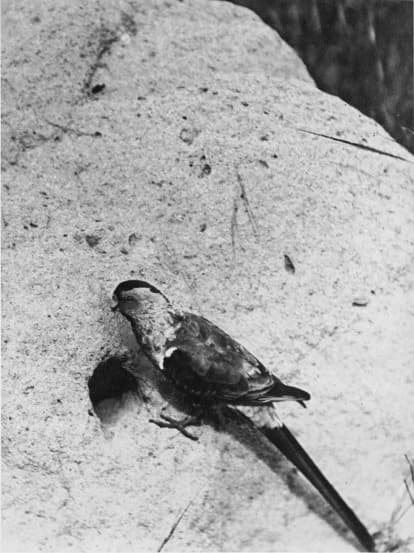
Paradise parrot
The paradise parrot was an exceptionally colorful, medium-sized parrot native to the grassy woodlands along the Queensland and New South Wales border in eastern Australia. Known for its striking plumage of turquoise, aqua, scarlet, black, and brown, and an unusually long tail, it inhabited areas that were once moderately common for the species. Tragically, it became extinct in 1927, with its decline attributed to various factors including habitat loss and overgrazing.

Collared lory
The collared lory (Vini solitaria) is a species of parrot endemic to the Fiji Islands. This distinctive bird, measuring about 20 cm, is known for its bright red underparts, purple crown, and greenish upperparts, with males and females showing similar plumage. It is notable for its ability to adapt to urban environments, including the city of Suva, and was historically prized for its vibrant feathers used in trade networks across Polynesia.
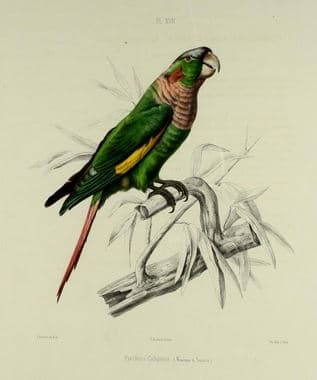
Flame-winged parakeet
The flame-winged parakeet, also known as the brown-breasted parakeet, is a medium-sized parrot endemic to the eastern Andean slopes of Colombia. This species is distinguished by its bright yellow primary coverts and bluish primaries, with vivid yellow and orange-red wing markings visible in flight, which give it its common name. It is currently facing threats from habitat loss and fragmentation, leading to a declining population.