
Lilac-crowned amazon
The lilac-crowned amazon, also known as Finsch's parrot, is a parrot species endemic to the Pacific slopes of Mexico. It is distinguished by its predominantly green plumage, a maroon forehead, and a striking violet-blue crown and neck. Unfortunately, this vibrant parrot has faced significant population decline, leading to its classification as Endangered by the IUCN.
Key Facts
- ›Endemic to the Pacific coast of Mexico, ranging from southeastern Sonora to southern Oaxaca.
- ›Adults have green plumage with a maroon forehead and a violet-blue crown and neck.
- ›Juveniles have less maroon on their forehead and dark brown irises, maturing to adult features within a year.
- ›Breeds from February to June, nesting in tree cavities in dry forests.
- ›Classified as Endangered by the IUCN due to habitat loss and population decline.
- ›Hand-reared individuals can be friendly and learn to MIMIC speech.
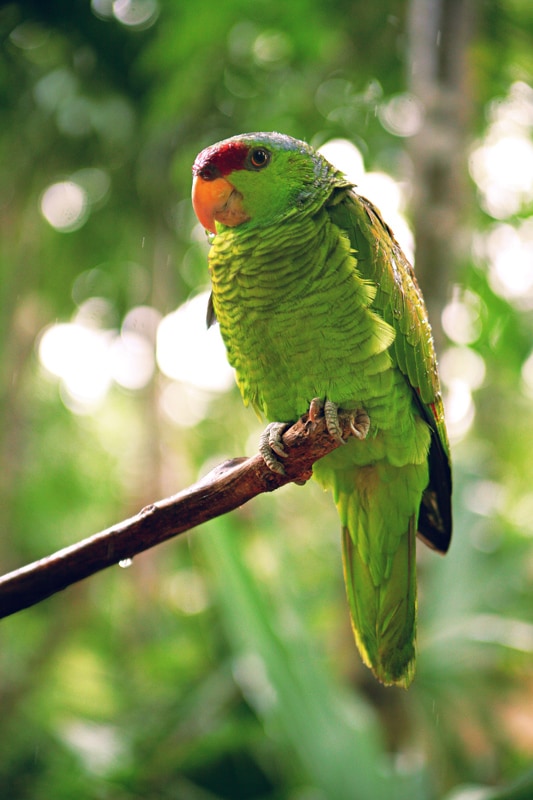
Lilac-Crowned Parrot, Finsch's Parrot, Finsch's Amazon
Mexico
Dry Forests, Residential Areas, Conifer Forests
Maroon Forehead, Violet-Blue Crown and Neck, Red Speculum On Primary Feathers
Not Specified
Friendly, Good Companion
Can Learn A Vocabulary, Not Known As Prolific Talkers
Natural Cavities of Trees
About Lilac-crowned amazon
Lilac-crowned Amazon: A Jewel of Mexico's Pacific Slopes
The lilac-crowned amazon, scientifically known as Amazona finschi and also referred to as Finsch's parrot or Finsch's amazon, is a striking parrot species native exclusively to the Pacific coastal regions of Mexico. Its vibrant plumage is predominantly green, accented by a distinctive maroon forehead and a captivating violet-blue crown and neck. This combination of colors, along with the specific markings on its forehead and crown, makes it readily identifiable.
Range and Habitat
This parrot's natural range is confined to the Pacific slopes of Mexico, extending from southeastern Sonora and southwestern Chihuahua southward to Oaxaca. Its habitat typically consists of dry forests, though populations have also been observed in residential areas and conifer forests, sometimes associating with red-crowned parrots. The species' range has seen a significant decrease, with population declines recorded across most of its natural territories.
Conservation Concerns
The lilac-crowned amazon faces considerable threats, primarily due to habitat loss, which has led to a substantial reduction in its population. Recognizing this vulnerability, BirdLife International classified the species as vulnerable in 2006, and the International Union for Conservation of Nature (IUCN) subsequently uplisted it to Endangered in 2014. These designations highlight the urgent need for conservation efforts to protect this unique avian species.
Reproduction and Aviculture
The breeding season for the lilac-crowned amazon occurs between February and June. They typically nest in natural tree cavities. Females lay a clutch of one to four eggs, with an average brood size of 1.8 nestlings. While reproductive success can be impacted by climate variability in their dry forest habitats, encouragingly, hand-reared individuals can develop into friendly and companionable pets. They are capable of learning a significant vocabulary, though they are not considered exceptionally talkative parrots. A notable population of approximately 100 individuals has also been observed in Southern California, particularly in the San Gabriel Valley and Orange County.
Source: Wikipedia ↗
Frequently Asked Questions
What are the distinguishing physical characteristics of a lilac-crowned amazon?
Adult lilac-crowned amazons are primarily green with yellowish underparts and black edging. They are easily identified by their maroon forehead and a distinct violet-blue crown and neck. The cheeks and ear coverts are a greenish-yellow.
Where does the lilac-crowned amazon live naturally?
This parrot species is endemic to the Pacific coast of Mexico. Its natural range extends from southeastern Sonora and southwestern Chihuahua down to southern Oaxaca, inhabiting elevations above 375 meters in some areas.
What is the conservation status of the lilac-crowned amazon?
The lilac-crowned amazon is currently classified as Endangered by the International Union for Conservation of Nature (IUCN). This status reflects a significant decline in its population, largely due to habitat loss.
How do juvenile lilac-crowned amazons differ from adults?
Juveniles are visually similar to adults but have less maroon on their forehead and darker brown irises. Within about a year, they begin to develop the more pronounced maroon forehead and amber irises characteristic of adult birds.
What are the nesting habits of the lilac-crowned amazon?
Lilac-crowned amazons typically nest in natural cavities found in trees within dry forest environments. The breeding season runs from February to June.
Are lilac-crowned amazons good pets?
Hand-reared lilac-crowned amazons can be quite friendly and make good companion parrots. While not primarily known for extensive talking, they can learn a notable vocabulary.
Related Parrot species
New Caledonian lorikeet
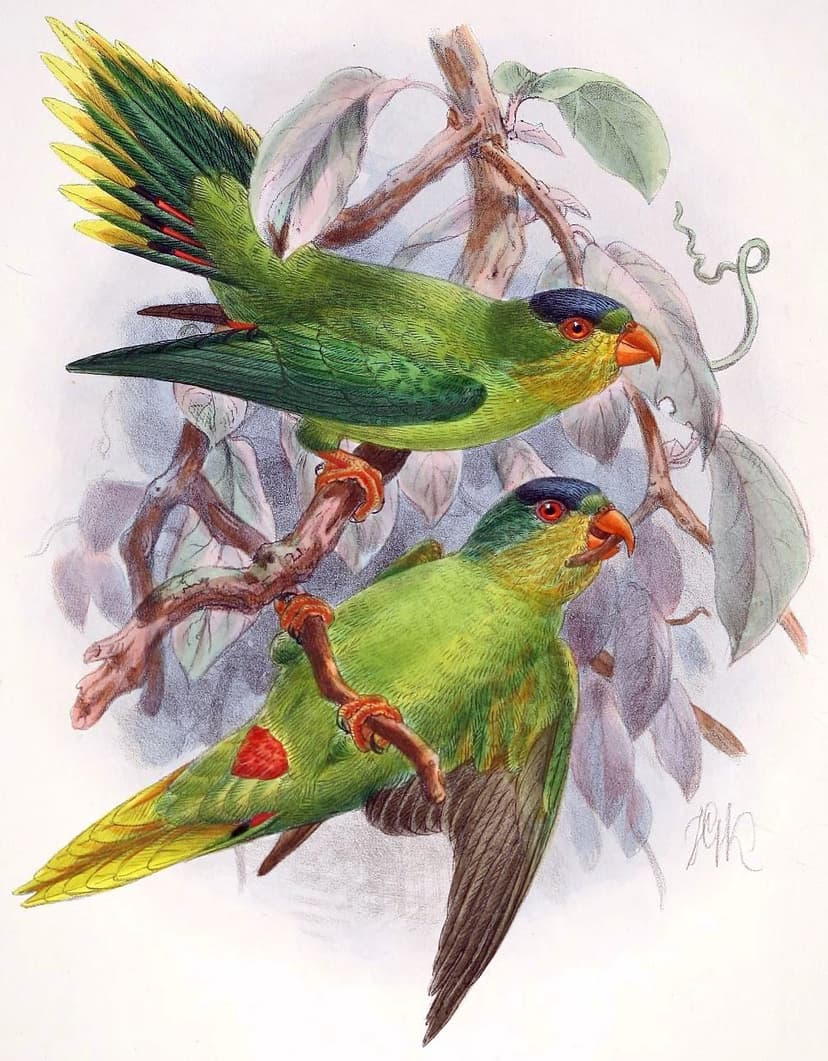
The New Caledonian lorikeet is a lorikeet species endemic to the Melanesian island of New Caledonia, possibly extinct. Historically assigned to the genus Charmosyna, it was moved to Vini based on molecular phylogenetic studies. This small, elusive bird is characterized by its green plumage with violet-blue and dark blue markings, and a distinctive red anal region.

Fuertes's parrot
Fuertes's parrot, also known as the indigo-winged parrot, is an endangered species endemic to the west slope of Colombia's Central Andes. This parrot is distinguished by its striking blue and green plumage, accented with red and violet-blue markings on its wings and tail. It inhabits wet temperate cloudforests and is known to feed in flocks, with conservation efforts focusing on nest box programs to aid its population recovery.
Blue lorikeet
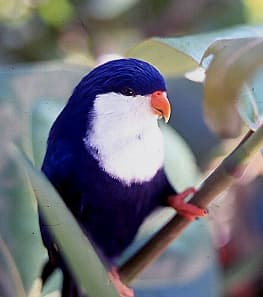
The blue lorikeet (Vini peruviana) is a small lorikeet native to French Polynesia and the Cook Islands, also known as the Tahiti lorikeet or indigo lory. It is distinguished by its predominantly dark blue plumage with a white chest, throat, and face, and is known for its active nature and diet of nectar, pollen, and insects.