
New Caledonian lorikeet
The New Caledonian lorikeet is a lorikeet species endemic to the Melanesian island of New Caledonia, possibly extinct. Historically assigned to the genus Charmosyna, it was moved to Vini based on molecular phylogenetic studies. This small, elusive bird is characterized by its green plumage with violet-blue and dark blue markings, and a distinctive red anal region.
Key Facts
- ›Endemic to New Caledonia, it is now considered possibly extinct.
- ›Females are predominantly green with a violet-blue crown and dark bluish thighs.
- ›Males have not been recorded, but are expected to have more red coloration.
- ›It is a small, inconspicuous bird, making it extremely difficult to spot.
- ›Its diet likely includes nectar, pollen, blossoms, and soft fruit, with Erythrina specifically mentioned.
- ›Listed as Critically Endangered - Possibly Extinct by the IUCN.
New Caledonia
Humid Montane Forests, Lowland Melaleuca Forests, Shrubland
Slim and Pointed Tail, Slender and Pointed Wings, Red Anal Region
Nectar, Pollen, Blossoms, Soft Fruit, Erythrina
High-Pitched Screeches
Excavate In Arboreal Termite Nests, Excavate In Epiphytic Ferns
About New Caledonian lorikeet
New Caledonian Lorikeet: A Possibly Extinct Jewel of New Caledonia
The New Caledonian lorikeet, scientifically known as Vini diadema, is a species of lorikeet that was endemic to the Melanesian island of New Caledonia. Historically placed in the genus Charmosyna, it was later reclassified into the genus Vini based on molecular phylogenetic studies. The species is now considered possibly extinct, with its current existence uncertain.
Description and Identification
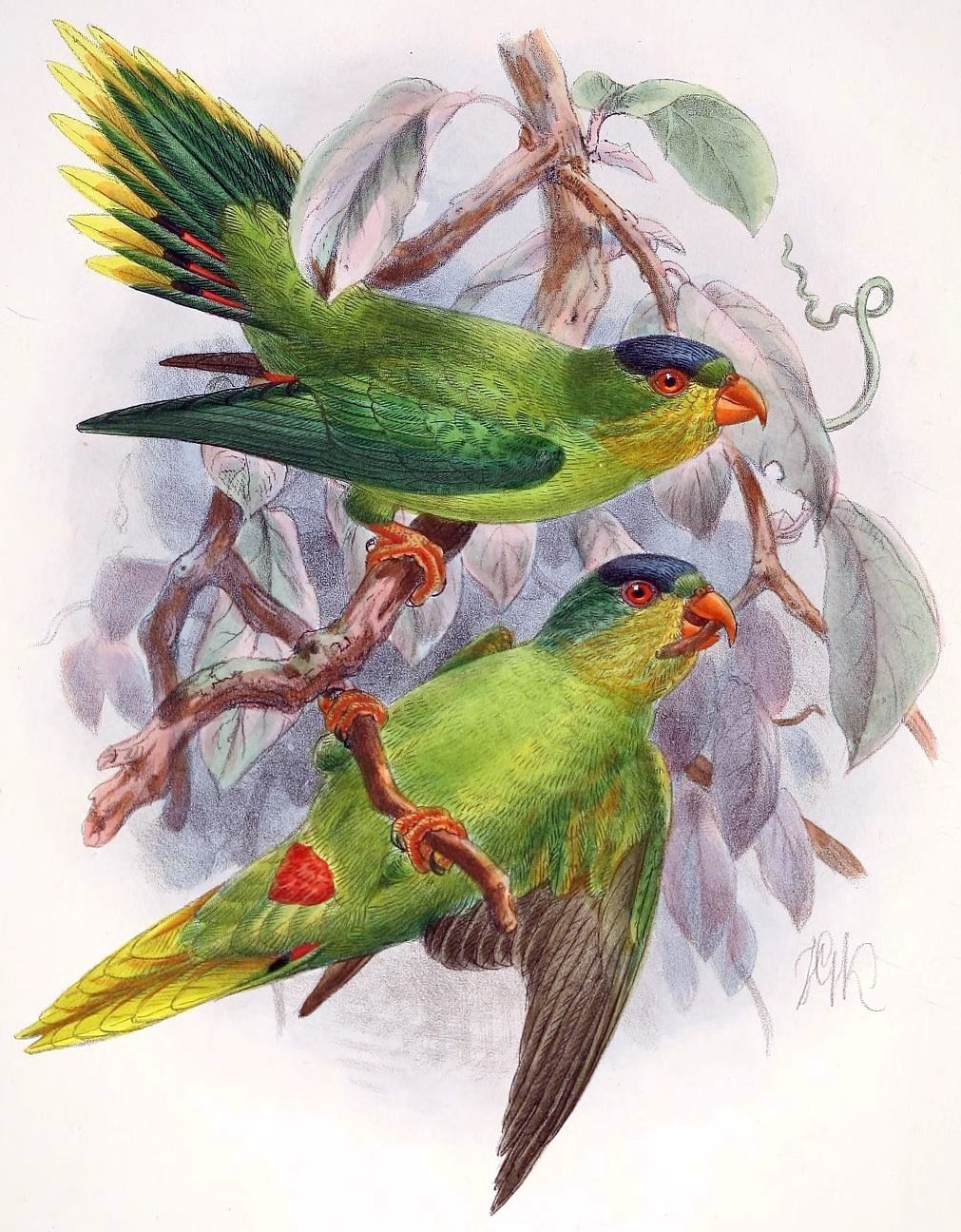
Adult females of the New Caledonian lorikeet are predominantly green, distinguished by a deep violet-blue crown and dark bluish thighs. They possess a yellowish face and underside face, and a notable red anal region. The tail is green on the upper side and yellowish olive on the underside, with the lateral feathers featuring red basal markings, followed by a black band and tipped with yellow on the underside. The beak is orange-red, and the iris is presumed to be dark orange, similar to the feet. Males have not been definitively recorded, but based on related species, they are anticipated to exhibit more red coloration, potentially on the face, underside of the primaries, and rump sides, and may be slightly larger.
Distribution and Habitat
The precise provenance of the single known specimen is uncertain. While one bird was unfortunately shot at Mont Ignambi near Oubatche in 1913, it was not preserved. Unverified reports have emerged from various locations across New Caledonia, including areas west of Mont Panié, the Mont Ignambi region, the La Foa-Canala road, and Yaté Lake. The species is believed to inhabit humid montane forests but has also been observed in lowland Melaleuca forests, though these sightings likely reflect better accessibility rather than primary habitat preference. Mt. Ignambi is considered an ideal habitat, and the Yaté Lake sighting originated from an area of low shrubland. The bird typically keeps to the treetops, making it exceptionally difficult to spot.
Ecology and Diet
This lorikeet is described as nomadic and relatively inconspicuous, contributing to its elusiveness. Related species are known to consume nectar, pollen, blossoms, and occasionally soft fruits, often foraging in pairs or small flocks of fewer than ten individuals. The plant Erythrina has been specifically noted as a food source for this species. Reproduction data for green Charmosyna lorikeets is limited, but for this species, the breeding season is presumed to be between July and December, potentially extending to February or even year-round. Nests are excavated in arboreal termite nests or epiphytic ferns, and clutches typically consist of two, possibly three, white, rounded eggs.
Conservation Status and Threats
Described from two specimens collected before 1860, the New Caledonian lorikeet has seen very rare sightings reported up to the 1880s. Subsequent claims of sightings have been made, but none have been definitively confirmed, and extensive searches have been fruitless. There is ongoing debate about whether the species still exists, with some sources listing it as extinct since 1860, though most ornithologists hope for its rediscovery. The bird's rarity is attributed to a combination of factors, possibly including habitat modification, although its post-1880 decline predates significant habitat destruction. Introduced predators such as cats and rats, or introduced diseases, are also considered potential causes. The large-scale destruction of lowland forests may have deprived the species of seasonal food sources. Despite its elusiveness, it is listed in CITES Appendix II and is classified as Critically Endangered - Possibly Extinct by the IUCN.
Source: Wikipedia ↗
Frequently Asked Questions
What is the scientific name of the New Caledonian lorikeet?
The scientific name of the New Caledonian lorikeet is Vini diadema. It was formerly classified under the genus Charmosyna but was moved to the genus Vini based on molecular phylogenetic studies.
What does the New Caledonian lorikeet look like?
The female New Caledonian lorikeet is primarily green with a deep violet-blue crown and dark bluish thighs. It also features a yellowish face and underside face, and a red anal region. The tail is green above and yellowish olive below, with specific red, black, and yellow markings on the lateral feathers.
Where is the New Caledonian lorikeet found?
This lorikeet is endemic to the Melanesian island of New Caledonia. Reports of its presence have come from various locations within the island, including Mont Ignambi, west of Mont Panié, the La Foa-Canala road, and Yaté Lake.
What is the conservation status of the New Caledonian lorikeet?
The New Caledonian lorikeet is listed as Critically Endangered - Possibly Extinct by the IUCN. There is division among experts regarding whether the species still exists, with many hoping for its rediscovery.
What is known about the New Caledonian lorikeet's diet and habitat?
It is believed to inhabit humid montane forests but also frequents lowland Melaleuca forests. Its diet likely consists of nectar, pollen, blossoms, and soft fruit, with Erythrina being a noted food plant. They are thought to forage in pairs or small flocks.
Why is the New Caledonian lorikeet so rarely seen?
The New Caledonian lorikeet is extremely rare and elusive, making it very hard to track. Its small size and inconspicuous nature contribute to its elusiveness, and it tends to keep to treetops.
Related Parrot species
Lilac-crowned amazon
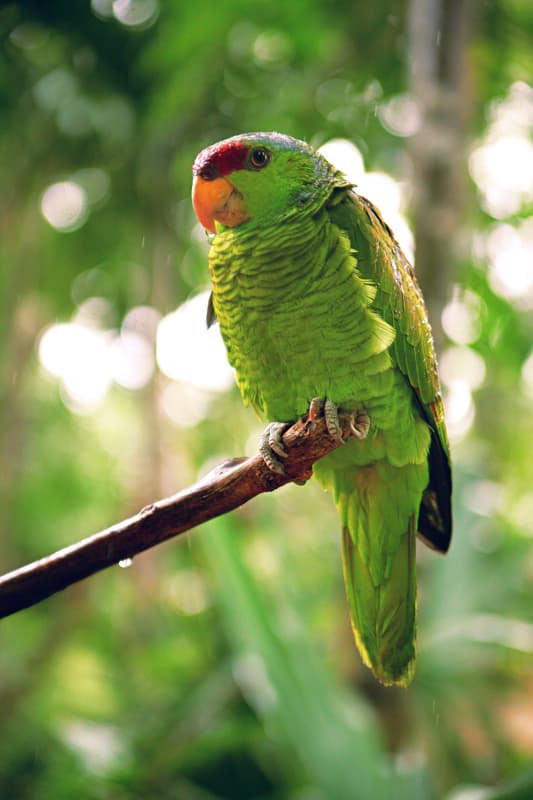
The lilac-crowned amazon, also known as Finsch's parrot, is a parrot species endemic to the Pacific slopes of Mexico. It is distinguished by its predominantly green plumage, a maroon forehead, and a striking violet-blue crown and neck. Unfortunately, this vibrant parrot has faced significant population decline, leading to its classification as Endangered by the IUCN.

Fuertes's parrot
Fuertes's parrot, also known as the indigo-winged parrot, is an endangered species endemic to the west slope of Colombia's Central Andes. This parrot is distinguished by its striking blue and green plumage, accented with red and violet-blue markings on its wings and tail. It inhabits wet temperate cloudforests and is known to feed in flocks, with conservation efforts focusing on nest box programs to aid its population recovery.

Black-headed parrot
The black-headed parrot is a species of parrot native to the tropical forests of South America, primarily found in countries like Brazil, Colombia, and Venezuela. It is distinguished by its striking black cap, rufous-orange hindneck band, and vibrant yellow and green plumage. These parrots are known for their playful and energetic nature when kept as pets, often mimicking environmental sounds.