
Grey-headed parakeet
Psittacula finschii·Psittaculidae·January–March·4-5 eggs
The grey-headed parakeet is a species of parrot found across Southeast Asia, ranging from northeastern India to Vietnam. It is closely related to the slaty-headed parakeet and is distinguished by its greyish-green head and long tail. This species inhabits various forest types and is known to be social, often seen in flocks.
Key Facts
- ›Found in Southeast Asia, including India, Vietnam, Laos, Cambodia, Thailand, Myanmar, China, Bangladesh, and Bhutan.
- ›Inhabits forests of oak, teak, and pine, as well as deciduous hillsides and farmland with scattered trees.
- ›Diet consists of leaf buds, seeds, fruit, berries, and flowers.
- ›Often observed in flocks or family parties, gathering in large numbers to roost at dusk.
- ›Breeding season occurs from January to March, with females laying clutches of 4-5 eggs.
- ›Threatened by capture for the exotic bird trade and habitat loss due to deforestation and logging.
Southeast Asia, India, Vietnam, Laos, Cambodia, Thailand, Myanmar, China, Bangladesh, Bhutan
Forests, Deciduous Forest Hillsides, Farmland With Scattered Trees, Evergreen and Semi-Evergreen Vegetation
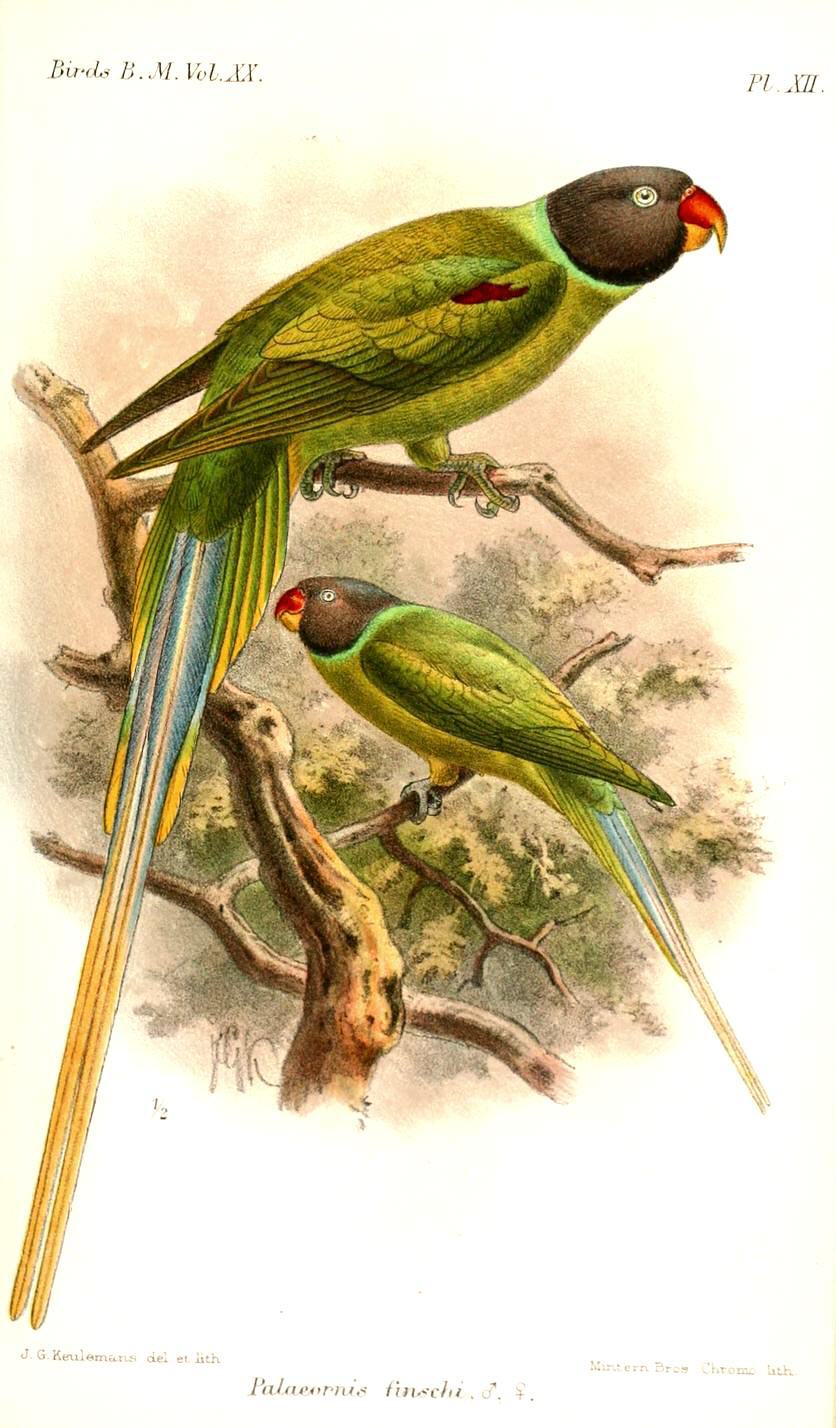
- Grey/green face
- Dull green head
- Faint pale green band below cheeks to hindcrown
- Long tail
Leaf Buds, Seeds, Fruit, Berries, Flowers
About Grey-headed parakeet
The grey-headed parakeet, scientifically known as Psittacula finschii, is a species of parrot native to the diverse landscapes of Southeast Asia. It is closely related to the slaty-headed parakeet, forming a super-species with it. The bird's range extends from northeastern India through to Vietnam, encompassing countries like Laos, Cambodia, Thailand, Myanmar, China, Bangladesh, and Bhutan.
Description and Habitat
This parakeet is characterized by its distinctive greyish-green face and a dull green head, often adorned with a faint pale green band that runs from the cheeks to the hindcrown. It possesses a long tail and lacks the prominent wing patches seen in some other parakeet species. The grey-headed parakeet thrives in a variety of forest environments, including those dominated by oak, teak, and pine trees. It also adapts well to deciduous forest hillsides and agricultural areas with scattered trees, and in Cambodia, it is frequently found in evergreen and semi-evergreen vegetation.
Behavior and Ecology
Social in nature, the grey-headed parakeet is typically observed in flocks or family groups, with larger congregations sometimes reported. They are generally resident birds, though some seasonal altitudinal movements may occur in response to food availability. A notable behavior is their tendency to gather in large flocks for roosting at dusk. Their diet is diverse, comprising various species of leaf buds, seeds, fruits, berries, and flowers. The breeding season spans from January to March, during which females lay clutches of approximately 4 to 5 eggs.
Conservation Concerns
The grey-headed parakeet faces significant threats that impact its wild populations. It is frequently captured for the exotic bird trade, and is locally kept as a pet, particularly in some villages in southern China and surrounding regions. This continuous trapping exerts considerable pressure on the species. Furthermore, deforestation and the logging of its natural forest habitat contribute to a negative impact on the parakeet's population, highlighting the need for conservation efforts to protect this species and its environment.
Source: Wikipedia ↗
Frequently Asked Questions
What is the scientific name for the grey-headed parakeet?
The scientific name for the grey-headed parakeet is Psittacula finschii. This binomial name commemorates the German naturalist and explorer Otto Finsch.
Where is the grey-headed parakeet found geographically?
The grey-headed parakeet has a wide distribution across Southeast Asia. Its range includes parts of India, Bhutan, Bangladesh, Myanmar, China, Laos, Vietnam, Cambodia, and Thailand.
What kind of habitat does the grey-headed parakeet prefer?
This parakeet is found in forests composed of trees like oak, teak, and pine. It also resides in deciduous forest hillsides and farmland areas that have scattered trees. In Cambodia, it is regularly found in evergreen and semi-evergreen vegetation.
What does the grey-headed parakeet eat?
The diet of the grey-headed parakeet is varied and includes different species of leaf buds, seeds, fruit, berries, and flowers. They forage for these food sources within their natural habitat.
What are the main threats to the grey-headed parakeet population?
The primary threats to the grey-headed parakeet are capture for the exotic bird trade, and the loss of its natural forest habitat due to deforestation and logging. These factors significantly impact wild populations.
When does the grey-headed parakeet breed and how many eggs do they lay?
The breeding season for the grey-headed parakeet typically occurs from January to March. Females usually lay a clutch of 4 to 5 eggs during this period.
Related Parrot species

Blue-winged parrot
The blue-winged parrot is a small parrot native to Tasmania and southeastern mainland Australia. It is known for its predominantly olive-green plumage with distinctive blue markings on the wings and a blue frontal band on the head, which differs between males and females. This species primarily feeds on grass seeds on the ground and is partly migratory, traveling between Tasmania for breeding and the mainland for winter.
Kākāpō
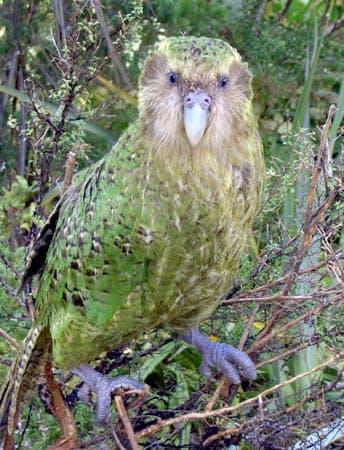
The kākāpō, also known as the owl-parrot, is a unique, large, nocturnal, and flightless parrot endemic to New Zealand. It is distinguished by its finely blotched yellow-green plumage, owl-like facial disc, and exceptionally soft feathers. Historically significant to Māori culture, the kākāpō is now critically endangered due to introduced mammalian predators.

Budgerigar
The budgerigar, also known as the common parakeet or budgie, is a small, seed-eating parrot native to Australia. Naturally green and yellow with black markings, captive breeding has produced a wide array of colors. These nomadic, social birds are highly popular pets worldwide due to their small size, affordability, and remarkable ability to mimic human speech.