
Kākāpō
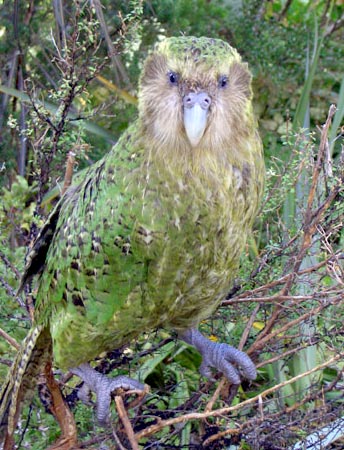
The kākāpō, also known as the owl-parrot, is a unique, large, nocturnal, and flightless parrot endemic to New Zealand. It is distinguished by its finely blotched yellow-green plumage, owl-like facial disc, and exceptionally soft feathers. Historically significant to Māori culture, the kākāpō is now critically endangered due to introduced mammalian predators.
Key Facts
- ›The kākāpō is the world's only flightless parrot.
- ›It is the world's heaviest parrot, with males weighing up to 3 kg.
- ›This species is nocturnal and has a distinctive owl-like facial disc.
- ›Kākāpō exhibit a unique polygynous lek breeding system.
- ›They are one of the world's longest-living birds, with a potential lifespan of up to 100 years.
- ›The kākāpō has a low basal metabolic rate and does not have male parental care.
Owl-Parrot
New Zealand
Tussocklands, Scrublands, Coastal Areas, Podocarp Forests, Beech Forests, Tawa Forests, RāTā Forests, Areas With Regenerating Vegetation
Yellow-Green, Yellow, Black, Dark Brownish-Grey, Pale Green
Flightless, Owl-Like Facial Disc, Finely Blotched Yellow-Green Plumage, Large Grey Beak, Large Blue Feet, Nocturnal, Ground-Dwelling, Distinct Musty-Sweet Odour
Fruits, Seeds, Leaves, Stems, Rhizomes
Curious, Solitary, Genial, Affectionate, Playful
Booming Calls, Ching Sound, Skraark Sound, Growling
Ground Nests, Under Cover of Plants, Cavities Such As Hollow Tree Trunks
About Kākāpō
The kākāpō (Māori: [ˈkaːkaːpɔː]; pl.: kākāpō), sometimes known as the owl-parrot, is a large, nocturnal, ground-dwelling parrot endemic to New Zealand. It is the world's only flightless parrot, the world's heaviest parrot, and possesses a unique combination of traits among parrots, including finely blotched yellow-green plumage, a distinct facial disc resembling that of an owl, and exceptionally soft feathers. Historically, the kākāpō held cultural significance for the Māori people, appearing in their mythology and being hunted for meat and feathers.
Anatomy and Adaptations
The kākāpō's anatomy reflects the evolutionary tendencies of island birds. With few natural predators in pre-human New Zealand, it developed a robust physique at the expense of flight abilities, characterized by reduced wing and shoulder muscles and a diminished sternal keel. Its wings are relatively short and used for balance and parachuting rather than sustained flight. As a nocturnal species, the kākāpō has adaptations for low-light conditions, including enhanced light sensitivity and a well-developed sense of smell, which is unusual among parrots.
Ecology and Behaviour
Kākāpō are primarily nocturnal, roosting during the day and foraging at night. Despite being flightless, they are excellent climbers and can move considerable distances on foot with a rapid, jog-like gait. They are entirely herbivorous, feeding on a diet of fruits, seeds, leaves, stems, and rhizomes. Solitary by nature, they have been observed to be curious and can interact with humans, sometimes displaying distinct personalities.
Breeding System
The kākāpō is the only flightless bird with a lek breeding system. During the breeding season, males establish mating courts on hilltops, where they compete to attract females with loud, low-frequency booming calls. Females choose a mate based on the quality of his display. After mating, the female solely undertakes nesting duties, laying 1–4 eggs in a ground nest and incubating them. She then feeds and cares for the altricial young for several months.
Conservation Status
The kākāpō is critically endangered, with its population having been decimated by introduced mammalian predators such as cats, rats, ferrets, and stoats. Significant conservation efforts, notably the Kākāpō Recovery Programme initiated in 1995, have focused on predator eradication and managing the remaining population on predator-free islands to ensure the species' survival. As of 2026, the known population consists of 235 individuals.
Source: Wikipedia ↗
Frequently Asked Questions
What makes the kākāpō unique among parrots?
The kākāpō possesses several unique traits, including being the world's only flightless parrot, its nocturnal nature, and its owl-like facial disc. It also has finely blotched yellow-green plumage and is the heaviest parrot species.
What is the kākāpō's habitat and where is it found?
Historically, the kākāpō was widely distributed throughout both main islands of New Zealand, inhabiting diverse environments like tussocklands, scrublands, coastal areas, and various types of forests. Currently, due to conservation efforts, they are confined to predator-free islands in New Zealand.
What does a kākāpō eat?
The kākāpō is entirely herbivorous, feeding on a variety of plant matter. Its diet includes fruits, seeds, leaves, stems, and rhizomes.
Why is the kākāpō's appearance so distinctive?
The kākāpō has finely blotched yellow-green plumage that provides camouflage, a distinct facial disc of feathers resembling an owl's face, and a large grey beak. Its feathers are exceptionally soft, contributing to its unique appearance and the specific epithet 'habroptilus'.
What is the conservation status of the kākāpō?
The kākāpō is critically endangered. Introduced mammalian predators like cats and rats severely reduced its population. Conservation efforts, particularly the Kākāpō Recovery Programme, have been implemented to protect the remaining individuals.
How does the kākāpō breed?
Kākāpō have a unique polygynous lek breeding system where males gather in an arena to compete for females by performing displays and making booming calls. Females choose a mate based on these displays, and no pair bond is formed; the female then lays eggs and raises the chicks alone.
What are the physical adaptations of the kākāpō for its lifestyle?
As a flightless, nocturnal bird, the kākāpō has reduced wing and pectoral muscles, a diminished sternal keel, and strong legs for climbing and jogging. Its senses are adapted for darkness, including an enhanced sense of smell and eyes with modified retinas for low light.
Related Parrot species

Blue-winged parrot
The blue-winged parrot is a small parrot native to Tasmania and southeastern mainland Australia. It is known for its predominantly olive-green plumage with distinctive blue markings on the wings and a blue frontal band on the head, which differs between males and females. This species primarily feeds on grass seeds on the ground and is partly migratory, traveling between Tasmania for breeding and the mainland for winter.
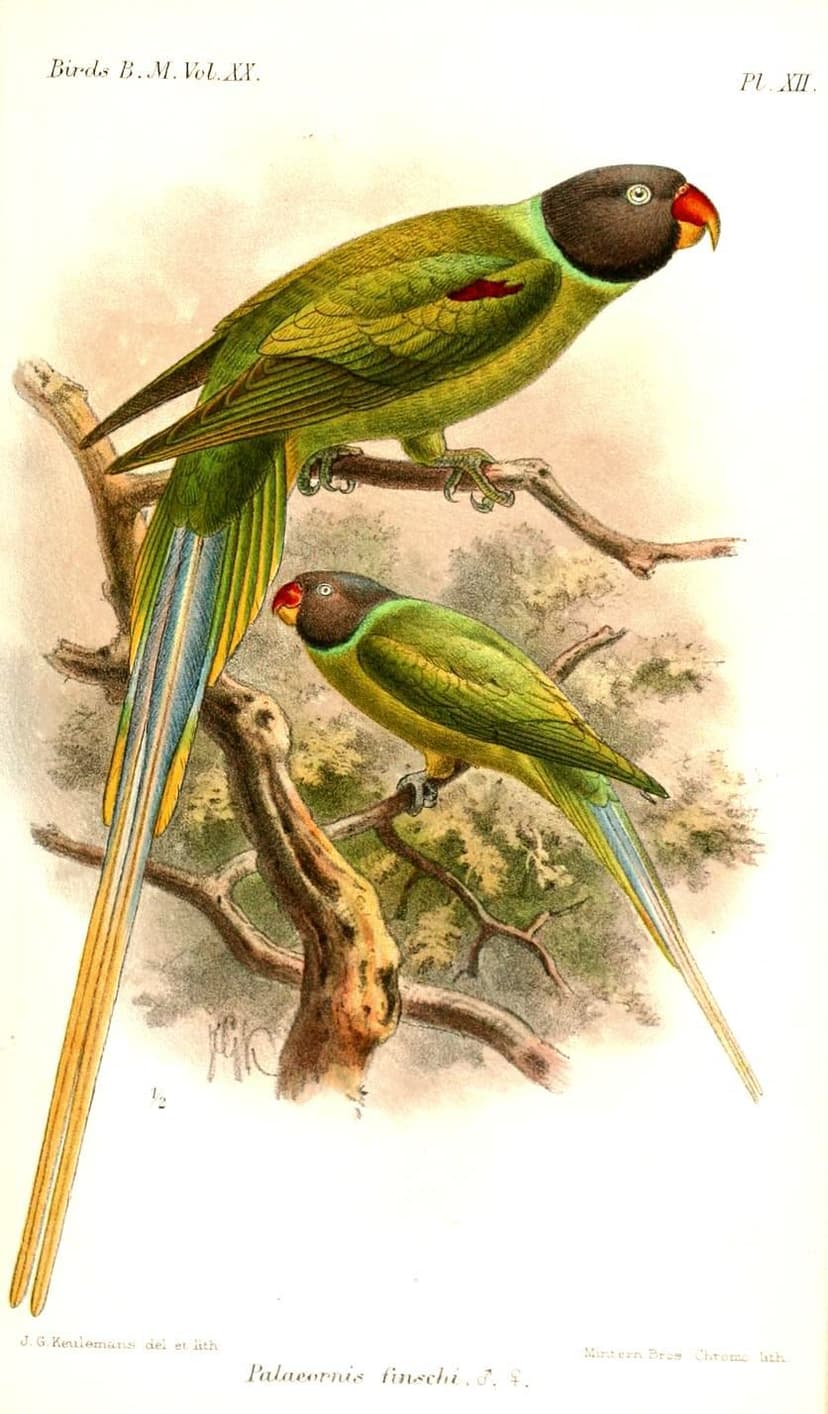
Grey-headed parakeet
The grey-headed parakeet is a species of parrot found across Southeast Asia, ranging from northeastern India to Vietnam. It is closely related to the slaty-headed parakeet and is distinguished by its greyish-green head and long tail. This species inhabits various forest types and is known to be social, often seen in flocks.
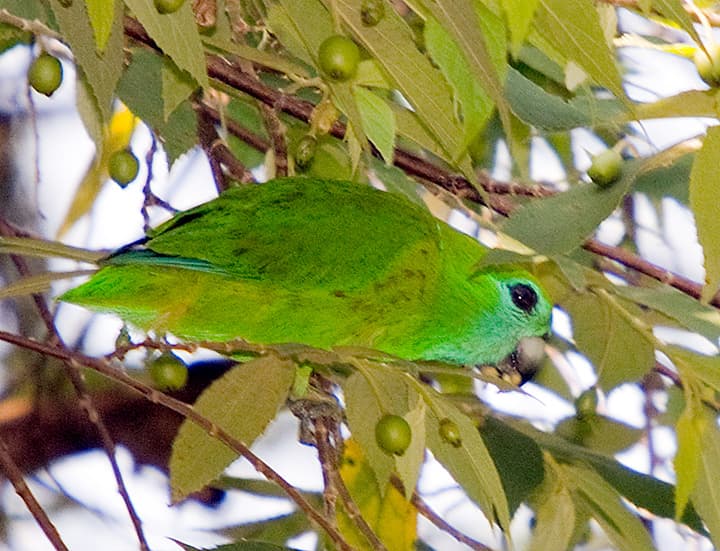
Guaiabero
The Guaiabero is a small, stout parrot endemic to the Philippines, belonging to the monotypic genus Bolbopsittacus and closely related to lovebirds and hanging parrots. Its common name stems from its reputation as a guava-eater, and it is distinctive for its large bill, stubby tail, and sexually dimorphic plumage, with males exhibiting more blue and females having black crescent markings.