
Blue-winged parrot
Neophema chrysostoma·Psittaculidae·20-24·55
The blue-winged parrot is a small parrot native to Tasmania and southeastern mainland Australia. It is known for its predominantly olive-green plumage with distinctive blue markings on the wings and a blue frontal band on the head, which differs between males and females. This species primarily feeds on grass seeds on the ground and is partly migratory, traveling between Tasmania for breeding and the mainland for winter.
Key Facts
- ›Found in Tasmania and southeastern mainland Australia.
- ›Sexually dimorphic with males having more blue on wings and a two-toned frontal band.
- ›Primarily feeds on the seeds of grasses, often on the ground.
- ›Partly migratory, with populations moving between Tasmania and the mainland.
- ›Adapts readily to captivity and can be kept in communal aviaries.
- ›Nests in tree hollows, typically eucalypts.

Blue-Banded Parakeet, Blue-Banded Grass-Parakeet, Hobart Ground Parrot, Blue-Winged Grass Parrot, Blue Winged Grass Parakeet
Australia, Tasmania
Savannah Woodland, Grasslands, Orchards, Farmlands, Marshes, Heath, Dunes, Open Habitats
Olive-Green, Blue, Yellowish, Pale Green, Yellow, Blue-Grey, Ultramarine
- Two-toned blue frontal band on the head
- Deep blue wing coverts and under wing coverts
- Greater amount of blue on the wing compared to elegant and orange-bellied parrots
Seeds of Grasses
Adapts Readily To Captivity
- Hollows of Live and Dead Trees, Generally Eucalypts
About Blue-winged parrot
The blue-winged parrot (Neophema chrysostoma), also referred to as the blue-banded parakeet or blue-banded grass-parakeet, is a small parrot species found in Tasmania and the southeastern regions of mainland Australia. This species exhibits partial migratory behavior, with some populations traveling to Tasmania to breed during the spring and summer months before returning to the mainland for winter.
Description and Identification
Measuring between 20 to 24 cm in length and weighing approximately 55 grams, the blue-winged parrot is sexually dimorphic. Both males and females are predominantly olive-green. The adult male is distinguished by a striking two-toned blue band across its face, composed of ultramarine above and paler turquoise blue below, and a yellowish crown. Its throat and breast are pale green, the belly is yellow, and its wing coverts and under wing coverts are a deep blue, with a blue-grey tail. The adult female is generally duller, with more subdued olive underparts, less blue on the wings, and a less pronounced frontal band. Juveniles are dull olive green with slate-blue wings and lack the frontal band. The notable amount of blue on the wings helps differentiate the blue-winged parrot from similar species like the elegant parrot and the orange-bellied parrot.
Distribution and Habitat
The blue-winged parrot is distributed across southeastern Australia, extending north to the Flinders Ranges in eastern South Australia, across Victoria, and more sporadically through central and western New South Wales and into Queensland. They inhabit a range of open environments, including savannah woodlands, grasslands, orchards, farmlands, marshes, heathlands, and dunes, at elevations up to 1,200 meters. Their migratory behavior is significant, marking them as one of only three parrot species that undertake regular annual migrations over sea or ocean, notably between Tasmania and the mainland.
Diet and Behavior
Primarily ground feeders, blue-winged parrots subsist mainly on the seeds of various grasses. They have been observed feeding in flocks that can range from pairs during the breeding season to as many as 2,000 birds before autumn migration. They have also been seen foraging alongside European goldfinches in Victoria.
Breeding and Reproduction
Breeding occurs between September and January, with pairs potentially raising one to two broods per season. Nests are typically constructed in the hollows of live or dead trees, most commonly eucalypts, often situated up to 20 meters above the ground. A clutch typically contains four to six glossy white eggs, which are incubated for around 20 days. The young birds remain in the nest for approximately 35 days before fledging.
In Captivity
The blue-winged parrot adapts well to captivity and can be successfully maintained in communal aviaries. They have also been known to hybridize with the elegant and turquoise parrots in avicultural settings.
Source: Wikipedia ↗
Frequently Asked Questions
What are the different names for the blue-winged parrot?
The blue-winged parrot is also known by several other common names, including the blue-banded parakeet, blue-banded grass-parakeet, Hobart ground parrot, blue-winged grass parrot, and blue winged grass parakeet.
How can I tell the difference between a male and female blue-winged parrot?
The blue-winged parrot is sexually dimorphic. Males exhibit more blue coloration on their wings and possess a distinct two-toned blue band across their forehead, while females are generally duller with less blue on their wings and a less pronounced frontal band.
What is the natural habitat of the blue-winged parrot?
These parrots inhabit a variety of open environments, including savannah woodlands, grasslands, orchards, farmlands, marshes, heathlands, and dunes. They can be found at elevations up to 1,200 meters.
What do blue-winged parrots eat in the wild?
Their diet consists mainly of grass seeds, which they consume while feeding on the ground. They have been observed eating seeds from various grass species, and in Tasmania, also from plants like pale sundew.
Do blue-winged parrots migrate?
Yes, the blue-winged parrot is partly migratory. Many individuals travel between Tasmania, where they breed during spring and summer, and the mainland of Australia for the winter months.
Where do blue-winged parrots build their nests?
Blue-winged parrots typically nest in the hollows of live or dead trees, with eucalypts being a common choice. These nesting sites can be located up to 20 meters above the ground.
What is the typical clutch size and incubation period for blue-winged parrots?
A clutch usually consists of four to six glossy white eggs. The incubation period for these eggs is approximately 20 days.
Related Parrot species

Blue-winged racket-tail
The blue-winged racket-tail is a critically endangered parrot species endemic to Tawi-Tawi island in the Philippines. Its plumage is predominantly dark green with blue primary feathers and distinctive racquet-shaped tail feathers. The species faces severe threats from habitat loss and poaching for the illegal pet trade, leading to a drastically reduced population.
Hooded parrot
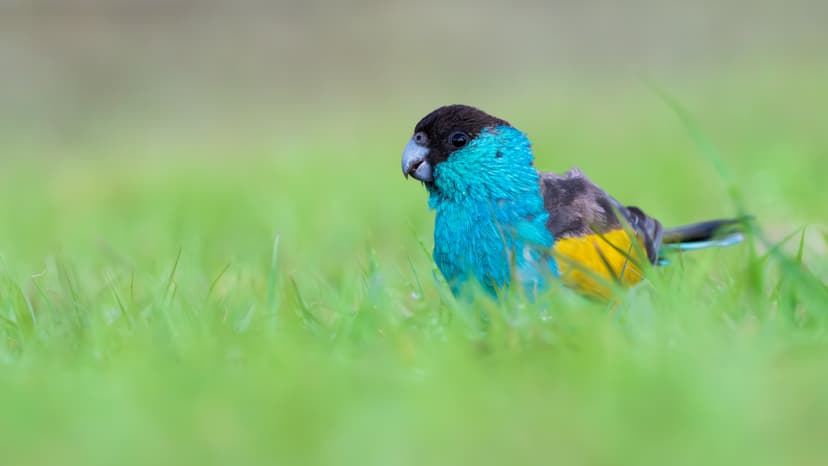
The hooded parrot is a species native to the Northern Territory in Australia, inhabiting savannah and open woodland. It is distinctive for being one of the few parrots that breed in termite mounds, and males are recognized by their black head and yellow wing patches. While once more widespread, it remains common in protected areas.
Kākāpō
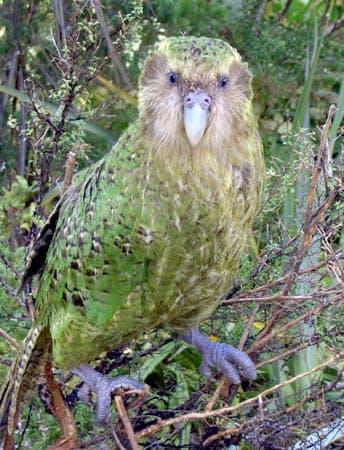
The kākāpō, also known as the owl-parrot, is a unique, large, nocturnal, and flightless parrot endemic to New Zealand. It is distinguished by its finely blotched yellow-green plumage, owl-like facial disc, and exceptionally soft feathers. Historically significant to Māori culture, the kākāpō is now critically endangered due to introduced mammalian predators.