
Hispaniolan parakeet
The Hispaniolan parakeet (Psittacara chloropterus) is a Vulnerable species of parrot endemic to the island of Hispaniola, shared by the Dominican Republic and Haiti. Primarily green with yellowish underparts, it is distinguished by red flecks on its wings and head, and a distinctive white-skinned eye-ring. This species inhabits a variety of landscapes from sea level to high altitudes and is known for its grating "kree" call.
Key Facts
- ›Endemic to the island of Hispaniola, found in both the Dominican Republic and Haiti.
- ›Adults are predominantly green with yellow undersides; some may have red flecks on their head and red on their wings.
- ›Inhabits diverse environments including forests, savannas, croplands, and urban centers, from sea level to 3,000 meters.
- ›Known to feed on fig fruits and other fruits, seeds, and flowers, and can be a pest on maize crops.
- ›Threatened by habitat loss, persecution as a crop pest, and illegal trapping for the cage bird trade.
- ›Classified as Vulnerable by the IUCN, with an estimated population of 1500 to 7000 mature individuals.

Perico, Perruche
Hispaniola
Lowland and Montane Forest, Savanna, Open Woodlands, Secondary Forest, Croplands, Urban Centers
Red Flecks On Head, Red On Wing Bend and Edge, Bare White Skin Around Eye
Fig Fruits, Fruits, Seeds, Flowers, Maize
"Kree" Call, Grating Noisy Sound Quality
Cavities In Trees, Arboreal Termitaria
About Hispaniolan parakeet
The Hispaniolan parakeet, scientifically known as Psittacara chloropterus, is a vibrant parrot species endemic to the Caribbean island of Hispaniola, which is shared by the Dominican Republic and Haiti. In the Dominican Republic, it is commonly referred to as "perico," while in Haiti, it is known as "perruche."
Physical Description
Adult Hispaniolan parakeets typically measure between 30 to 33 cm (12 to 13 inches) in length and weigh between 144 to 147 grams. The sexes are outwardly indistinguishable. Their plumage is predominantly green, with the underparts often exhibiting a more yellowish hue. Some individuals may display small red flecks on their heads. A notable characteristic is the presence of red coloration on the bend and edge of their wings, as well as on their outermost underwing coverts. The undersides of their flight feathers and tail are a dull yellowish color. Their eyes are encircled by a ring of bare white skin, which is a defining feature. Immature birds tend to have minimal or no red coloration on their wings.
Distribution and Habitat
Historically, the Hispaniolan parakeet was found across a significant portion of Hispaniola. As of recent observations, its presence in the Dominican Republic is largely concentrated in the Cordillera Central and Sierra de Bahoruco mountain ranges, along with some urban areas. In Haiti, the species is considered very rare, with documented sightings in the Chaîne de la Selle and Massif de la Hotte mountain ranges in the early 2000s, and scattered records elsewhere. The species has also been introduced to Puerto Rico and Guadeloupe, though its establishment and population numbers in these non-native locations are not well-recorded.
The Hispaniolan parakeet demonstrates adaptability, inhabiting a wide array of environments. These include lowland and montane forests, savannas, open woodlands, secondary forests, agricultural lands, and urban centers such as Santo Domingo. They appear to be most prevalent in humid montane forests. Their altitudinal range extends from sea level to as high as 3,000 meters (9,800 feet).
Behavior and Diet
This parakeet species is not migratory. Its diet primarily consists of fig (Ficus) fruits. Reports also indicate consumption of a variety of other fruits, seeds, and flowers from numerous plant and tree species. The Hispaniolan parakeet has also been noted as a significant pest to maize (Zea mays) crops.
Breeding
Nesting sites for the Hispaniolan parakeet are typically found in tree cavities or within arboreal termitaria (termite nests). Unfortunately, very little is known about the specific breeding biology of this species in its wild environment. However, observations in captivity provide some insights: they lay clutches of three to four eggs, with an incubation period lasting between 20 to 23 days. The young typically fledge, or take their first flight, approximately eight weeks after hatching.
Vocalization
The call of the Hispaniolan parakeet is described as a "kree" sound, characterized by a grating and noisy quality. These vocalizations are made both while the birds are in flight and when they are perched.
Conservation Status
The International Union for Conservation of Nature (IUCN) initially assessed the Hispaniolan parakeet as Near Threatened. However, since 1994, its status has been elevated to Vulnerable. The species faces significant threats due to its small and fragmented range, coupled with an estimated population of only 1500 to 7000 mature individuals, which is believed to be in decline. The primary factors contributing to this decline are continuing habitat loss and persecution as a crop pest. Furthermore, illegal trapping for both the domestic and international cage bird trade has also played a role in its diminishing numbers.
Source: Wikipedia ↗
Frequently Asked Questions
What is the Hispaniolan parakeet's scientific name and classification?
The Hispaniolan parakeet's scientific name is Psittacara chloropterus. It belongs to the Arinae subfamily within the Psittacidae family, which comprises African and New World parrots. Previously placed in the genus Aratinga, it has been classified under Psittacara since approximately 2013.
Where does the Hispaniolan parakeet live?
This parakeet is endemic to the island of Hispaniola, which is divided between the Dominican Republic and Haiti. It has also been introduced to Puerto Rico and Guadeloupe, though its presence in these introduced locations is not well-documented.
What does the Hispaniolan parakeet look like?
Adult Hispaniolan parakeets are typically 30 to 33 cm long and are mostly green, with more yellowish coloration on their underparts. They often have red flecks on their head, and the bend and edge of their wings, along with their outermost underwing coverts, are red. A distinctive feature is the bare white skin surrounding their eyes.
What is the habitat of the Hispaniolan parakeet?
The Hispaniolan parakeet inhabits a broad range of environments. This includes lowland and montane forests, savannas, open woodlands, secondary forests, croplands, and even urban areas like Santo Domingo. It is most frequently observed in humid montane forests and can be found at elevations from sea level up to 3,000 meters.
What does the Hispaniolan parakeet eat?
The diet of the Hispaniolan parakeet includes fig fruits. They are also known to consume a variety of other fruits, seeds, and flowers from different plant species. Notably, they have been observed to cause significant damage to maize crops.
What is the conservation status of the Hispaniolan parakeet?
The Hispaniolan parakeet is listed as Vulnerable on the IUCN Red List. Its population is estimated to be between 1500 and 7000 mature individuals and is believed to be declining due to ongoing habitat loss, persecution as a crop pest, and illegal trapping for the cage bird trade.
What sounds does the Hispaniolan parakeet make?
The Hispaniolan parakeet is known for its characteristic call, described as a "kree" sound. This vocalization has a grating and noisy quality and is made both when the bird is in flight and when it is perched.
How do Hispaniolan parakeets breed?
In the wild, Hispaniolan parakeets nest in cavities found in trees or in arboreal termitaria (termite mounds). Little is scientifically documented about their breeding biology in their natural habitat. In captivity, they typically lay clutches of three to four eggs, with incubation lasting 20 to 23 days, and fledging occurring around eight weeks after hatching.
Related Parrot species
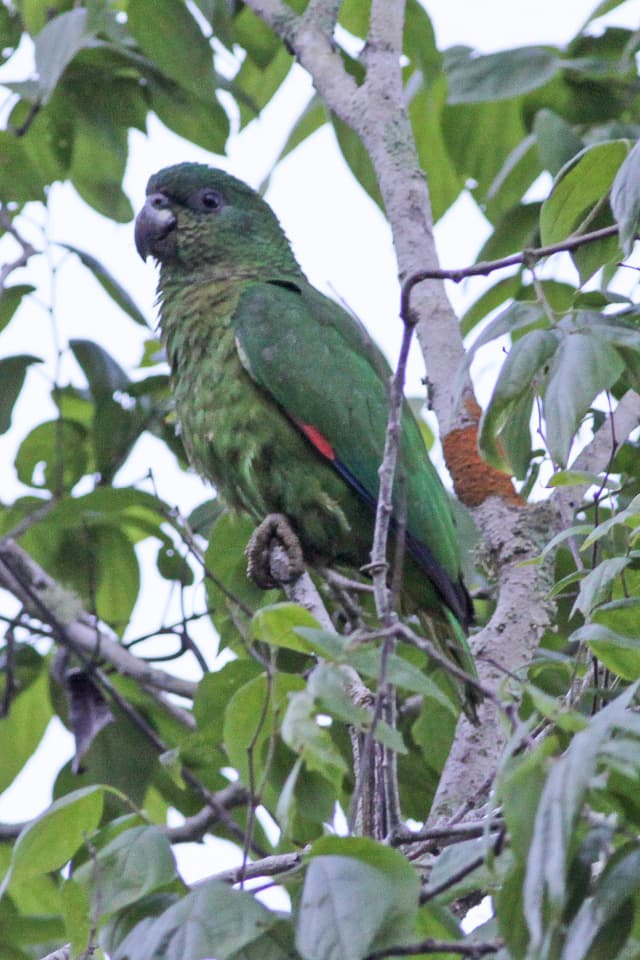
Black-billed amazon
The black-billed amazon is a small parrot endemic to Jamaica, distinguished by its predominantly green plumage and a dark, almost black bill. It is the smallest member of the Amazona parrot genus and is known for its nimble nature. This species inhabits mountainous rainforests and faces threats from habitat loss and poaching.
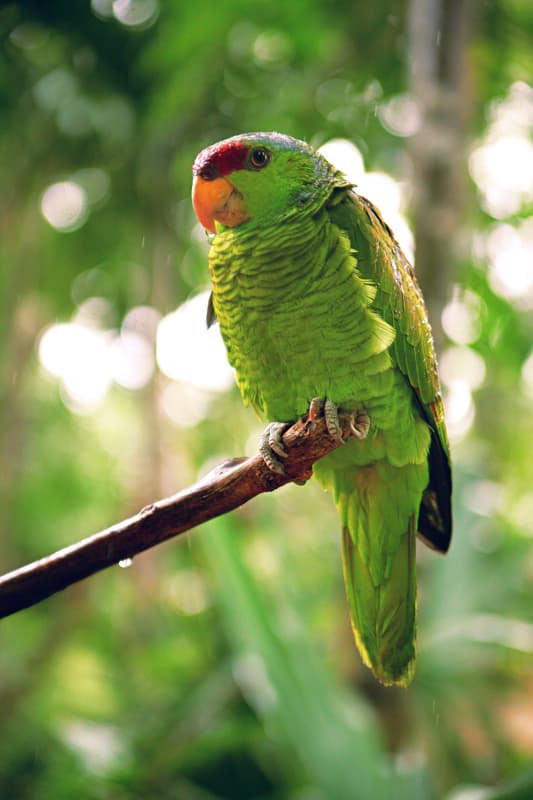
Lilac-crowned amazon
The lilac-crowned amazon, also known as Finsch's parrot, is a parrot species endemic to the Pacific slopes of Mexico. It is distinguished by its predominantly green plumage, a maroon forehead, and a striking violet-blue crown and neck. Unfortunately, this vibrant parrot has faced significant population decline, leading to its classification as Endangered by the IUCN.

Blue-headed parrot
The blue-headed parrot is a medium-sized parrot native to tropical and subtropical regions of South America and southern Central America. Its most striking feature is its vibrant blue head and neck, contrasting with its predominantly green body and red undertail coverts. These parrots are known for their noisy, high-pitched calls and are popular as pets due to their affectionate nature, though they are not renowned for their talking ability.