
Green-thighed parrot
Vulnerable (nominate subspecies), Least Concern (other subspecies)
The white-bellied parrot, also known as the white-bellied caique, is a species of parrot found in the humid tropical forests of South America, including Bolivia, Brazil, Colombia, and Peru. It is characterized by its short, stout body, bright green rump, white belly often stained chestnut, and distinctive green thigh feathers, which give it one of its common names. While its diet includes fruits and flowers, much about its breeding behavior and movements remains unknown.
Key Facts
- ›Found in humid tropical forests of Bolivia, Brazil, Colombia, and Peru.
- ›Chunky, short-tailed parrot measuring 23-25 cm in length.
- ›Adults have mostly yellow heads with orange crowns, a white belly, and bright green thigh feathers.
- ›Diet consists of fruits from trees and palms, as well as flowers.
- ›Nests in tree cavities, with clutch sizes typically ranging from two to four eggs.
- ›The nominate subspecies (P. L. leucogaster) is listed as Vulnerable by the IUCN.
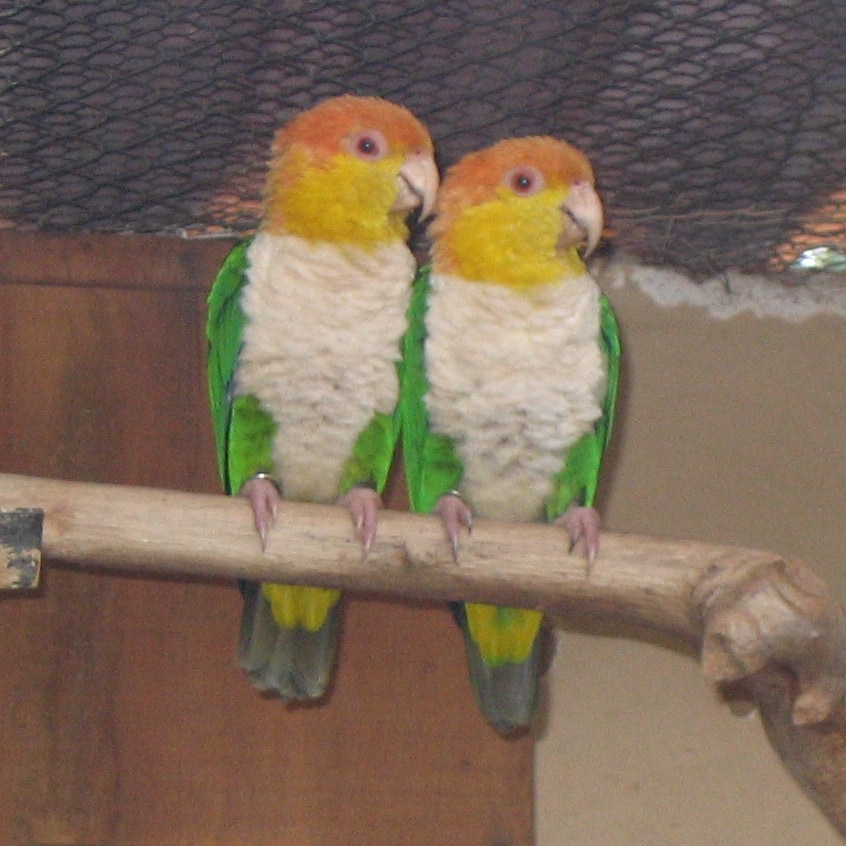
White-Bellied Caique, Green-Thighed Parrot, Black-Legged Parrot, Yellow-Tailed Parrot
South America
Humid Tropical Forests, Forest Edges, Forest Openings, Terra Firme Forests, VáRzea Forests, Drier Forests
- Short Tail
- Chunky Build
- White Belly Often Stained Chestnut Brown
- Bright Green Thigh Feathers
- Head Plumage Fluoresces Under Ultraviolet Light
Fruits of Trees, Fruits of Palms, Flowers
Not Specified
- High-Pitched, Harsh, Squealing Flight Call
- Loud High-Pitched 'Kree-Ee-Ee' Or 'Skeeew' Notes When Perched
- Melodious Whistles When Perched
- Subdued 'Kee-Ah-U' Or 'Kew' Calls When Perched
Tree Cavities
About Green-thighed parrot
White-Bellied Parrot
The white-bellied parrot (Pionites leucogaster), also known as the white-bellied caique in aviculture, is a species of parrot native to the humid tropical forests of South America. Its range includes parts of Bolivia, Brazil, Colombia, and Peru. This species is characterized by its stout, short-tailed build and distinctive plumage, which includes a predominantly yellow head, a white belly often stained a chestnut brown, and notably bright green thigh feathers, giving it the common name "green-thighed parrot."
Taxonomy and Subspecies
Three subspecies are recognized by major ornithological authorities: P. l. xanthomerius (Black-legged parrot), P. l. xanthurus (Yellow-tailed parrot), and P. l. leucogaster (Green-thighed parrot), the nominate subspecies. While some classifications group them under the white-bellied parrot, BirdLife International treats them as separate species. These subspecies exhibit variations in crown color, tail color, and leg and foot coloration.
Description and Habitat
Adult white-bellied parrots measure between 23 to 25 cm in length and weigh around 155 grams. Their head is largely yellow with orange crowns and napes, their upperparts are dull green with a bright green rump, and their throat, breast, and vent are yellow. The belly is white, and the thighs are a vibrant green. Their wings are mainly dull green with reddish-orange axillaries and dark blue primaries, and their tail is bright green. The bill is pale horn-colored, and the cere, legs, and feet are bright pink. Immature birds have brownish crowns and napes. They inhabit humid tropical forests, preferring forest edges and openings, and can also be found in drier forests at the southern edges of their range.
Behavior and Diet
Little is documented regarding the movement patterns of the white-bellied parrot. Their diet consists of fruits from trees and palms, as well as flowers. The exact foraging techniques employed by the species are not well-understood.
Breeding
Breeding occurs in tree cavities. The nominate subspecies nests between November and January, while P. l. xanthomerius is thought to breed between August and December. Clutch sizes typically range from two to four eggs. Further details about their breeding biology remain largely unknown.
Vocalization and Conservation
The white-bellied parrot has a distinctive flight call described as a high-pitched, harsh, squealing "sqheee." When perched, they produce a range of vocalizations, from loud high-pitched notes to more melodious whistles and subdued calls. Conservation assessments vary by subspecies; the nominate "green-thighed" subspecies is listed as Vulnerable due to habitat loss, degradation, and potential hunting, while the "black-legged" and "yellow-tailed" subspecies are considered Least Concern, though they also face threats from deforestation for agriculture.
Source: Wikipedia ↗
Frequently Asked Questions
What are the different subspecies of the white-bellied parrot?
The white-bellied parrot has three recognized subspecies: P. l. xanthomerius (Black-legged parrot), P. l. xanthurus (Yellow-tailed parrot), and P. l. leucogaster (Green-thighed parrot). BirdLife International treats these as separate species, while other taxonomic bodies list them as subspecies.
What is the typical size and weight of a white-bellied parrot?
White-bellied parrots are typically 23 to 25 cm (9.1 to 9.8 inches) long and weigh approximately 155 grams (5.5 ounces). They are described as stout, short-tailed birds.
What colors are found in the white-bellied parrot's plumage?
Adults of the nominate subspecies have mostly yellow heads with orange crowns and napes, a dull green upperpart with a bright green rump, and a white breast and belly. They are distinguished by bright green thigh feathers, a bright green tail, and dull green wings with reddish-orange axillaries and dark blue primaries.
What is the natural habitat of the white-bellied parrot?
All subspecies inhabit humid tropical forests, preferring the edges and openings rather than the dense interior. The nominate subspecies can also be found in drier forests at the southern extent of its range.
What is the conservation status of the white-bellied parrot?
The conservation status varies by subspecies. The nominate 'green-thighed' subspecies is listed as Vulnerable, while the 'black-legged' and 'yellow-tailed' subspecies are assessed as Least Concern by the IUCN.
What do white-bellied parrots eat in the wild?
Their diet is known to include fruits from trees and palms, as well as flowers. Detailed information about their foraging techniques is limited.
Where are white-bellied parrots found geographically?
The white-bellied parrot is found in Bolivia, Brazil, Colombia, and Peru. Specific subspecies inhabit different regions within these countries, generally south of the Amazon River.
Related Parrot species

Jandaya parakeet
The Jandaya parakeet, scientifically known as Aratinga jandaya, is a small Neotropical parrot native to the wooded habitats of northeastern Brazil. It is distinguished by its vibrant plumage, featuring a yellow head and neck, reddish-orange body, and green wings and tail. While common in aviculture, where it is often called a "jenday conure," the species is considered locally rare in the wild.
Norfolk kākā
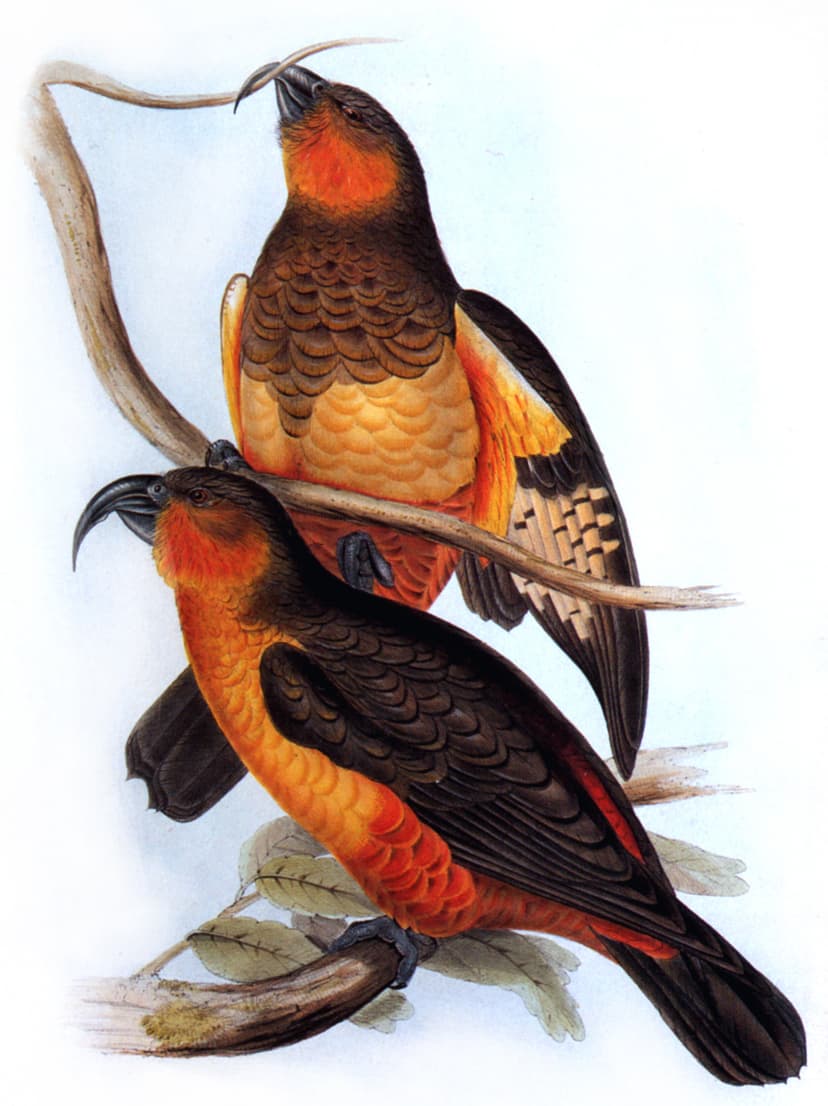
The Norfolk kākā was a large parrot species native to Norfolk Island and Phillip Island, characterized by its olive-brown upperparts and distinct reddish-orange cheeks and throat. It belonged to the same family as the New Zealand kākā and inhabited both rocky areas and treetops. Sadly, this species is now extinct, with its decline attributed to hunting for food and capture as pets, exacerbated by the establishment of penal colonies on the islands.

Black-headed parrot
The black-headed parrot is a species of parrot native to the tropical forests of South America, primarily found in countries like Brazil, Colombia, and Venezuela. It is distinguished by its striking black cap, rufous-orange hindneck band, and vibrant yellow and green plumage. These parrots are known for their playful and energetic nature when kept as pets, often mimicking environmental sounds.