
Kuhl's lorikeet
Vini kuhlii·Psittaculidae·19·55
Kuhl's lorikeet, also known as the Rimitara lorikeet, is a vibrant species of lorikeet found in the South Pacific. Named after German ornithologist Heinrich Kuhl, this fast-flying bird is characterized by its striking green, blue, and red plumage. It primarily inhabits tropical moist lowland forests and coconut plantations, feeding on nectar.
Key Facts
- ›Kuhl's lorikeet is a small, fast-flying lorikeet with distinctive green, blue, and red coloration.
- ›Its natural habitat includes tropical moist lowland forests and coconut plantations.
- ›The species is a nectarivore, possessing a brushy tongue adapted for feeding on nectar.
- ›Historically found in the Cook Islands, its native range is now largely restricted to Rimatara in French Polynesia.
- ›Introduced predators like black rats and competition from common mynas pose significant threats.
- ›Conservation efforts have included reintroduction programs, such as the successful one on Atiu in the Cook Islands.

Rimitara Lorikeet, Kuhl's Lory, Manu 'Ura, Kura
South Pacific, French Polynesia, Cook Islands, Kiribati
Tropical Moist Lowland Forests, Plantations, Coconut Plantations
Brushy Tongue For Nectar Feeding, Vibrant Plumage
Nectar
About Kuhl's lorikeet
Kuhl's lorikeet (Vini kuhlii), also recognized by names such as the Rimitara lorikeet or Kuhl's lory, is a species of lorikeet native to the islands of the South Pacific. Named in honor of German ornithologist Heinrich Kuhl, this bird is distinguished by its vibrant plumage and swift flight.
Description and Habitat
This lorikeet is characterized by a striking coloration, featuring a green back, wings, and crown, a blue nape and legs, and bright red undersides and cheeks. It typically measures around 19 centimeters in length and weighs approximately 55 grams. Kuhl's lorikeet thrives in natural tropical moist lowland forests and plantations. As a nectarivore, it possesses a brushy tongue adapted for efficiently acquiring nectar from flowers. In areas dominated by coconut plantations, the species is found exclusively within these environments.
Distribution and Conservation
Historically, Kuhl's lorikeet had a broader distribution across islands ranging from the Cook Islands to French Polynesia. However, its range significantly contracted following human settlement. The sole remaining natural population was once confined to Rimatara in the Austral Islands of Southern French Polynesia. The species has also been introduced to several islands in Kiribati.
Kuhl's lorikeet faces considerable threats, including predation by introduced black rats, which were brought by Europeans. Competition and nest disturbances from the common myna bird also impact their populations. Furthermore, the bird's colorful feathers led to historical hunting. Conservation initiatives have been crucial for the species' survival. The last native population on Rimatara was protected by a taboo around 1900. In 2007, a significant reintroduction program established a population on the black-rat-free island of Atiu in the Cook Islands. This reintroduction has proven successful, with the population observed to be reproducing, reaching an estimated number of over 400 individuals by 2019. These conservation efforts have been supported by various organizations, including the Cook Islands Natural Heritage Trust and the San Diego Zoo Institute for Conservation Research.
Source: Wikipedia ↗
Frequently Asked Questions
What are the main physical characteristics of Kuhl's lorikeet?
Kuhl's lorikeet is a fast-flying bird measuring about 19 centimeters in length and weighing around 55 grams. It features vibrant plumage with a green back, wings, and crown, complemented by a blue nape and legs, and bright red undersides and cheeks.
Where is Kuhl's lorikeet found naturally?
The natural habitat of Kuhl's lorikeet includes tropical moist lowland forests and plantations. While historically present in the Cook Islands, its current natural population is primarily found on the island of Rimatara in French Polynesia. It has also been introduced to islands in Kiribati.
What does Kuhl's lorikeet eat?
Kuhl's lorikeet is a nectarivore, meaning its diet consists mainly of nectar. It has a specialized brushy tongue that helps it acquire nectar from flowers.
What are the biggest threats to Kuhl's lorikeet?
The species faces significant threats from introduced predators, particularly black rats, which prey on them. They are also vulnerable to competition and nest disturbances from the common myna bird. Historically, they have been exploited for their red feathers and trapped for the international bird trade.
What conservation actions have been taken for Kuhl's lorikeet?
Conservation efforts have involved protecting the last native population on Rimatara with a taboo and reintroducing the species to predator-free islands. A notable reintroduction occurred on Atiu in the Cook Islands in 2007, which has since seen successful reproduction and population growth.
Is Kuhl's lorikeet still found in the Cook Islands?
Kuhl's lorikeet was once present in the Cook Islands but its native population there disappeared. However, a successful reintroduction program began in 2007 on the island of Atiu, and the population there is now reproducing.
Related Parrot species
Arinae
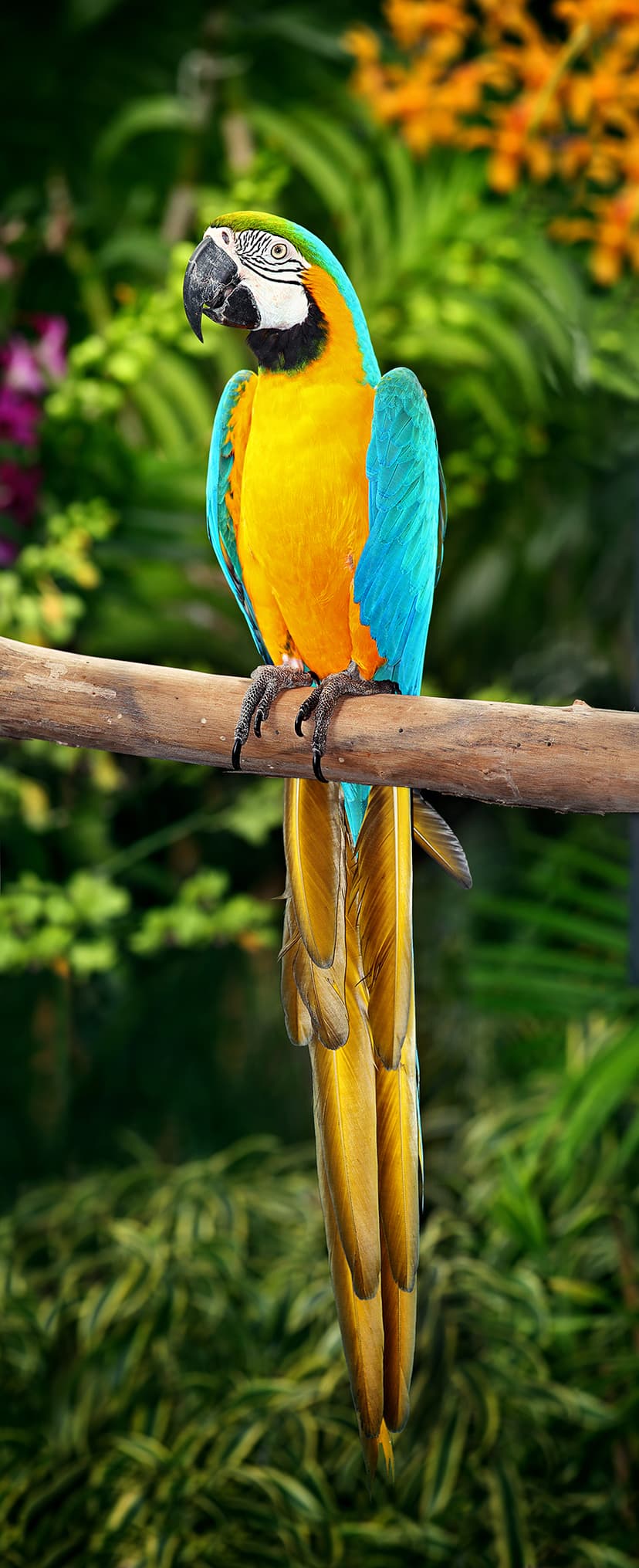
The Arinae, commonly known as neotropical parrots or New World parrots, encompass approximately 150 species found across South and Central America, Mexico, the Caribbean, and the southern United States. These parrots are distinguished by their diverse forms, including iconic macaws, conures, and amazons, and have a long history of interaction with Europeans since their discovery in the late 15th century.

Australian king parrot
The Australian king parrot is a striking parrot species native to the humid, forested eastern regions of Australia. It is distinguished by the vibrant red plumage of the adult male, contrasting with the predominantly green female. These parrots are known for their relatively quiet nature and devotion to their human companions when kept as pets.
Bald parrot
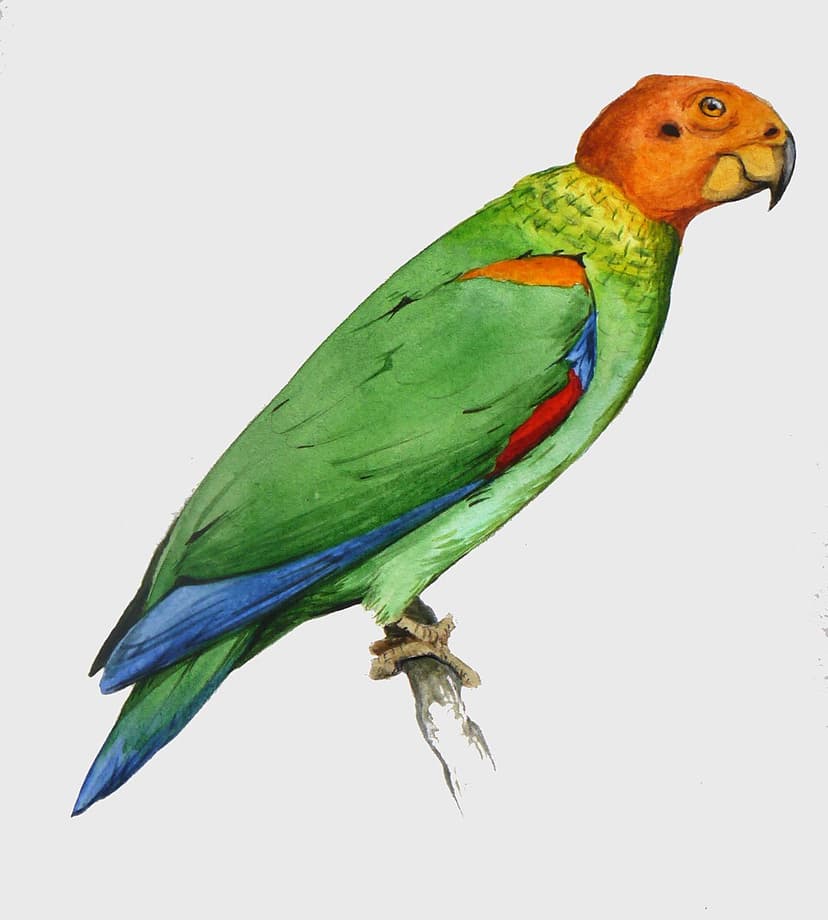
The bald parrot, scientifically known as Pyrilia aurantiocephala, is a medium-small parrot species endemic to the east-central Amazon of Brazil. It is distinguished by its striking bald, brownish-orange head and red underwing coverts, which are conspicuous in flight. This species inhabits tropical moist lowland forests and is considered near threatened due to extensive deforestation in its native range.