
Bald parrot
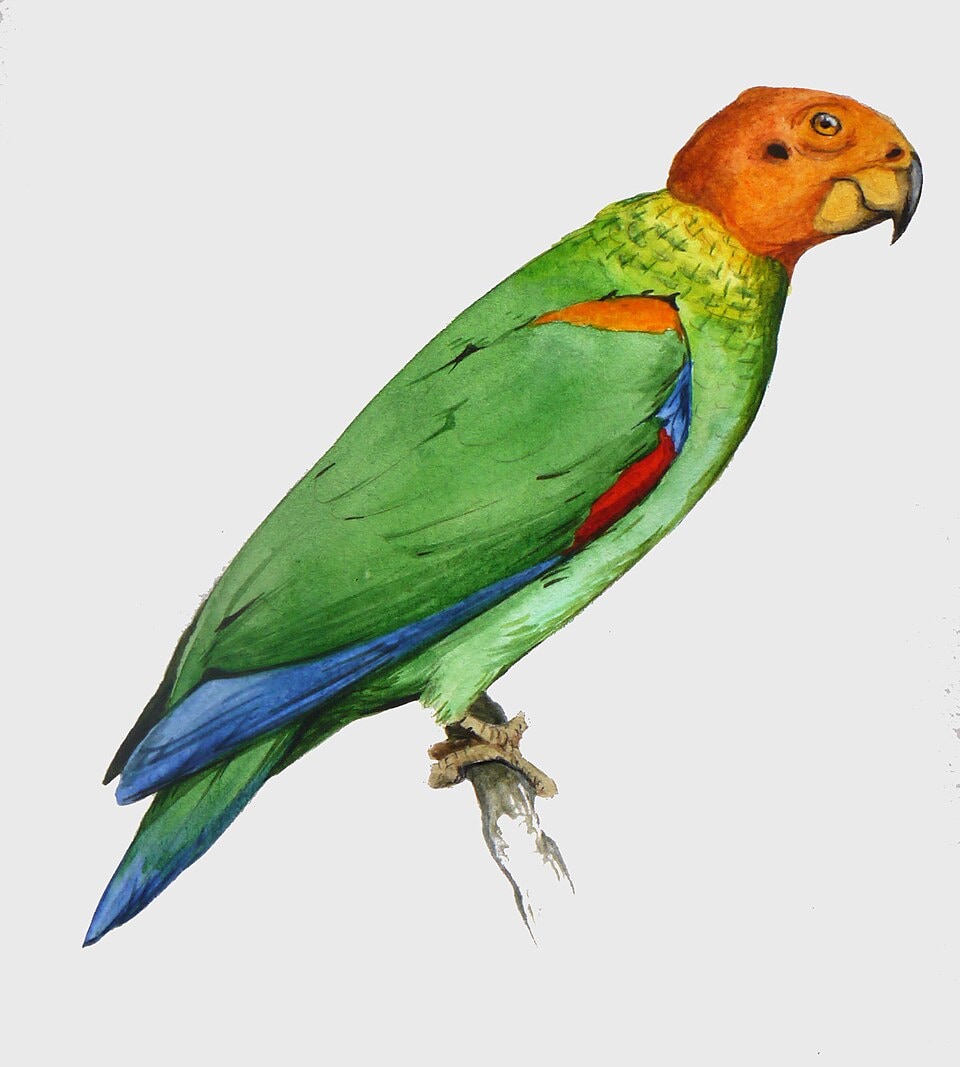
The bald parrot, scientifically known as Pyrilia aurantiocephala, is a medium-small parrot species endemic to the east-central Amazon of Brazil. It is distinguished by its striking bald, brownish-orange head and red underwing coverts, which are conspicuous in flight. This species inhabits tropical moist lowland forests and is considered near threatened due to extensive deforestation in its native range.
Key Facts
- ›Found exclusively in the east-central Amazon of Brazil.
- ›Characterized by a bald, brownish-orange head and red underwing coverts.
- ›Inhabits tropical moist lowland forests.
- ›Considered near threatened due to deforestation.
- ›Diet consists of flowers, seeds, fruits, and insects.
- ›Communicates with high-pitched 'skee-skee-skee' and rolling 'chow-chow-chow' sounds.
Orange-Headed Parrot
Brazil
Tropical Moist Lowland Forests
Bald, Brownish-Orange Head, Red Underwing Coverts
Flowers, Seeds, Fruits, Insects
High Pitched 'Skee-Skee-Skee', Rolling Slightly Nasal 'Chow-Chow-Chow'
About Bald parrot
The Bald Parrot
The bald parrot, scientifically classified as Pyrilia aurantiocephala, is a distinctive parrot species found exclusively in the east-central Amazon region of Brazil. This species, also known as the orange-headed parrot, is easily identified by its striking bald head, which displays a prominent brownish-orange coloration. This unique feature, coupled with red underwing coverts that are particularly noticeable during flight, sets it apart from other parrot species.
Distribution and Habitat
The natural habitat of the bald parrot is the tropical moist lowland forests of central Brazil. Its range extends across areas of the Lower River Madeira and Upper River Tapajós and River Teles Pires. These parrots are known to flock, often forming their own groups separate from other bird species.
Description and Diet
Overall, the bald parrot is a medium-small, predominantly green bird. Its head is bald and strikingly orange, with a paler, more yellow hue around the eyes. The neck exhibits blackish coloring, transitioning to a mostly green lower neck. The wings have a light yellow tint, and the lower belly is tinged with blue. Their diet is varied, consisting of flowers, seeds, fruits, and insects found within their forest environment.
Vocalizations
The bald parrot communicates through a series of distinct sounds. These include a high-pitched call described as "skee-skee-skee" and a rolling, slightly nasal sound identified as "chow-chow-chow."
Conservation Status
BirdLife International and the IUCN classify the bald parrot as near threatened. The primary threat to its survival is the widespread deforestation occurring throughout the Amazon basin, which diminishes its natural habitat and population numbers. While an estimated 6,700 mature individuals are present, the total population is estimated at around 10,000 individuals, and this number is reportedly decreasing.
Source: Wikipedia ↗
Frequently Asked Questions
What makes the bald parrot distinctive?
The bald parrot is most recognizable by its unique bald head, which is a distinct brownish-orange color. It also features red underwing coverts that are very noticeable when the bird is in flight.
Where is the bald parrot found?
This species is endemic to the east-central Amazon region of Brazil. Its natural habitat is specifically tropical moist lowland forests, particularly in areas around the Lower River Madeira and Upper River Tapajós and River Teles Pires.
What is the conservation status of the bald parrot?
The bald parrot is considered near threatened by BirdLife International and the IUCN. This is primarily due to the widespread deforestation occurring in its Amazonian habitat, which is reducing its available living space.
What does the bald parrot eat?
The natural diet of the bald parrot is varied and includes a mix of plant matter and small invertebrates. They consume flowers, seeds, fruits, and insects found within their forest environment.
How does the bald parrot communicate?
The bald parrot has a distinctive vocalization. It communicates with a high-pitched call described as 'skee-skee-skee' and also makes a rolling, slightly nasal sound identified as 'chow-chow-chow'.
Related Parrot species

Cliff parakeet
The cliff parakeet is a species of parrot endemic to Bolivia, known for its distinctive green and blue plumage with a yellow belly. Unlike its close relative, the monk parakeet, it builds solitary stick nests on cliffs rather than communal ones in trees, a unique characteristic among parrots. Its diet consists primarily of fruits and seeds, though it also consumes crops, leading to conflict with agriculture.
Montane racket-tail
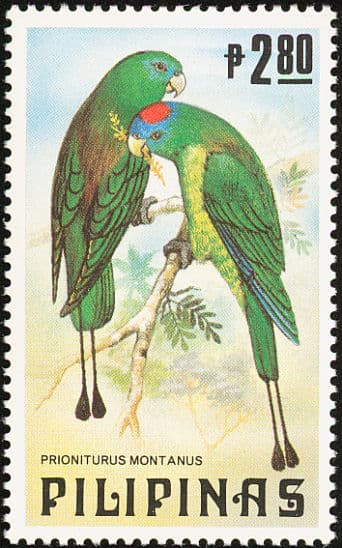
The montane racket-tail is a species of parrot found exclusively in the Philippines' northern Luzon mountains. It is distinguished by its habitat in high-altitude tropical moist montane forests and its near threatened conservation status. This species exhibits sexual dimorphism, with males displaying a bluish crown and red spot, while females have green heads with a pale blue tinge.
Blue-eared lory
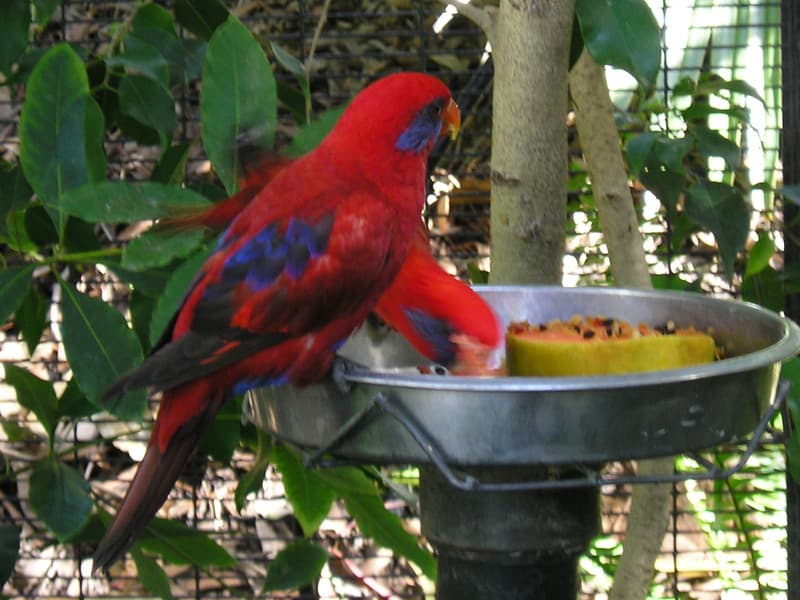
The blue-eared lory is a small parrot native exclusively to the island of Seram in Indonesia. It is distinctive for its vibrant plumage, featuring a red body contrasted with blue cheeks and ear-coverts, and a purple-blue abdomen. This species is considered Near Threatened due to a declining population within its limited range.