
Long-billed corella
Cacatua tenuirostris·Cacatuidae·38-41·average 567
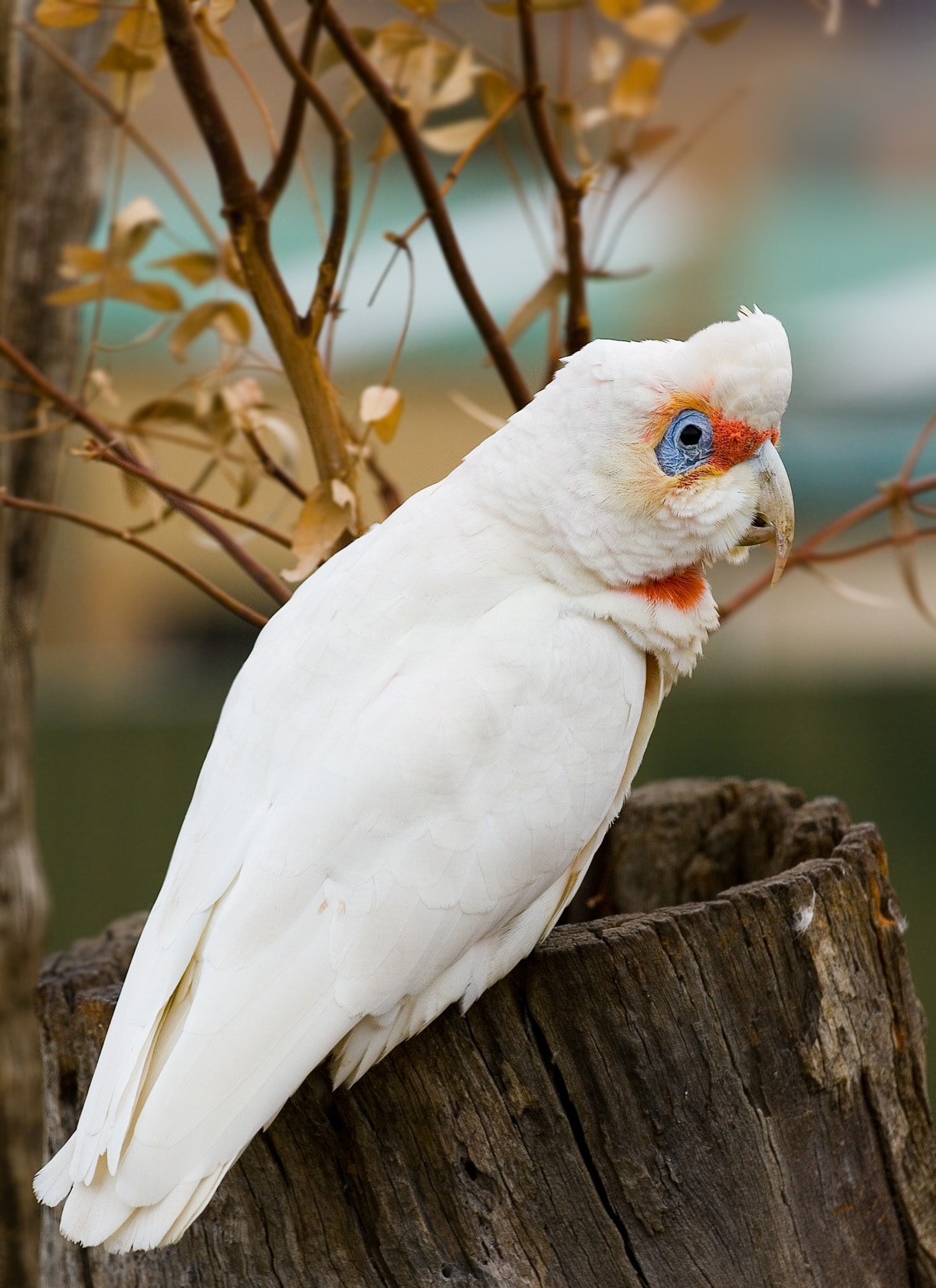
The long-billed corella is a white cockatoo native to Australia, distinguished by its long, pale beak used for digging and a reddish-pink facial patch. It is known for its impressive ability to mimic human speech, making it a popular pet, but is also considered an agricultural pest due to crop damage.
Key Facts
- ›Predominantly white plumage with a reddish-pink face and forehead.
- ›Possesses a distinctively long, pale beak for excavating roots and seeds.
- ›Native to grassy woodlands and grasslands in southeastern Australia.
- ›Highly regarded for its vocal mimicry, often considered the best 'talker' among Australian parrots.
- ›Can be destructive to agricultural crops and infrastructure, leading to pest control measures.
- ›Forms monogamous pairs and shares parental duties.
Long-Billed Cockatoo, Slender-Billed Corella
Australia
Grassy Woodlands, Grasslands, Pasture, Agricultural Fields, Urban Parks, Red Gum Woodland
Long, Pale Beak, Reddish-Pink Facial Patch, Featherless, Bluish Eye-Ring
Roots, Seeds, Corms, Bulbs, Weeds, Introduced Plants
Mimical, Can Be Destructive
Quick, Quavering, Falsetto Calls, Harsh Screeches, Ability To Mimic Words and Sentences
Decayed Debris, Hollows of Large Old Eucalypts, Cavities of Loose Gravely Cliffs
About Long-billed corella
The long-billed corella, scientifically known as Cacatua tenuirostris, is a distinctive species of cockatoo native to Australia. It is primarily recognized by its predominantly white plumage, accented by a reddish-pink facial patch and forehead, and a strikingly long, pale beak. This specialized beak is a crucial tool for the bird, enabling it to excavate roots and seeds from the ground, forming a significant part of its diet.
Distribution and Habitat
This species is found in the wild across various regions of Australia, with its core range encompassing Victoria and southeastern New South Wales. Over recent decades, its territory has expanded, and it is now also observed in Tasmania, South Australia, and southeast Queensland. A notable feral population has established itself in Perth, Western Australia, raising conservation concerns due to potential hybridization with the endangered western corella. The long-billed corella thrives in open environments such as grassy woodlands, grasslands, agricultural fields, and urban parks, often found near red gum woodlands.
Behavior and Diet
Long-billed corellas are known for their social nature, typically forming monogamous pairs. Both members of the pair actively participate in nest-building, incubating the eggs, and raising their young. Their nests are commonly found in decayed debris, hollows of old eucalypts, or within the cavities of loose, gravely cliffs. The diet of the long-billed corella is varied, consisting of roots, seeds, corms, and bulbs, with a particular fondness for weeds like onion grass. While they consume native plants, introduced species now constitute a substantial portion of their food intake.
Vocalizations and Human Interaction
A remarkable characteristic of the long-billed corella is its exceptional ability to mimic human speech, often to near perfection. This talent has led to its popularity as a pet in many parts of Australia, where it is considered one of the best 'talkers' among native Psittacines. Conversely, the species is also viewed as an agricultural pest. Its habit of digging can cause significant damage to crops, and they are known to disturb asphalt, power lines, and sporting fields, leading to culling permits in certain areas. Tragic incidents, such as suspected mass poisonings, have also highlighted the complex relationship between this species and human activities and land use.
Source: Wikipedia ↗
Frequently Asked Questions
What are the distinguishing features of a long-billed corella?
The long-billed corella is primarily white with a reddish-pink hue on its face and forehead. A notable feature is its long, pale beak, which is adapted for digging. It also has a rim of featherless, bluish skin around its eyes.
Where is the long-billed corella found in the wild?
This species is native to Australia, primarily found in Victoria and southeastern New South Wales. Its range has expanded, and populations can now be found in Tasmania, South Australia, and southeast Queensland, with a feral population in Perth, Western Australia.
What does a long-billed corella eat?
Their diet consists mainly of roots, seeds, corms, and bulbs, often dug from the ground. They are known to feed on weeds like onion grass and native plants such as murnong, as well as a significant amount of introduced plant species.
Are long-billed corellas good at talking?
Yes, long-billed corellas are highly regarded for their vocal mimicry, capable of imitating words and entire sentences with remarkable accuracy. They are often cited as one of the best 'talking' Australian parrots.
What are the conservation concerns for the long-billed corella?
While not facing immediate extinction, concerns exist due to hybridization with the endangered western corella, particularly in areas with feral populations. They are also subject to culling in some regions due to their status as agricultural pests.
How does the long-billed corella breed?
Long-billed corellas form monogamous pairs and breed during the Austral winter to spring, typically from July to November. Both parents participate in nest building, incubation, and caring for the young, laying 2-3 eggs in decayed wood within tree hollows or cliff cavities.
Related Parrot species

Blue-eyed cockatoo
The blue-eyed cockatoo is a large, predominantly white parrot distinguished by a vibrant blue ring of featherless skin around its eyes and a mobile crest. Native to the lowland forests of New Britain, east of New Guinea, it is known for its intelligence and social nature, making it a sought-after, though demanding, pet. Its population is currently declining due to habitat loss and illegal trade.

Budgerigar
The budgerigar, also known as the common parakeet or budgie, is a small, seed-eating parrot native to Australia. Naturally green and yellow with black markings, captive breeding has produced a wide array of colors. These nomadic, social birds are highly popular pets worldwide due to their small size, affordability, and remarkable ability to mimic human speech.
Cockatiel
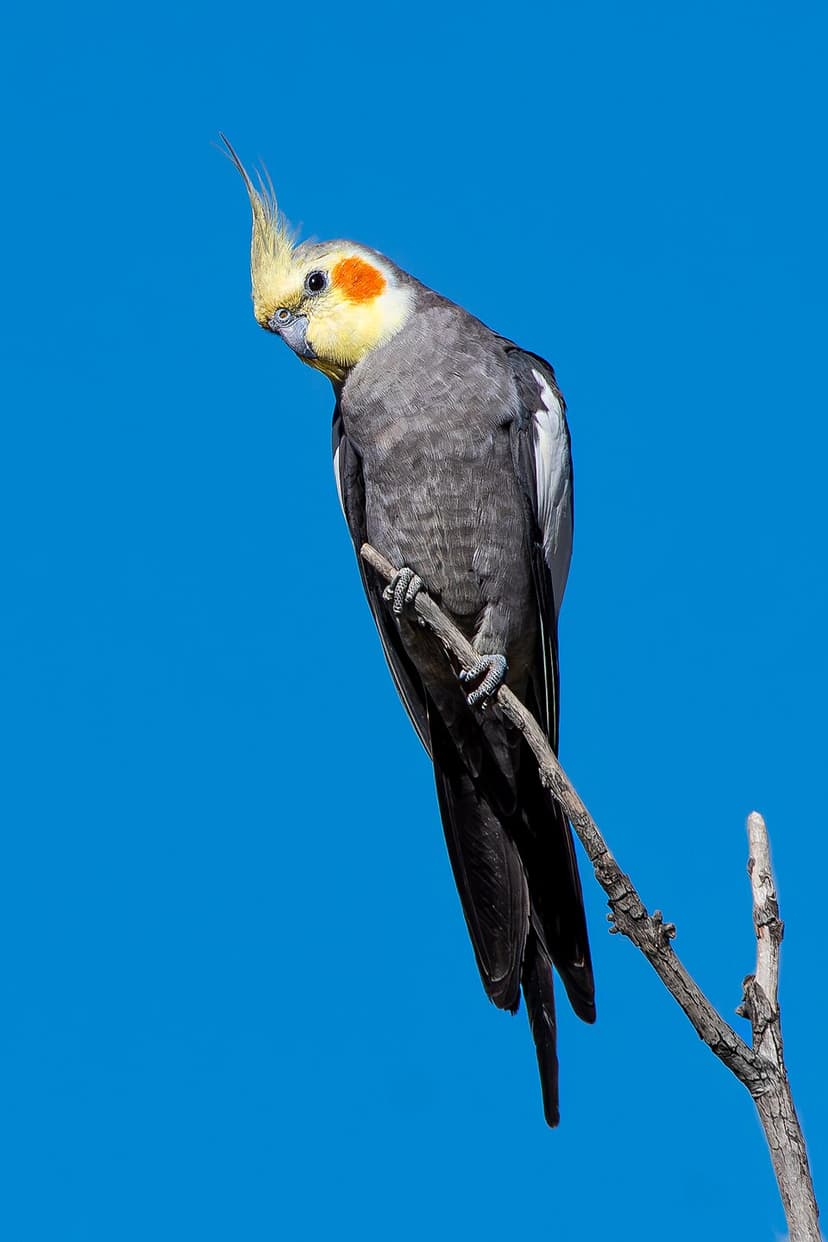
The cockatiel is a small to medium-sized parrot native to Australia, and the smallest member of the cockatoo family. Recognized for its distinctive crest, long tail feathers, and sociable nature, it is one of the most popular pet birds globally, though improper care leads to high surrender rates. Its unique characteristics and ability to form strong bonds with humans have cemented its place as a beloved companion.