
Blue-eyed cockatoo
The blue-eyed cockatoo is a large, predominantly white parrot distinguished by a vibrant blue ring of featherless skin around its eyes and a mobile crest. Native to the lowland forests of New Britain, east of New Guinea, it is known for its intelligence and social nature, making it a sought-after, though demanding, pet. Its population is currently declining due to habitat loss and illegal trade.
Key Facts
- ›Approximately 50 cm (20 in) in length with a mobile crest.
- ›Features a distinctive light blue rim of featherless skin around each eye.
- ›Inhabits lowland forests of New Britain, east of New Guinea.
- ›Diet primarily consists of seeds, nuts, berries, fruits, and insects.
- ›Can live for an average of 50 years and reaches maturity after 4 years.
- ›Considered vulnerable due to habitat destruction and illegal trade.

New Britain, Papua New Guinea
Lowland Forests, Primary Forests, Selectively Logged Forests, Gardened Forests
- Light Blue Rim of Featherless Skin Around Each Eye
- Mobile Crest
Seeds, Nuts, Berries, Fruits, Insects, Larvae
Demanding, Loving, Friendly, Playful
Mimicking Owners
Nests usually located in very large trees
About Blue-eyed cockatoo
The blue-eyed cockatoo (Cacatua ophthalmica) is a large parrot, measuring around 50 cm (20 inches) in length, recognized by its predominantly white plumage, a mobile crest, and a distinctive light blue ring of featherless skin around its eyes. This unique eye-ring is the feature that gives the species its common name. Like other cockatoos, it possesses zygodactyl feet, enabling it to hold objects and bring food to its beak while standing on its other foot, a trait that is relatively unusual among bird species.
Habitat and Distribution
This species is endemic to the lowland forests of New Britain, an island situated east of New Guinea, making it the sole cockatoo species found within the Bismarck Archipelago. Its habitat encompasses primary (untouched) forests, selectively logged areas, and gardened forests managed by indigenous people. While they are not overly particular about tree types for nesting, they are most abundant and active in primary forests. Nests are typically situated in very large trees, often at an average height of 41 meters (135 feet). There is also a suggestion that blue-eyed cockatoos may engage in altitude and seasonal migratory movements throughout the year.
Diet
The diet of the blue-eyed cockatoo is varied, primarily consisting of seeds and nuts. They supplement this with berries, fruits, insects, and their larvae. Their foraging habits are integral to their survival within their forest ecosystems.
Behavior and Pet Qualities
Blue-eyed cockatoos are known for their intelligence and social nature. They are described as demanding but excellent house pets, with some considering them the friendliest and most loving of all cockatoo species. They exhibit engaging household behaviors, such as mimicking their owners, enjoying play, and even playfully lying on their backs. Due to their high level of interaction ability, these birds require significant attention. A lack of adequate interaction can lead to self-mutilation, including feather plucking.
Conservation Status
Initially classified as least concern by the IUCN in 2004, the blue-eyed cockatoo was uplisted to vulnerable in 2008. The primary threats to the species are the rapid clearing of lowland forests for oil plantations, which destroys their nesting sites and impacts breeding success, and the pressures from illegal trade. Trapping methods can be damaging, further contributing to population decline. Unlike some other endemic bird species that can adapt to less dense forest areas, the blue-eyed cockatoo appears to rely heavily on primary forested regions for its survival. As of 2012, the population was estimated to range from 10,000 to 15,000 mature individuals, but this number is unfortunately declining.
Source: Wikipedia ↗
Frequently Asked Questions
What makes the blue-eyed cockatoo distinctive?
The blue-eyed cockatoo is most famously recognized by the striking light blue rim of featherless skin encircling each eye, which gives the species its name. It also possesses a mobile crest that can be erectile and is predominantly white.
Where is the natural habitat of the blue-eyed cockatoo?
This species is endemic to the lowland forests of New Britain, an island east of New Guinea. It is the only cockatoo species found within the Bismarck Archipelago and favors primary, selectively logged, and gardened forests, often nesting in very large trees.
What is the diet of the blue-eyed cockatoo?
The blue-eyed cockatoo's diet is varied, primarily consisting of seeds and nuts. They also consume berries, fruits, insects, and their larvae, foraging in their forest habitat.
Are blue-eyed cockatoos good pets?
Blue-eyed cockatoos are known to make demanding but great house pets, often described as friendly and loving. They exhibit household skills like mimicking owners and enjoying play, but require significant attention to prevent behavioral issues like self-mutilation.
What is the conservation status of the blue-eyed cockatoo?
The blue-eyed cockatoo is currently classified as vulnerable by the IUCN. Its population is declining due to the rapid clearing of lowland forests for oil plantations and the pressures of illegal trade.
How large is a blue-eyed cockatoo?
The blue-eyed cockatoo is a large parrot, measuring approximately 50 cm (20 inches) in length. They have a black beak and dark grey legs.
Related Parrot species
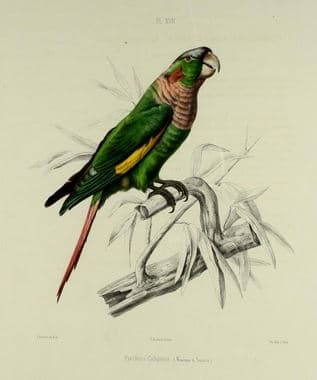
Flame-winged parakeet
The flame-winged parakeet, also known as the brown-breasted parakeet, is a medium-sized parrot endemic to the eastern Andean slopes of Colombia. This species is distinguished by its bright yellow primary coverts and bluish primaries, with vivid yellow and orange-red wing markings visible in flight, which give it its common name. It is currently facing threats from habitat loss and fragmentation, leading to a declining population.

Grey-cheeked parakeet
The grey-cheeked parakeet, also known as the fire-winged parakeet, is a vulnerable bird species native to Ecuador and Peru. It is distinguished by its predominantly green plumage, pale blue crown, ashy gray cheeks, and striking orange to orange-red underwing coverts. This species inhabits a variety of forest types and scrublands and is known for its noisy, chattering vocalizations.
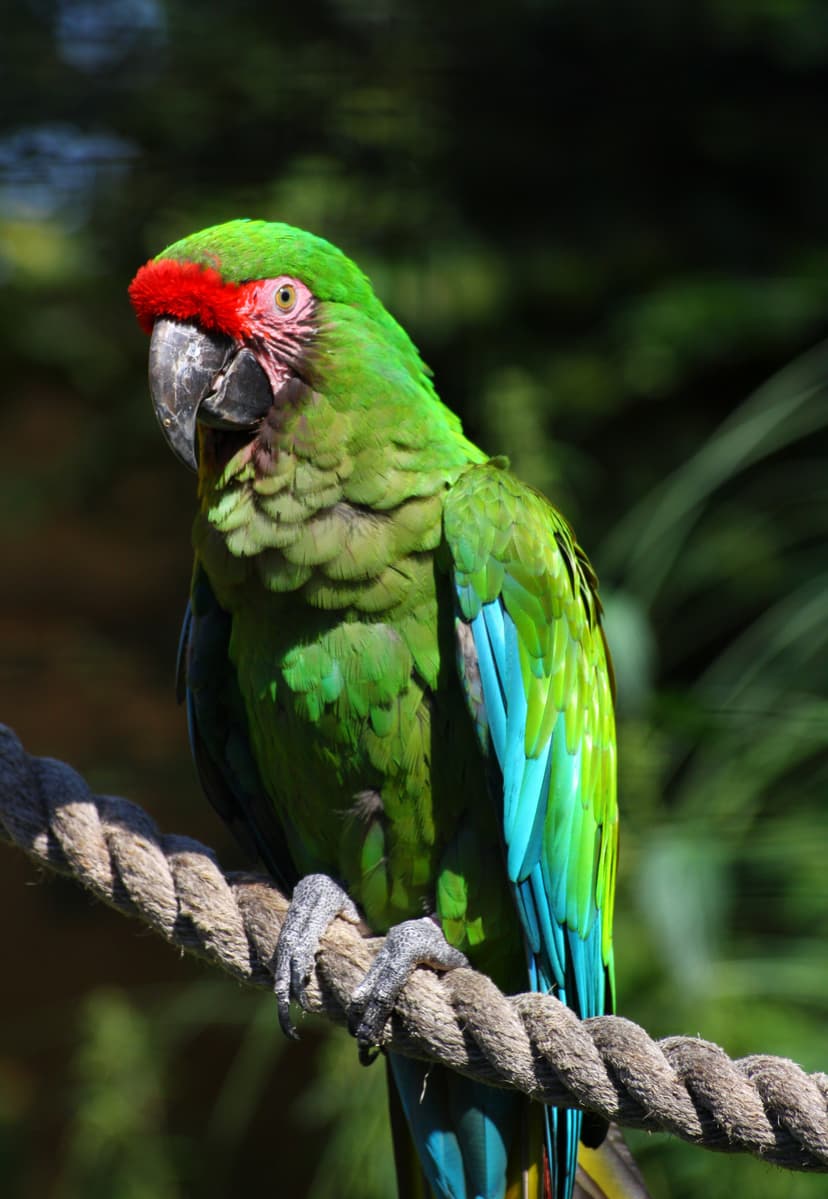
Military macaw
The military macaw (Ara militaris) is a medium to large parrot recognized by its predominantly green plumage accented with blue and yellow, and a distinctive red forehead patch, reminiscent of a military uniform. Native to a range stretching from west-central Mexico down to northern Argentina and Bolivia, these macaws are known for their loud vocalizations and social behavior. While facing conservation challenges, they are also commonly found in captivity due to their relative ease of breeding and long lifespan.