
Long-tailed parakeet
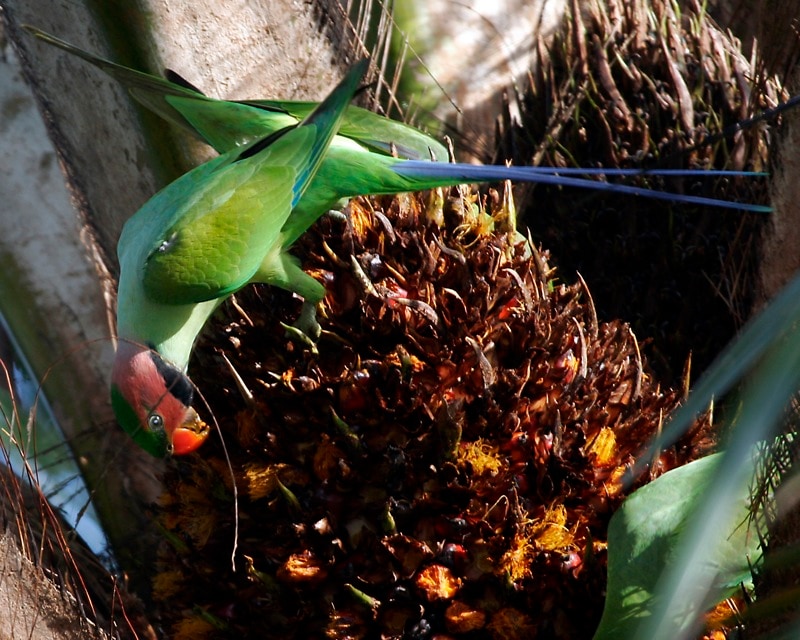
The long-tailed parakeet is a parakeet species endemic to the Andaman and Nicobar Islands, Sumatra, Borneo, and Peninsular Malaysia. It is distinguished by its predominantly green plumage, long blue tail, and in males, a black cap and red cheeks, which are less pronounced in females. This highly social bird inhabits a variety of environments, from swamp forests to agricultural areas, and is also captured for the illegal pet trade.
Key Facts
- ›Found in the Andaman and Nicobar Islands, Sumatra, Borneo, and Peninsular Malaysia.
- ›Males have a distinctive black cap and red cheeks, while females lack the cap and have less red.
- ›Inhabits diverse environments including forests, plantations, gardens, and agricultural areas.
- ›Known for being extremely social, often seen in small groups but occasionally in flocks of thousands.
- ›Diet includes berries, fruits, nuts, seeds, and grains.
- ›Threatened by habitat loss due to deforestation and illegal logging, as well as capture for the pet trade.
Burung Bayan Nuri
Andaman and Nicobar Islands, Sumatra, Borneo, Peninsular Malaysia
Swamp Forests, Lowland Evergreen Forest, Oil Palm Plantations, Coconut Plantations, Gardens, Public Parks, Agricultural Areas
Long Blue Tail, Male Black Cap, Male Red Cheeks
Berries, Papaya, Areca Nuts, Wild Fruit, Cultivated Fruit, Seeds, Grains, Corn
Curious, Social
Communicative
Nests In High Tree Trunks
About Long-tailed parakeet
The long-tailed parakeet, scientifically known as Psittacula longicauda and referred to in Malay as Burung Bayan Nuri, is a parakeet species native to a specific region in Southeast Asia. Its natural range encompasses the Andaman and Nicobar Islands, Sumatra, Borneo, and Peninsular Malaysia, including Singapore. This species is notable for its striking appearance and its highly social behavior.
Description and Identification
The plumage of the long-tailed parakeet is predominantly green, complemented by a long blue tail. A key characteristic that differentiates the sexes is the male's distinct black cap and red cheeks, features that are less pronounced or absent in females. This sexual dimorphism aids in distinguishing between males and females of the species.
Habitat and Ecology
This adaptable parakeet thrives in a diverse array of habitats. It can be found in swamp forests, lowland evergreen forests, and also in man-modified landscapes such as oil palm and coconut plantations, gardens, and public parks. It is a frequent visitor to agricultural areas, particularly those yielding tropical fruits and seeds, and is typically observed at elevations up to 300 meters.
The long-tailed parakeet is an extremely social bird, consistently observed communicating with its conspecifics. While small groups are commonly seen, the species is known to form large flocks, sometimes numbering in the thousands, particularly during the breeding season. These birds are colony breeders, finding suitable nesting sites in high tree trunks, a behavior consistent with many members of the Psittacidae family.
Diet and Behavior
Their diet is varied, consisting of berries, papaya, areca nuts, a wide range of cultivated and wild fruits, seeds, and cultivated grains such as corn. The long-tailed parakeet is also described as a curious species, often observed engaging with its environment by playing with sticks or other available materials.
Breeding Details
Breeding seasons vary slightly across its range. Birds on the Malay Peninsula tend to breed from December to February, while those on the Nicobar and Andaman Islands breed from February to March. Females typically lay a clutch of 2 to 4 eggs, which hatch after approximately 23 to 24 days. The young birds fledge, or take their first flight, at around 7 weeks of age.
Threats and Conservation
Significant threats endanger the long-tailed parakeet's survival. Much of its natural habitat is under pressure from deforestation and illegal logging. Furthermore, the species is targeted for capture for the illegal pet trade, which further contributes to population declines. The long-tailed parakeet occurs allopatrically with the Red-breasted parakeet (Psittacula alexandri), except in the Andaman Islands where their ranges overlap.
Source: Wikipedia ↗
Frequently Asked Questions
Where does the long-tailed parakeet live?
The long-tailed parakeet is endemic to the regions of the Andaman and Nicobar Islands, Sumatra, Borneo, and Peninsular Malaysia, including Singapore. It can be found in a wide variety of habitats within these areas.
What are the distinguishing features of the long-tailed parakeet?
The species is primarily green with a long blue tail. Males are further distinguished by a black cap and red cheeks, while females have less prominent red on their cheeks and lack the black cap.
What kind of habitats does the long-tailed parakeet prefer?
This parakeet is adaptable and can live in swamp forests, lowland evergreen forests, oil palm and coconut plantations, gardens, public parks, and agricultural areas. They are typically seen at elevations up to 300 meters.
Is the long-tailed parakeet a social species?
Yes, the long-tailed parakeet is extremely social and is always seen communicating with others of its kind. While small groups are common, flocks of thousands have been observed, particularly during the breeding season.
What are the main threats to the long-tailed parakeet?
The primary threats to the long-tailed parakeet are the loss of its natural habitat due to deforestation and illegal logging. Additionally, capture for the illegal pet trade poses a significant risk to its survival.
What is the diet of the long-tailed parakeet?
Their diet consists of a variety of berries, papaya, areca nuts, cultivated and wild fruits, seeds, and cultivated grains like corn. They are often seen in agricultural areas that provide these food sources.
Related Parrot species
Blue-winged parakeet
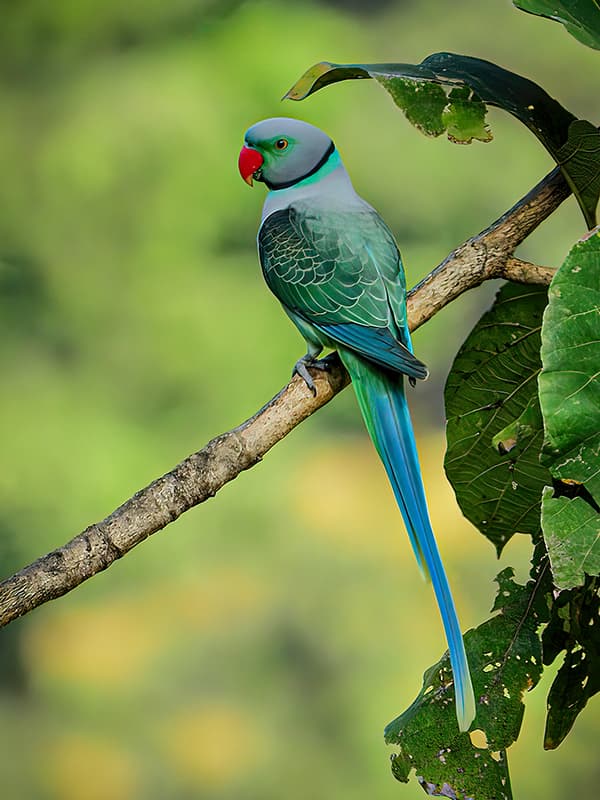
The blue-winged parakeet, also known as the Malabar parakeet, is a species of parakeet native to the Western Ghats of southern India. This species is distinctive for its long blue tails tipped in yellow, contrasting with their dark wings and dull grey head and body. Adult males and females are easily differentiated by the color of their beaks.
Geelvink pygmy parrot
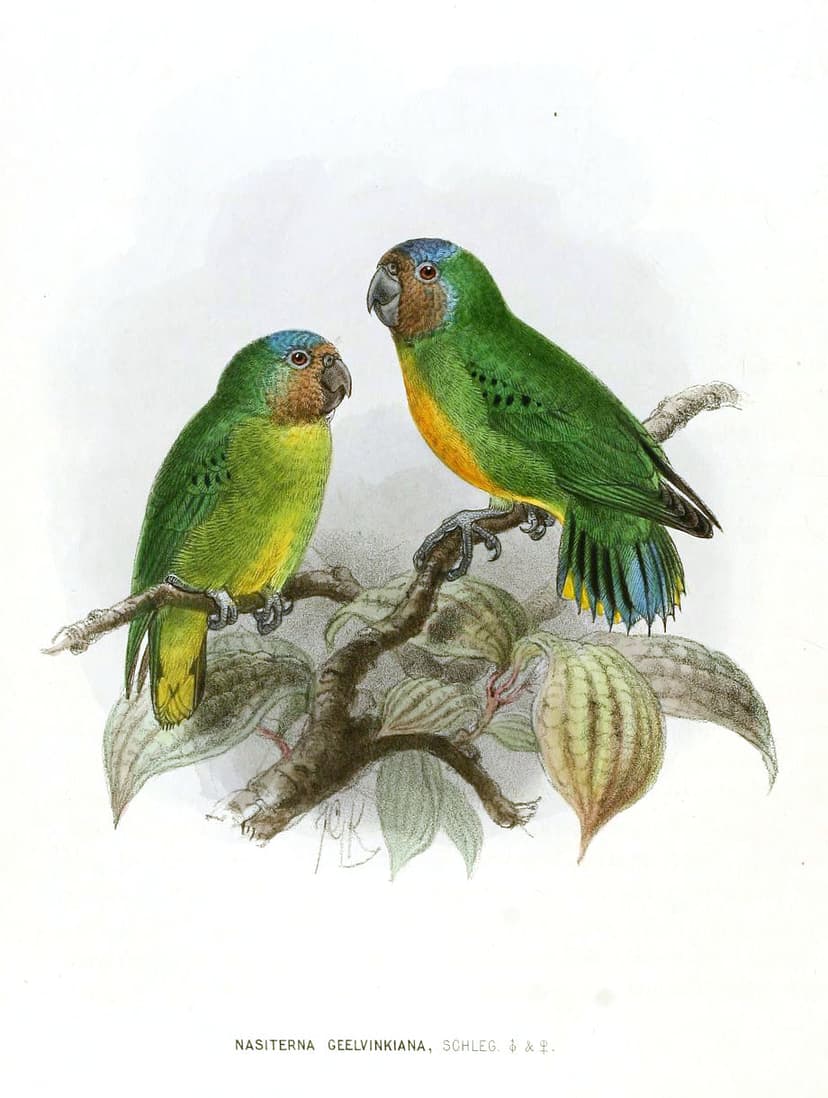
The Geelvink pygmy parrot is a small parrot species found exclusively on Biak and Numfoor islands in Western New Guinea. Its distinctive plumage includes a brown head, blue crown, yellow breast, green body, and blue tail, with red eyes. The species is threatened by habitat loss in its natural lowland forest and garden environments.

Josephine's lorikeet
Josephine's lorikeet is a species of parrot native to the highlands of New Guinea. It is distinguished by its predominantly red plumage, green wings, and a distinctive yellow-tipped tail. This species primarily inhabits moist lowland and montane forests.