
Geelvink pygmy parrot
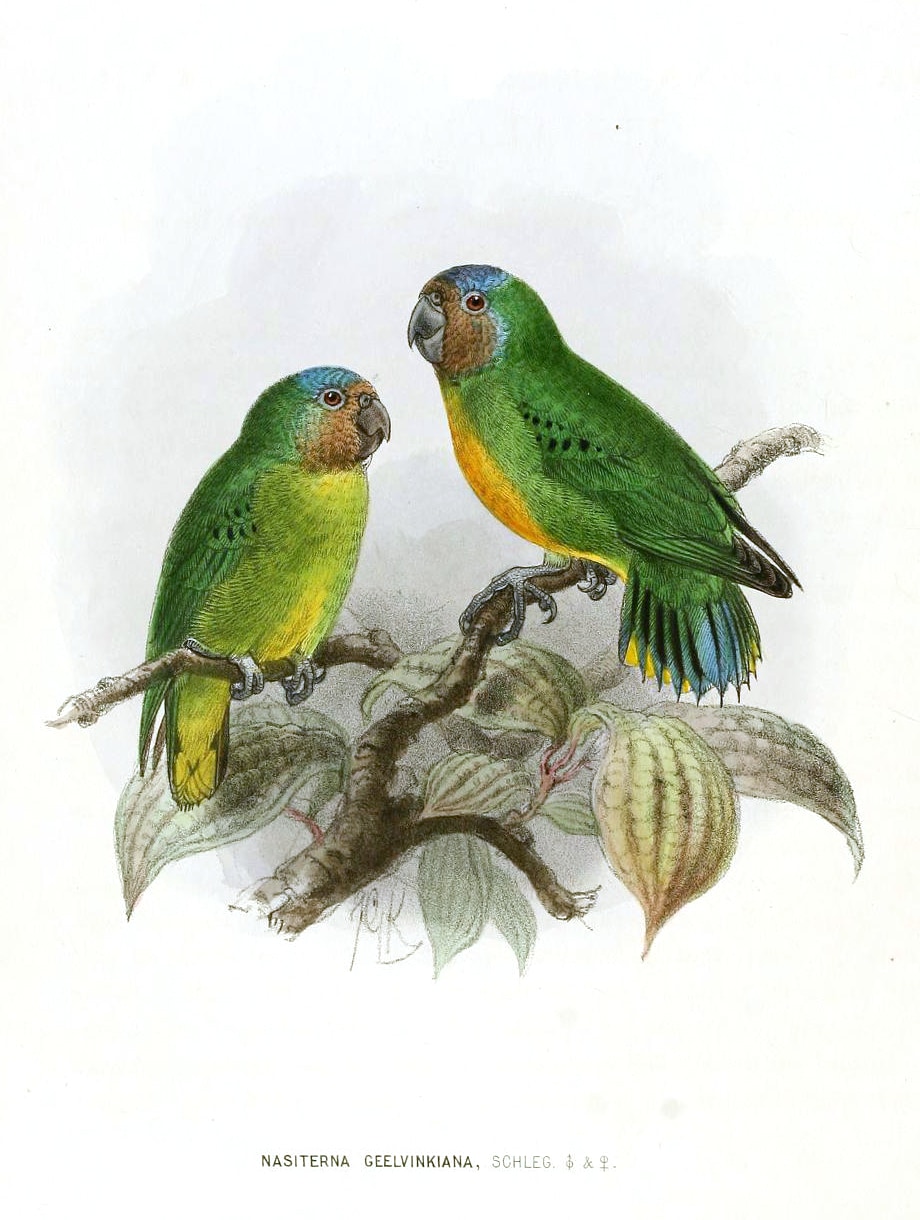
The Geelvink pygmy parrot is a small parrot species found exclusively on Biak and Numfoor islands in Western New Guinea. Its distinctive plumage includes a brown head, blue crown, yellow breast, green body, and blue tail, with red eyes. The species is threatened by habitat loss in its natural lowland forest and garden environments.
Key Facts
- ›Endemic to Biak and Numfoor islands in Western New Guinea.
- ›Features a brown head, blue crown, yellow breast, green body, and blue tail.
- ›Diet consists of lichen, fungi, seeds, fruits, flowers, insects, and their larvae.
- ›Inhabits subtropical or tropical moist lowland forests and rural gardens.
- ›Females have less brown coloration than males.
- ›Threatened by habitat loss.
Western New Guinea
Subtropical Or Tropical Moist Lowland Forests, Rural Gardens
Red Eyes
Lichen, Fungi, Seeds, Fruits, Flowers, Insects, Insect Larvae
About Geelvink pygmy parrot
The Geelvink pygmy parrot, scientifically known as Micropsitta geelvinkiana, is a small parrot species belonging to the Psittacidae family. This species is exclusively found on Biak and Numfoor islands, which are part of Western New Guinea. The name "Geelvink" originates from a Dutch ship and family of the same name, highlighting historical maritime connections to the region.
Description
The Geelvink pygmy parrot exhibits a striking plumage. Its head is primarily brown, contrasted by a vibrant blue crown and light blue ear coverts. The breast is a notable yellow, while the body is predominantly green. A blue tail adds to its colorful appearance. A distinctive feature of this parrot is its red eyes. While both sexes share these colors, there is a slight sexual dimorphism; females possess less brown coloration on their heads compared to males.
Diet and Habitat
The diet of the Geelvink pygmy parrot is diverse, encompassing lichen, fungi, seeds, fruits, and flowers. They also supplement their diet with insects and their larvae. Their natural habitats are subtropical or tropical moist lowland forests. Additionally, they have adapted to inhabit rural gardens within their native range, indicating some ability to coexist with human-altered landscapes.
Conservation
Unfortunately, the Geelvink pygmy parrot faces threats, primarily due to habitat loss. The ongoing reduction of its natural forest environments poses a significant challenge to the species' long-term survival. The species has two recognized subspecies: the nominate subspecies, M. g. geelvinkiana, which resides on Numfor, and M. g. misoriensis, found on Biak.
Source: Wikipedia ↗
Frequently Asked Questions
What are the key physical characteristics of the Geelvink pygmy parrot?
The Geelvink pygmy parrot has a brown head, a blue crown, and light blue ear coverts. Its breast is yellow, its body is green, and its tail is blue. It also possesses distinctive red eyes.
Where is the Geelvink pygmy parrot found?
This parrot species is endemic to the islands of Biak and Numfoor, located in Western New Guinea. It is not found naturally anywhere else in the world.
What does the Geelvink pygmy parrot eat?
Its diet is varied and includes lichen, fungi, seeds, fruits, and flowers. It also consumes insects and their larvae.
What is the natural habitat of the Geelvink pygmy parrot?
The Geelvink pygmy parrot lives in subtropical or tropical moist lowland forests. It can also be found in rural gardens within its native range.
Are there any known threats to the Geelvink pygmy parrot population?
Yes, the species is threatened by habitat loss. This loss of its natural environment poses a significant risk to its survival.
How can one distinguish between a male and female Geelvink pygmy parrot?
While subtle, there is a visual difference between the sexes. Females of the species tend to have less brown coloration on their heads compared to males.
Related Parrot species
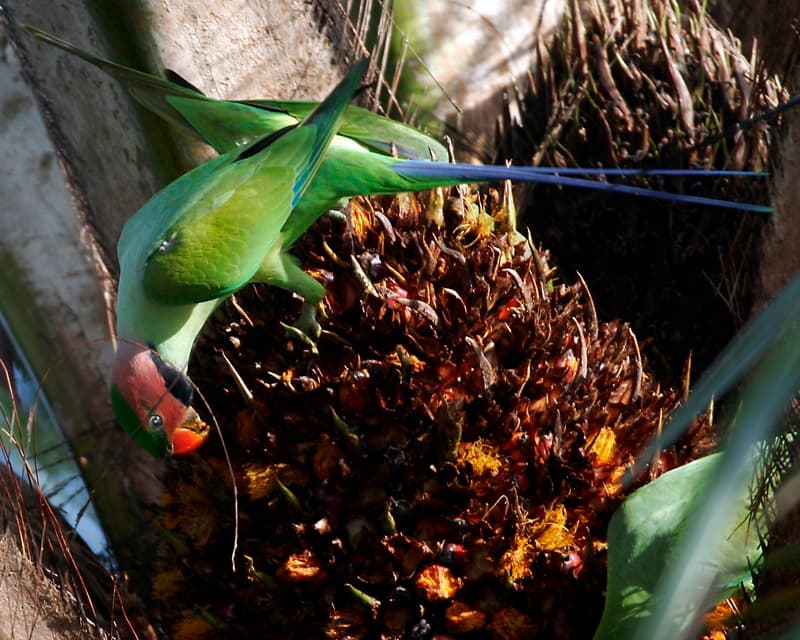
Long-tailed parakeet
The long-tailed parakeet is a parakeet species endemic to the Andaman and Nicobar Islands, Sumatra, Borneo, and Peninsular Malaysia. It is distinguished by its predominantly green plumage, long blue tail, and in males, a black cap and red cheeks, which are less pronounced in females. This highly social bird inhabits a variety of environments, from swamp forests to agricultural areas, and is also captured for the illegal pet trade.

Hispaniolan amazon
The Hispaniolan amazon, scientifically known as Amazona ventralis, is a parrot species native to the island of Hispaniola in the Caribbean. It is distinguished by its white forehead, light beak, white eye-ring, blue ear patch, and a maroon belly patch, setting it apart from other amazons. Once widespread, its population experienced a significant decline throughout the 20th century, with its range now largely confined to inland mountains and increasingly observed in urban areas.
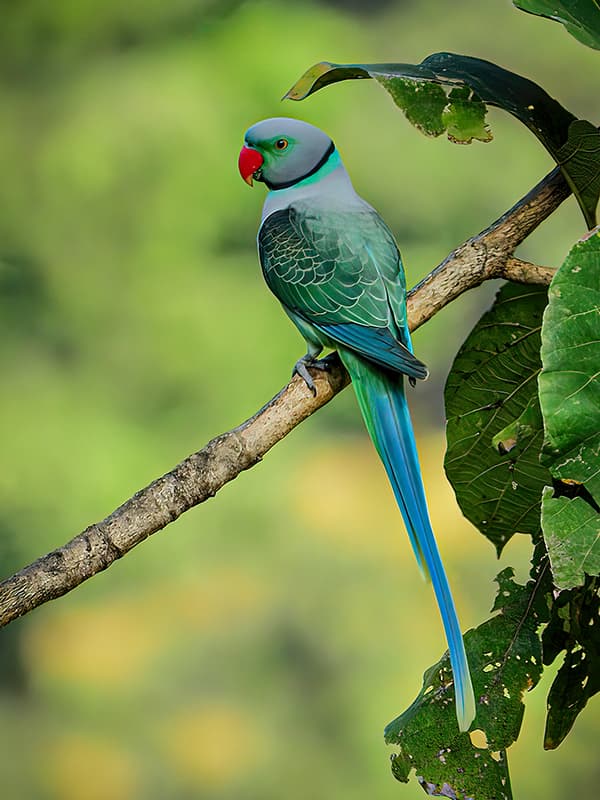
Blue-winged parakeet
The blue-winged parakeet, also known as the Malabar parakeet, is a species of parakeet native to the Western Ghats of southern India. This species is distinctive for its long blue tails tipped in yellow, contrasting with their dark wings and dull grey head and body. Adult males and females are easily differentiated by the color of their beaks.