
Duchess lorikeet
The Duchess lorikeet (Vini margarethae) is a species of parrot native to the Solomon Islands archipelago. This vibrantly colored bird, primarily bright red with distinctive yellow and purple markings, inhabits lowland and montane forests, as well as plantations. It is currently listed as Least Concern but faces threats from habitat loss and potential large-scale pet trade.
Key Facts
- ›The Duchess lorikeet is found exclusively in the Solomon Islands archipelago.
- ›Its plumage is predominantly bright red, accented with purple, black, and yellow.
- ›It feeds primarily on nectar, pollen, and small fruits, particularly from the Schefflera plant.
- ›The species inhabits various forest types and coconut plantations, from sea level to 1,350 meters.
- ›It is classified as Least Concern by the IUCN, though habitat loss and pet trade pose potential threats.
- ›Adults measure approximately 20 cm in length and weigh between 40-60 grams.

Duchess Lorikeet
Solomon Islands
Subtropical Or Tropical Moist Lowland Forest, Subtropical Or Tropical Moist Montane Forest, Coconut Plantations
- Wide yellow chest band
- Thin yellow collar on the mantle bordered by a purple or black line
- Yellow-orange eyes
Nectar, Pollen, Small Fruits
Squeaky Calls, Loud and High-Pitched Flight Calls, High-Pitched Screek Notes While Feeding
About Duchess lorikeet
The Duchess lorikeet, scientifically known as Vini margarethae, is a species of parrot belonging to the family Psittaculidae. This vibrant bird is endemic to the Solomon Islands archipelago, inhabiting a range of environments from sea level to altitudes of 1,350 meters. Its natural habitats include subtropical and tropical moist lowland and montane forests, as well as coconut plantations.
Description and Identification
Adult Duchess lorikeets measure approximately 20 cm (8 inches) in length and weigh between 40 and 60 grams. Their plumage is predominantly a striking bright red, complemented by a purple to black hindcrown and distinct yellow-orange eyes. A prominent feature is the wide yellow chest band that extends to a thin yellow collar on the mantle, bordered by a subtle purple or black line. The lower breast is a dull mauve to black, and the underwings are dull yellow. Their tails are red, with green upper tail coverts and yellow tips. While adult females share the same coloration as males, they possess additional yellow patches on the sides of their rump, marking a visible sexual dimorphism.
Juvenile Duchess lorikeets can be distinguished by black markings on their head and underparts, a dusky black patch on the occiput, a faint yellow breast band, and a dusky wash on the yellow mantle collar. Their bills are brown to black, and their eyes are grey.
Distribution and Ecology
This species is found specifically on Bougainville Island and six islands within the Solomon Islands. It is noted as a localized species, sometimes absent from seemingly suitable habitats within its range. The Duchess lorikeet may exhibit nomadic behavior, shifting its habitat preference between different altitudes. Its calls are generally described as more squeaky than those of other lorikeet species, with loud, high-pitched flight calls and high-pitched screek notes emitted while feeding.
Diet and Conservation
The diet of the Duchess lorikeet consists primarily of nectar, pollen, and small fruits, with a notable consumption of Schefflera fruits. Despite its widespread distribution and relatively common status, the species faces threats from habitat loss, particularly the logging of lowland forests. The potential for a large-scale pet trade also poses a risk to its population. However, the Duchess lorikeet is currently classified as Least Concern by BirdLife International and the IUCN. To mitigate potential population declines, the species is traded in the pet trade under a strict export quota of 60 birds per year.
Cultural Significance
The Duchess lorikeet was featured on a stamp issued by the Solomon Islands in 1975, highlighting its recognition within the region.
Source: Wikipedia ↗
Frequently Asked Questions
What is the scientific name for the Duchess lorikeet?
The scientific name for the Duchess lorikeet is Vini margarethae. It was formerly classified under the genus Charmosyna before being moved to Vini based on molecular phylogenetic studies in 2020.
Where can the Duchess lorikeet be found in the wild?
The Duchess lorikeet is found throughout the Solomon Islands archipelago, including Bougainville Island and six other islands within the Solomons. It inhabits subtropical or tropical moist lowland and montane forests, as well as plantations.
What does the Duchess lorikeet eat?
The diet of the Duchess lorikeet primarily consists of nectar, pollen, and small fruits. They have a particular preference for the fruits of the Schefflera plant.
What are the main threats to the Duchess lorikeet population?
The primary threats to the Duchess lorikeet are habitat loss due to logging of lowland forests and the potential for large-scale pet trade. However, the species is currently managed with an export quota to mitigate population decline.
How can you identify a Duchess lorikeet?
Adult Duchess lorikeets are predominantly bright red with a purple to black hindcrown and yellow-orange eyes. They feature an orange bill, a wide yellow chest band, and a thin yellow collar on the mantle bordered by a purple or black line. Their tails are red with green upper tail coverts and yellow tips.
What is the conservation status of the Duchess lorikeet?
The Duchess lorikeet is considered to be of Least Concern by BirdLife International and the IUCN. While it is widespread and relatively common, its population could decline if large-scale pet trade becomes a significant issue.
Related Parrot species

Moluccan eclectus
The Moluccan eclectus is a vibrantly colored parrot native to the Maluku Islands (Moluccas) in Indonesia. It is distinguished by its extreme sexual dimorphism, with males being predominantly emerald green and females a striking red and purple/blue. These parrots are known for their unusual social breeding system and their long digestive tracts, which allow them to process a high-fiber diet.
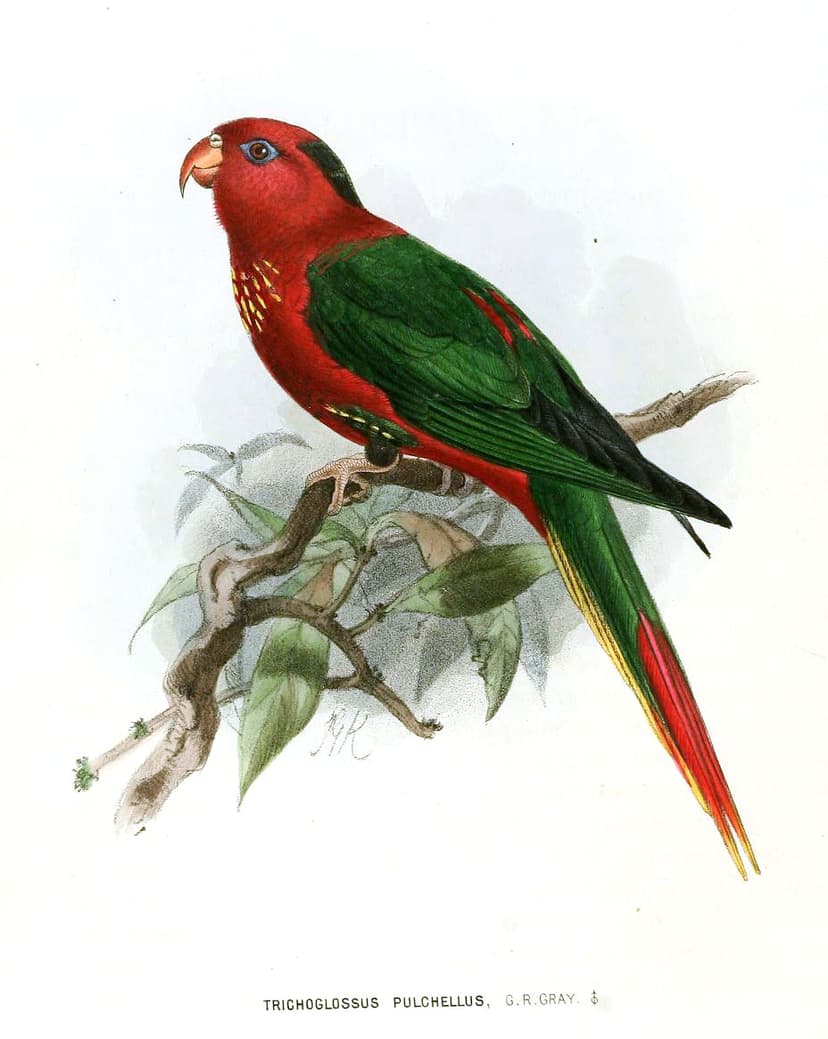
Fairy lorikeet
The fairy lorikeet (Charmosynopsis pulchella) is a small, vibrantly colored parrot native to New Guinea. Primarily red with green wings and yellow accents, it inhabits moist lowland and montane forests. Distinctive subspecies exist, differing in the extent of yellow and green markings, particularly on the breast and rump.
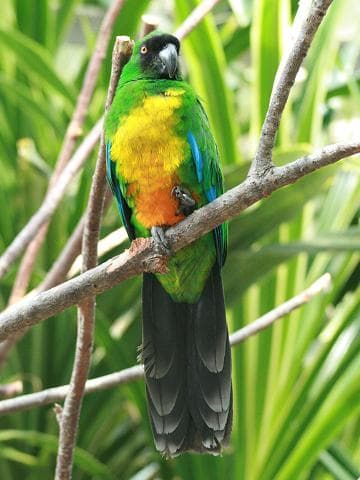
Masked shining parrot
The masked shining parrot, also known as the masked parrot or masked musk parrot, is a species of parrot endemic to Viti Levu in Fiji. This striking bird is characterized by its predominantly bright green plumage, a distinctive black mask on its face, and a vibrant yellow to orange breast and abdomen. Its natural habitats range from lowland and montane forests to mangrove forests, and it is currently threatened by habitat loss.