
Musk lorikeet
The musk lorikeet is a vibrant bird species native to eastern Australia, known for its predominantly green plumage accented with a red forehead and blue crown. These adaptable parrots are distinctive for their ability to thrive in urban environments, often seen in flocks foraging on nectar from city plantings and native eucalyptus trees.
Key Facts
- ›Native to south-central and eastern Australia, including New South Wales, Victoria, South Australia, and Tasmania.
- ›Measures approximately 22 cm (8.7 inches) in length.
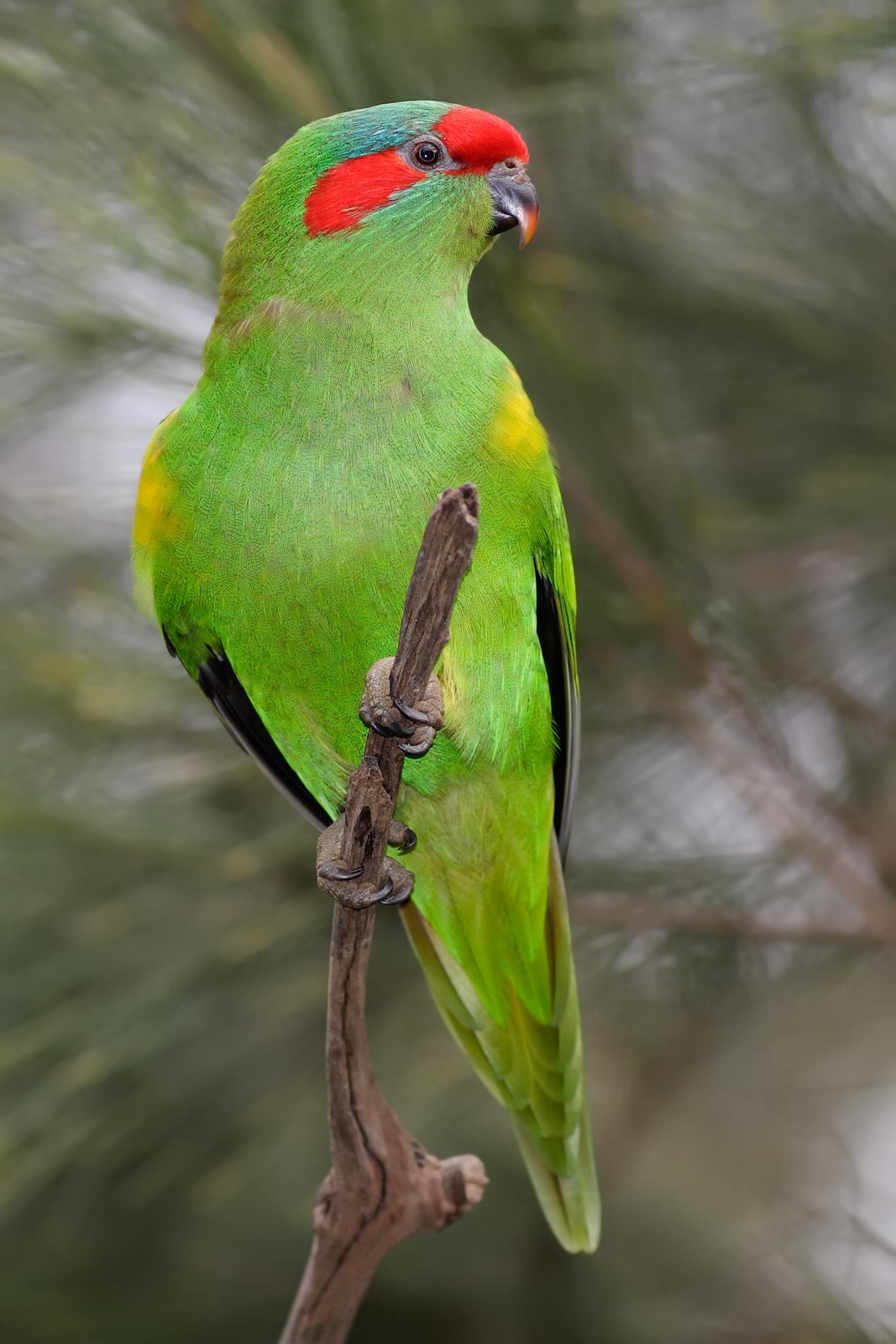
- ›Primarily green with a red forehead, blue crown, and a distinctive yellow wing band.
- ›Feeds on nectar, pollen, flowers, and seeds, with a notable presence in urban areas due to readily available food sources.
- ›Breeds mainly between August and January, nesting in tree hollows.
- ›Can be found in woodlands, drier forests, and increasingly in urban parks and gardens.
Red-Eared Lorikeet, Green Keet, Coolich
Australia
Woodlands, Drier Forests, Urban Areas
Red Forehead, Blue Crown, Yellow Wing Band
Nectar, Pollen, Flowers, Seeds, Fruit
Hollow Limb High In A Tree
About Musk lorikeet
The musk lorikeet (Trichoglossus concinnus), also known as the red-eared lorikeet or green keet, is a species of bird belonging to the parrot family Psittaculidae. This vibrantly colored bird is native to south-central and eastern Australia, inhabiting regions such as New South Wales, Victoria, South Australia, and Tasmania.
Description and Identification
Adult musk lorikeets typically measure around 22 centimeters (8.7 inches) in length. Their plumage is predominantly green, making them easily identifiable by a striking red forehead, a distinct blue crown, and a notable yellow band across their wings. The beak features red at the tip with darker coloration towards its base.
Distribution and Habitat
These lorikeets are commonly found in woodlands and drier forests. They are known to be nomadic within these environments, particularly in southeastern mainland Australia, west of the Great Dividing Range, and also in Tasmania. In recent years, musk lorikeets have demonstrated remarkable adaptability by becoming common visitors to urban areas, such as Melbourne and Sydney.
Urban Adaptation and Diet
Musk lorikeets are among the few avian species that have successfully adapted to rapid urbanization. Their success in cities is partly attributed to the widespread planting of nectar-producing plants, which serve as a reliable food source. Their diet primarily consists of nectar, pollen, flowers, and seeds, with a particular fondness for eucalyptus blossoms and nectar from plants like bottlebrush and Grevillea species. This reliance on nectar sources means they compete with other nectarivores, such as the rainbow lorikeet, for limited resources.
Breeding Habits
The breeding season for musk lorikeets generally spans from August to January. They typically build their nests in hollow limbs high up in trees. Females lay a clutch of approximately two white eggs, which are incubated for about 22 days. The young lorikeets usually fledge, or take their first flight, between five to six weeks after hatching.
Source: Wikipedia ↗
Frequently Asked Questions
What are the main colors of a musk lorikeet's plumage?
The musk lorikeet is primarily green. It is further identified by a red forehead, a blue crown, and a distinctive yellow band on its wings.
Where do musk lorikeets naturally live?
Musk lorikeets are found in eastern New South Wales, Victoria, South Australia, and Tasmania. They inhabit woodlands and drier forests in southeastern mainland Australia, and are also present in Tasmania.
What do musk lorikeets eat?
Their diet consists mainly of nectar, pollen, and flowers. They also consume seeds and have been observed feeding on fruits like apricots and apples when available.
How long is a musk lorikeet?
The musk lorikeet measures approximately 22 centimeters (8.7 inches) in length from head to tail.
Do musk lorikeets live in groups?
Yes, musk lorikeets are often observed in flocks. They have adapted to urban environments and are frequently seen in groups foraging for food.
When do musk lorikeets breed?
The breeding season for musk lorikeets mainly occurs from August to January. Nests are typically constructed in hollow limbs high up in trees.
Related Parrot species

Australian king parrot
The Australian king parrot is a striking parrot species native to the humid, forested eastern regions of Australia. It is distinguished by the vibrant red plumage of the adult male, contrasting with the predominantly green female. These parrots are known for their relatively quiet nature and devotion to their human companions when kept as pets.
Bald parrot
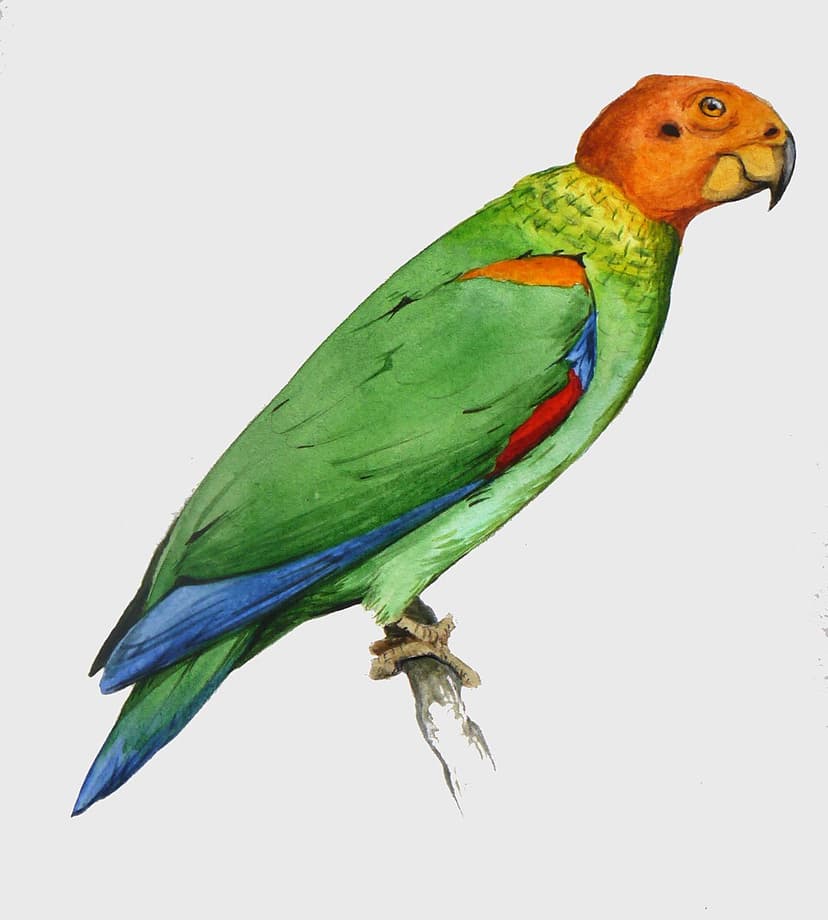
The bald parrot, scientifically known as Pyrilia aurantiocephala, is a medium-small parrot species endemic to the east-central Amazon of Brazil. It is distinguished by its striking bald, brownish-orange head and red underwing coverts, which are conspicuous in flight. This species inhabits tropical moist lowland forests and is considered near threatened due to extensive deforestation in its native range.
Blue-backed parrot
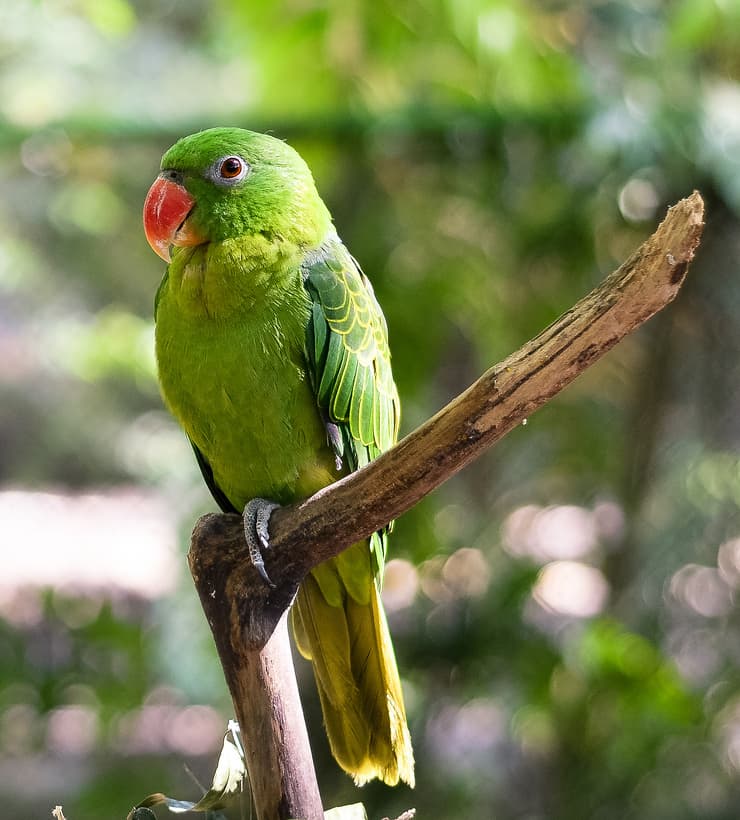
The blue-backed parrot is a large, endangered parrot species endemic to the Philippines. Primarily green with distinctive blue rump and wing bends, it is often confused with the blue-naped parrot but can be differentiated by its red iris, more pronounced sexual dimorphism, and vocalizations. Its main threats are habitat loss and trapping for the pet trade, leading to a critically low population.