
Nanday parakeet
Aratinga nenday·Psittacidae·27–30 cm·140 g
The Nanday parakeet, also known as the black-hooded parakeet, is a medium-small parrot native to South America. Its most distinctive feature is a black facial mask and beak, contrasting with its predominantly green plumage. These energetic birds are known for their vocalizations and are sometimes kept as companion parrots, though their powerful beaks make them less suitable for young children.
Key Facts
- ›Native to southeastern Bolivia, southwestern Brazil, central Paraguay, and northern Argentina.
- ›Characterized by a black facial mask, black flight feathers, and a tail edged in blue.
- ›Feeds on a diet of seeds, fruit, palm nuts, berries, flowers, and buds.
- ›Nests in tree cavities, with females typically laying three to four eggs.
- ›Known for being loud and energetic, requiring significant mental and social stimulation in captivity.
- ›Reported lifespans range up to 30 years in captivity.

Black-Hooded Parakeet, Nanday Conure
South America
Scrub Forest, Forest Clearings, Open Savannah, Pastures
Black Facial Mask, Black Beak, Black Trailing Flight Feathers, Blue-Edged Tail
Seeds, Fruit, Palm Nuts, Berries, Flowers, Buds
Loud, Energetic, Requires Mental and Social Stimulation
Loud, Capable of Learning To Talk
Holes In Trees
About Nanday parakeet
The Nanday parakeet, scientifically known as Aratinga nenday and also referred to as the black-hooded parakeet or nanday conure, is a medium-small parrot native to the Neotropics of South America. Its most defining characteristic is its striking black facial mask and beak, which stands out against its predominantly green plumage. Additional notable features include black trailing flight feathers on its wings, a tail edged in blue, bluish-green upper chest, paler green lower chest, and red feathers on its thighs.
Distribution and Habitat
This species is naturally found across southeastern Bolivia, southwestern Brazil, central Paraguay, and northern Argentina, particularly in the Pantanal region. They inhabit diverse environments including scrub forests, forest clearings around settlements, open savannahs, and pastures. Feral populations have also established themselves in various parts of the world, including Israel, Tenerife, and several areas in the United States such as California and Florida.
Diet and Behavior
Nanday parakeets feed on a varied diet of seeds, fruit, palm nuts, berries, flowers, and buds. In their natural habitat, they are considered pests in some areas due to their feeding habits. They typically nest in tree cavities, with females laying clutches of three to four eggs. After raising their young, they congregate in large communal roosts until the subsequent breeding season.
In Aviculture
The Nanday parakeet is sometimes kept as a companion parrot. It is recognized for being a loud and energetic bird that demands significant mental and social stimulation, along with ample time outside its cage to thrive. Due to its powerful beak, it may not be the most suitable pet for households with young children. In captivity, they can learn to mimic speech and perform tricks. The World Parrot Trust suggests keeping them in aviaries of at least 2–3 meters in length. While the longest verified lifespan is 18.7 years, there are reports of Nanday parakeets living as long as 30 years in captivity.
Source: Wikipedia ↗
Frequently Asked Questions
What are the identifying features of a Nanday parakeet?
The Nanday parakeet is primarily green with a striking black facial mask and beak, which gives it its common name. It also has black trailing flight feathers on its wings and its tail is edged in blue. The upper chest is bluish-green, the lower chest is paler green, and the thigh feathers are red.
Where are Nanday parakeets found in the wild?
Nanday parakeets are native to South America, specifically found in southeastern Bolivia, southwestern Brazil, central Paraguay, and northern Argentina. They inhabit regions like the Pantanal and are often found in scrub forests, forest clearings, open savannahs, and pastures.
What do Nanday parakeets eat?
Their natural diet consists of seeds, fruit, palm nuts, berries, flowers, and buds. Feral populations have also been observed feeding at bird feeders.
What are the nesting habits of Nanday parakeets?
In the wild, Nanday parakeets typically nest in holes found in trees. Females lay clutches of three to four eggs. After raising their young, they gather in communal roosts until the next breeding season.
Are Nanday parakeets good pets?
Nanday parakeets are sometimes kept as companion parrots due to their ability to learn tricks and talk. However, they are loud, energetic birds that require substantial stimulation and time outside their cage. Their powerful beaks mean they may not be suitable for households with young children.
What is the typical lifespan of a Nanday parakeet?
The longest verified lifespan recorded for a Nanday parakeet is 18.7 years. However, there are reports of them living for up to 30 years in captivity.
Related Parrot species
Crimson-bellied parakeet
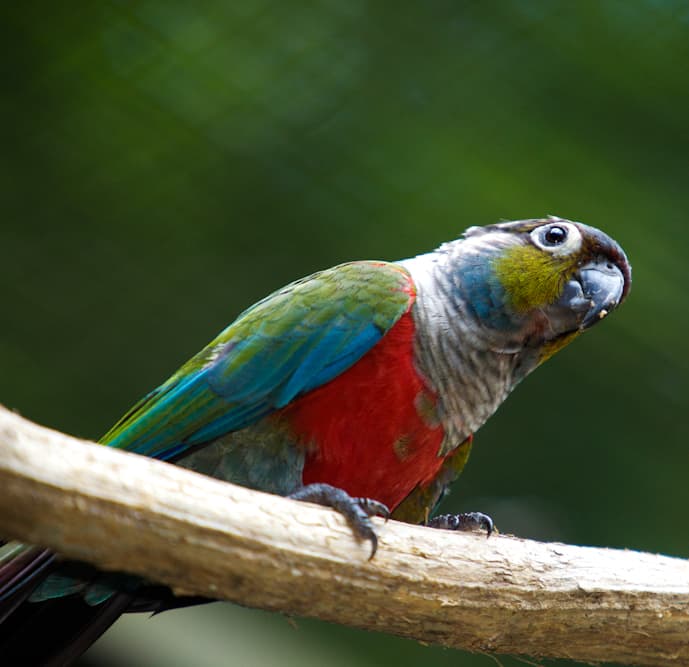
The crimson-bellied parakeet, also known as the crimson-bellied conure in aviculture, is a species of parrot native to Bolivia and Brazil. This bird is distinctive for its striking red belly contrasting with its predominantly green plumage, and it inhabits the canopy of humid forests. Despite its large range, its population is believed to be decreasing due to deforestation.

Green rosella
The Green rosella (Platycercus caledonicus), also known as the Tasmanian rosella, is the largest species in the rosella genus and is native to Tasmania and the Bass Strait islands. It is distinguished by its predominantly yellow head and underparts, violet-blue cheeks, and a red band above its beak. This parrot inhabits a variety of wooded environments and is primarily herbivorous, feeding on seeds, fruits, and flowers.
Military macaw
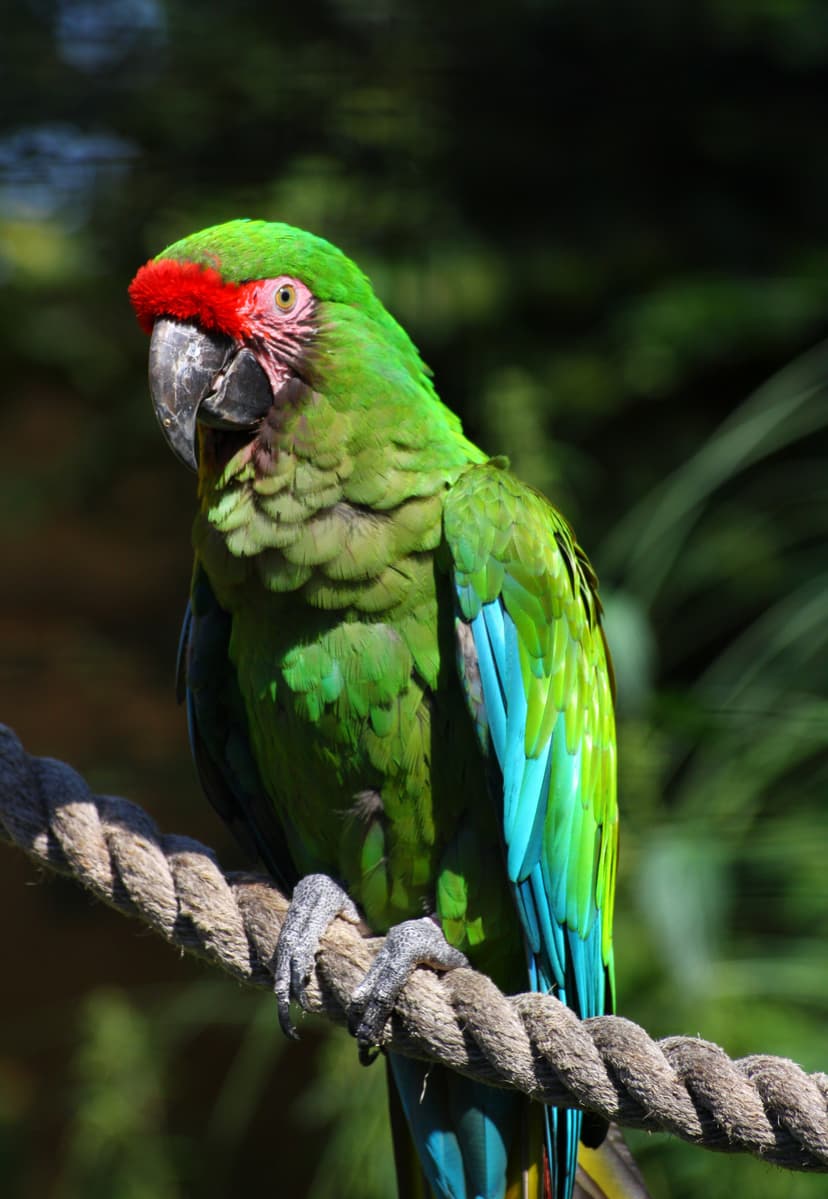
The military macaw (Ara militaris) is a medium to large parrot recognized by its predominantly green plumage accented with blue and yellow, and a distinctive red forehead patch, reminiscent of a military uniform. Native to a range stretching from west-central Mexico down to northern Argentina and Bolivia, these macaws are known for their loud vocalizations and social behavior. While facing conservation challenges, they are also commonly found in captivity due to their relative ease of breeding and long lifespan.